Pietro della Vecchia
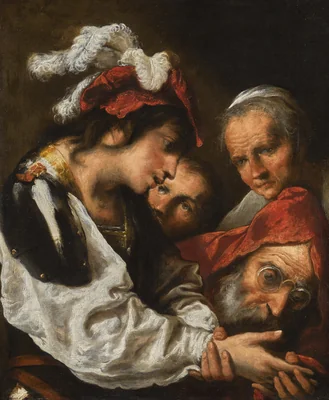
Pietro della Vecchia (c. 1600-1658), also known as Pietro Vècchia, stands as one of the most technically versatile Venetian painters of the Seicento. Active almost exclusively in Venice and its environs, except for a brief sojourn in Rome, his significance lies less in initiating a new style and more in his exceptional command over a vast range of existing genres. Della Vecchia’s prolific output included large-scale altarpieces, formal portraits, nuanced genre scenes, and even specialized grotteschi.
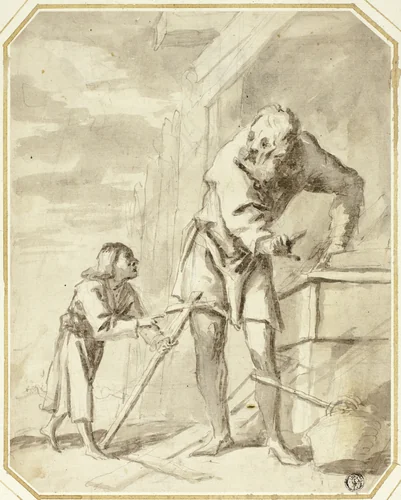
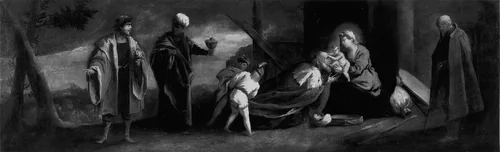
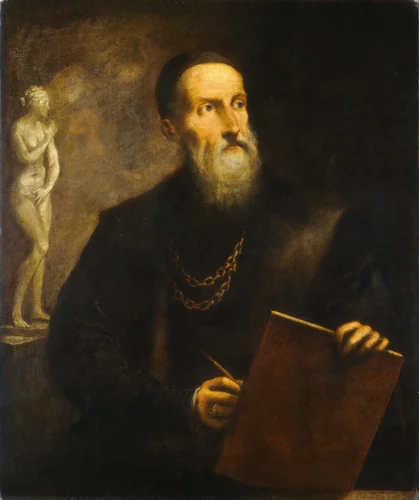
His formal works demonstrate a profound engagement with traditional piety, exemplified by compositions such as The Adoration of the Magi and the domestic focus of Saint Joseph with the Child Jesus in his Carpentry Shop. However, it was his mastery of artistic emulation that truly set him apart. Della Vecchia excelled in creating sophisticated pastiches, skillfully reproducing the coloring, technique, and handling of sixteenth-century Venetian titans like Giorgione and Titian. This particular ability required not merely copying but a deep, intellectual understanding of the historical masters' approaches, allowing him to produce convincing imitations, sometimes signed with his own name, such as his remarkable Imaginary Self-Portrait of Titian.
This extraordinary fluency across diverse styles secured him a unique position in the Venetian art world. Beyond his production of Pietro della Vecchia paintings, he successfully operated as a designer of cartoons for mosaics and worked extensively as an art restorer. The same acute technical eye that allowed him to replicate period styles also made him a highly sought-after art expert, frequently providing authoritative valuations of artworks for collectors. This dual role, serving as both creator and forensic analyst of painting, speaks volumes about his professional reputation and scholarly grasp of materials and provenance.
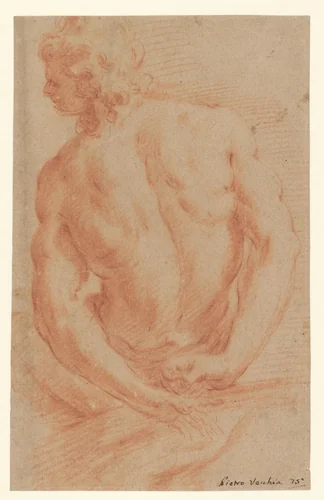
Today, della Vecchia’s comprehensive oeuvre, including both paintings and detailed preliminary drawings such as Studie van een mannelijk naakt, is represented in major institutions worldwide, including the Art Institute of Chicago and the Rijksmuseum. Many of his works are now in the public domain, allowing for their continued study and appreciation through high-quality prints and downloadable artwork, solidifying the legacy of this masterful specialist of the Venetian Golden Age.
Source: Wikipedia · CC BY-SA 4.0