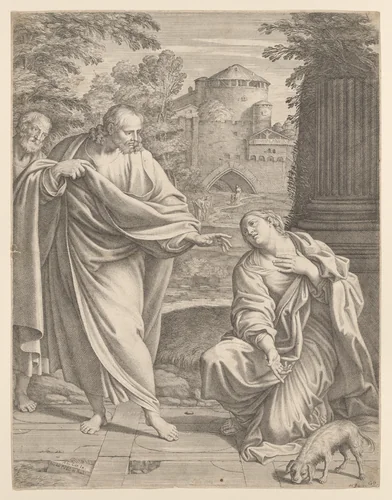
Pietro del Po
Pietro del Po (c. 1620–1692) was an Italian artist defined by the formal demands and devotional fervor of the Baroque era. Though recorded as a painter and draughtsman, Del Po’s professional identity and enduring historical reputation rest firmly upon his achievements as an engraver, a distinction critical to understanding the dissemination of seventeenth-century European art. He belonged to a generation of highly skilled graphic artists who specialized in reproductive prints, effectively serving as the conduit between major workshop compositions and a broader European audience.
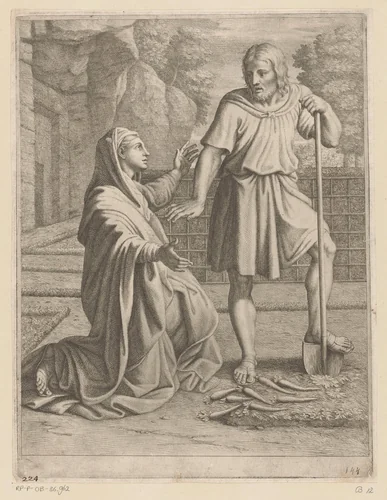
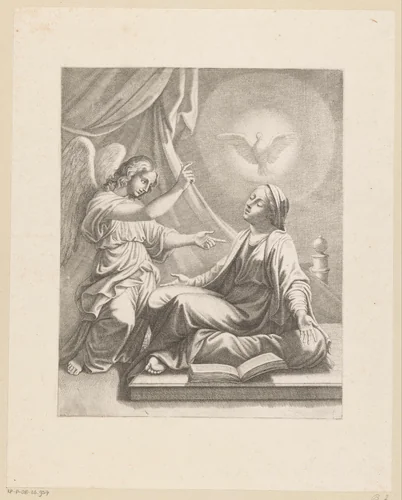
Operating primarily in Rome and later throughout Italy, Del Po’s technique was marked by a precise and dramatic application of line, translating the deep tonal contrasts of Baroque painting into black-and-white visual power. His graphic output frequently engaged with profound theological narratives, providing museum-quality interpretations of works often inaccessible to the common viewer. Key examples of his narrative prowess include the emotional intensity captured in Christus verschijnt aan Maria Magdalena and the formal balance observed in Annunciatie.
It is perhaps fortunate for posterity that Del Po prioritized the copper plate over the canvas; while his production of Pietro del Po paintings is historically noted, the survival rate and impact of his engraved works are significantly greater. This apparent self-awareness, an understanding that his true facility lay in multiplication rather than initial invention, ensured his visual legacy was widely circulated and preserved. His consistent excellence as a reproductive engraver earned him a respected place among his contemporaries.
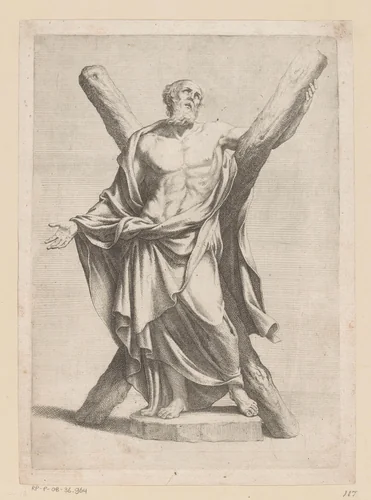
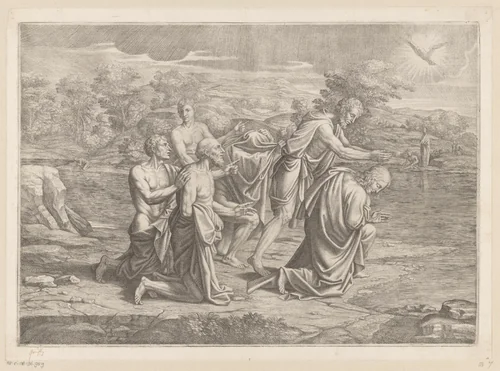
Today, Del Po's historical significance is confirmed by the presence of his prints in prestigious collections worldwide, including the Metropolitan Museum of Art and the Rijksmuseum. Works such as De heilige Andreas and Doop van Christus are frequently found as high-quality prints, increasingly available as downloadable artwork via the public domain. These detailed engravings provide essential insight into the religious iconography and artistic priorities of the late Italian Baroque, allowing modern audiences direct access to the technical mastery that defines the career of Pietro del Po.
Source: Wikipedia · CC BY-SA 4.0