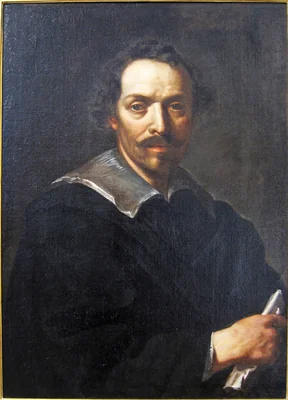
Pietro da Cortona
Pietro da Cortona (Pietro Berrettini, 1596-1669) was an Italian Baroque master whose simultaneous command of painting and architecture placed him among the key figures shaping 17th-century Rome. Working alongside contemporaries and rivals Gian Lorenzo Bernini and Francesco Borromini, Cortona helped define the visual language of the High Baroque, contributing significantly to its dynamism, dramatic scale, and integrated artistic design.
His most defining artistic innovation was the realization of monumental, illusionistic fresco cycles. Cortona perfected quadratura, the technique of manipulating perspective to create the dazzling illusion that painted mythological or allegorical scenes expanded far beyond the physical boundaries of the ceiling. This mastery is central to his reputation as a great designer of interior decorations, where he often synthesized painting, sculpture, and architecture into a cohesive, awe-inspiring environment.
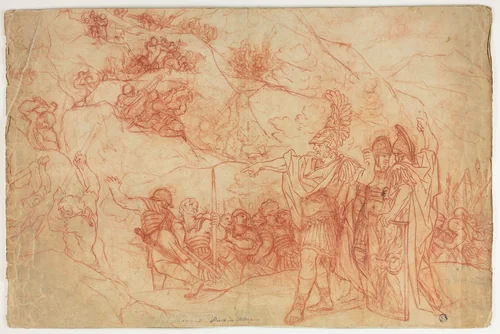
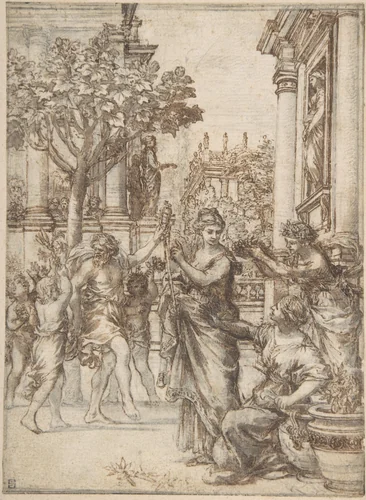
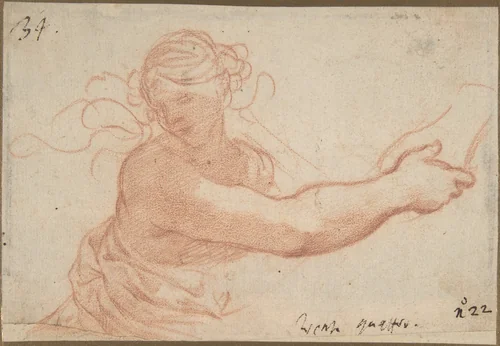
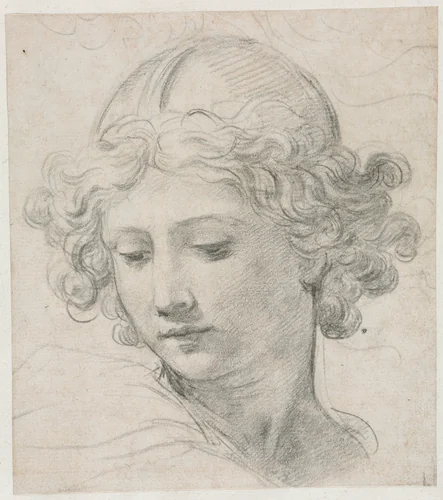
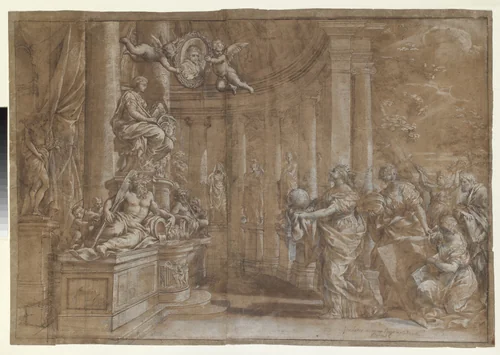
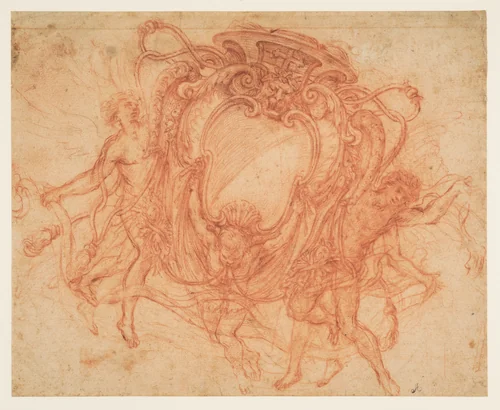
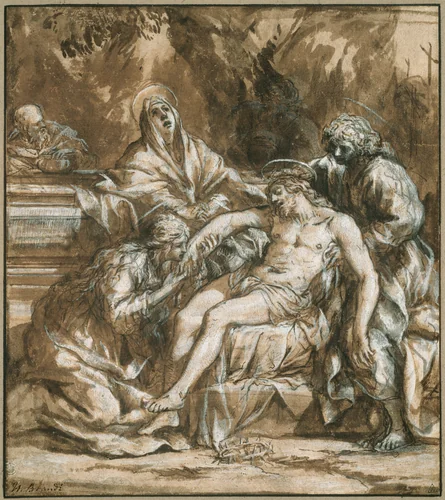
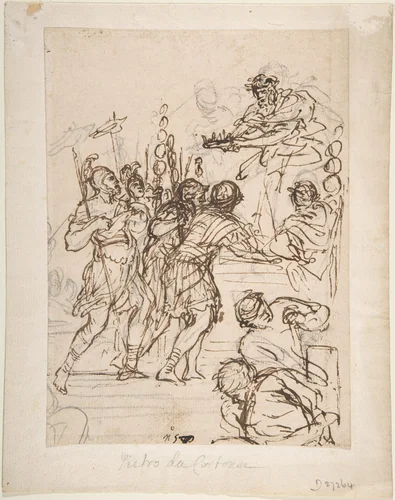
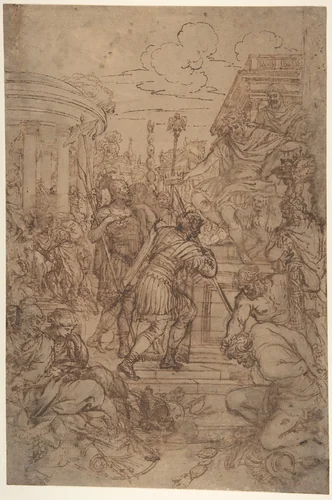
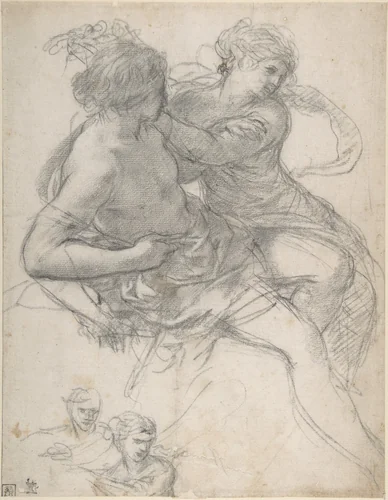
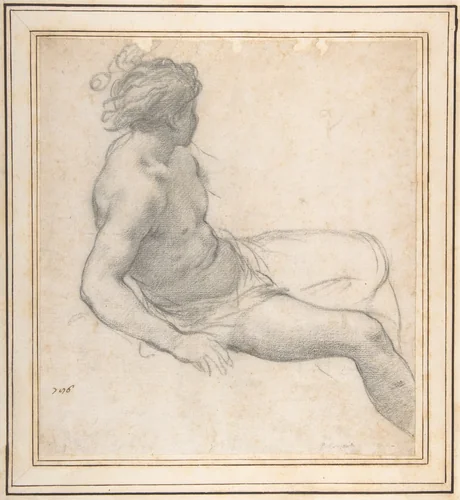
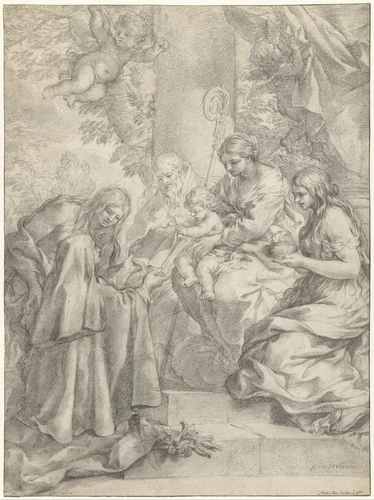
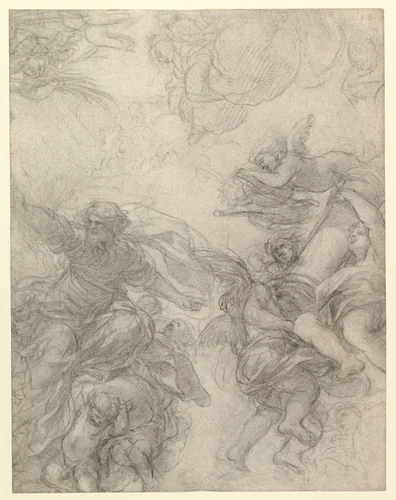
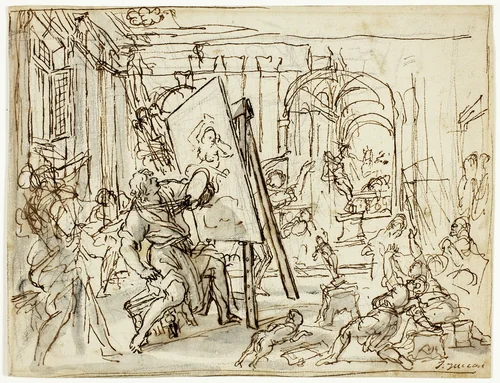
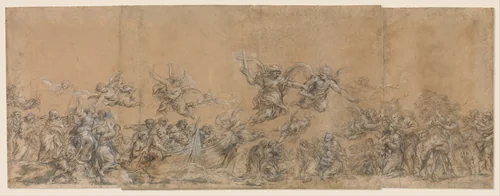
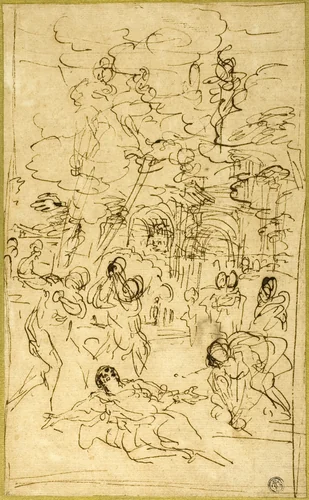
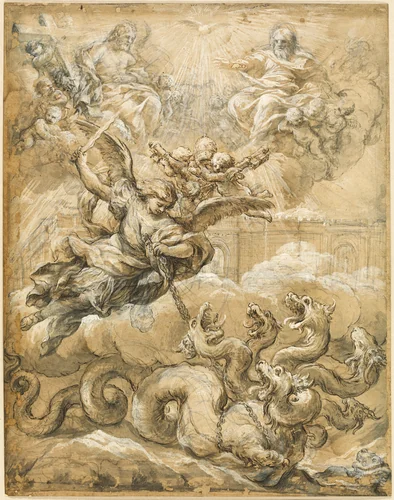
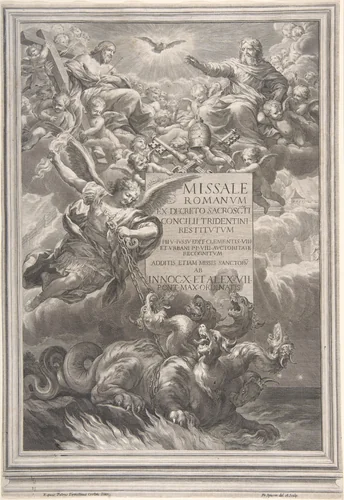
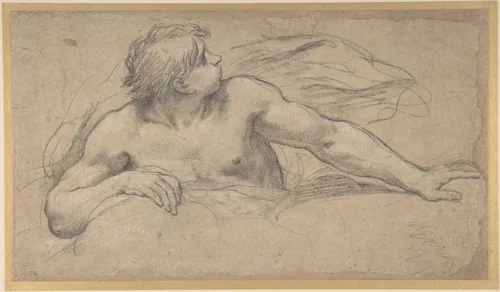
Although Cortona’s fame rests largely on these vast projects, his surviving graphic output confirms the intellectual rigor underlying his grand schemes. The existing body of work includes fifteen drawings, now held in collections such as the Cleveland Museum of Art and the Metropolitan Museum of Art, reflecting his versatility across religious and classical subjects, including Satyrs Supporting an Ornamental Motif and the preparatory sketch for St. Michael Expurging Heresy. These works testify to his superb draftsmanship and his ability to convey both intimate and epic narratives.
As an architect, Cortona consistently favored richness and plasticity, utilizing complex curves and projecting elements that further integrated his building designs with his expansive pictorial visions. This commitment to the bel composto ensured that his structures served as perfect stages for his paintings.
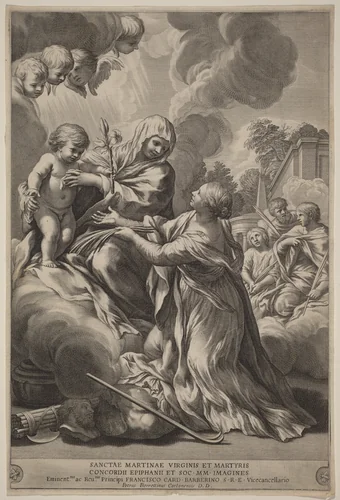
Cortona’s output was extraordinary for its consistency and scale. Unlike the often abrasive Bernini or the famously difficult Borromini, Cortona maintained a successful and steady career, navigating the demands of the Roman curia with apparent ease, suggesting that the pursuit of professional longevity in the fiercely competitive art world requires not only genius but also a certain diplomatic temperament. For those studying his technical methods or appreciating the finished works, numerous drawings and Pietro da Cortona prints are now available for study, often sourced from original sketches that have entered the public domain, allowing enthusiasts access to high-quality prints reflecting his diverse and essential contributions to Baroque art.
Source: Wikipedia · CC BY-SA 4.0