Pietro Buonaccorsi
Pietro Buonaccorsi, known universally by his moniker Perino del Vaga, stands as a critical hinge figure in sixteenth-century Italian art, bridging the formal perfection of the High Renaissance with the expressive, often agitated aesthetics of early Mannerism. Active from 1519, Buonaccorsi established himself as a preeminent draughtsman and painter, instrumental in disseminating the complex decorative language developed by Raphael’s workshop in Rome. His style is defined by a rhythmic linearity, elaborate figural arrangements, and an innate sense of theatrical drama, making his work central to the artistic transition of the era.
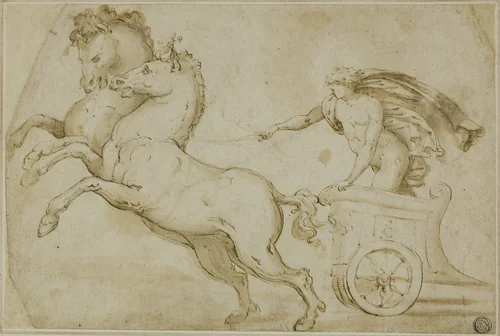
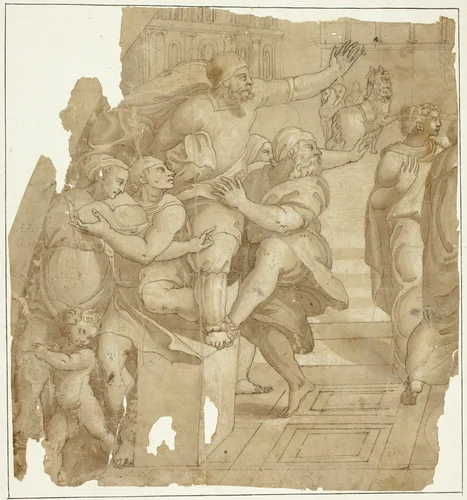
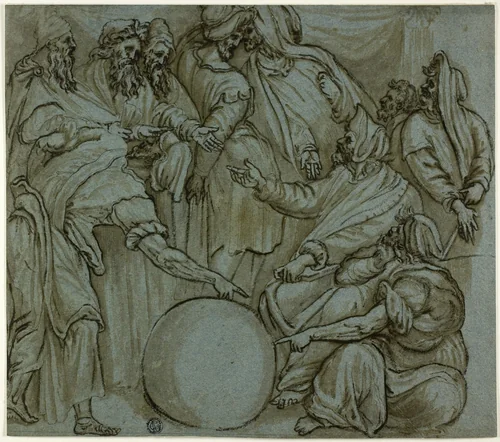
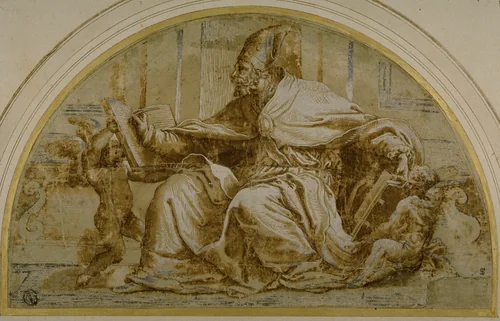
Buonaccorsi’s enduring legacy rests heavily upon his formidable skill as a draughtsman. He excelled in creating preparatory studies and modelli that demonstrate an extraordinary capacity for inventive composition and mythological spectacle. His drawings often explore narrative complexity and robust movement, exemplified by works such as Apollo Driving the Chariot of the Sun and the meticulous Philosophers Discussing the Terrestrial Globe. These sheets confirm his mastery of the human form in motion, seen equally in the powerful delineation of Fragment of a Composition with People Gesturing and Horses in the Background.
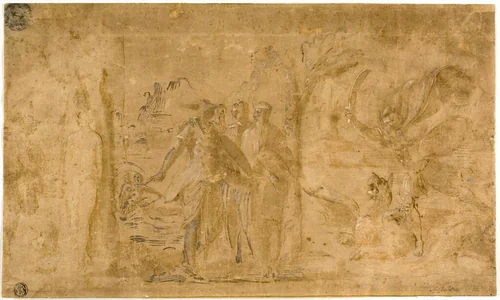
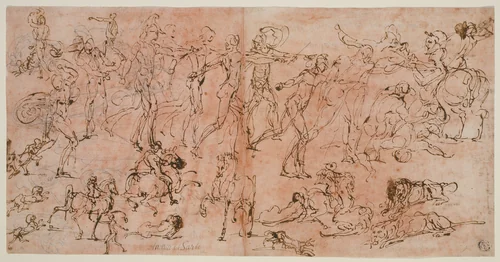
A particularly illuminating example of the artist’s prolific approach is the extensive double-sided sheet, Studies of Warriors, Horsemen, and Lions (recto); Studies of Heads and Nude Figures, Ceiling Plan, and Inscriptions (verso). This singular work demonstrates the astonishing breadth of his visual concerns, encompassing anatomical study, architectural planning, and animal portraiture within a unified, restlessly inventive practice. It is perhaps unsurprising that his nickname, Perino del Vaga (Perino of the Wandering/Vague), suggests a restless creative temperament always moving swiftly toward the next inventive challenge.
While surviving Pietro Buonaccorsi paintings are scattered, the extensive corpus of drawings held in major collections, including the Art Institute of Chicago, ensures continuous study of his method. His inventive compositions served as essential visual templates for successive generations of decorative artists. In the modern era, many of these museum-quality works have entered the public domain, granting unprecedented access to researchers and allowing enthusiasts to acquire high-quality prints that preserve the sophisticated brilliance of this transitional Mannerist master.