Pietro Aquila
Pietro Aquila was a prominent figure in late Italian Baroque art, known primarily for his prolific work as an engraver and printmaker during the latter half of the seventeenth century. Active roughly between 1660 and 1683, Aquila was a native of Palermo, where he developed a distinctive and vigorous graphic approach to translating monumental painting into the reproducible medium of the print. His enduring importance is underscored by the presence of his high-quality prints in major institutional collections, including the Rijksmuseum in Amsterdam and the Metropolitan Museum of Art in New York.
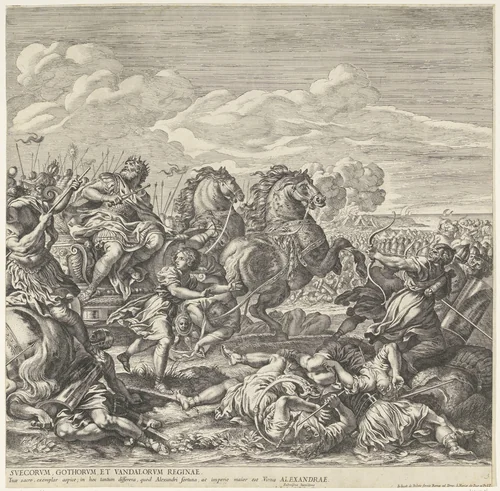
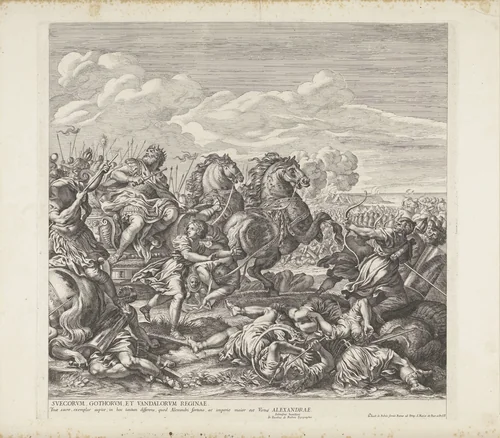
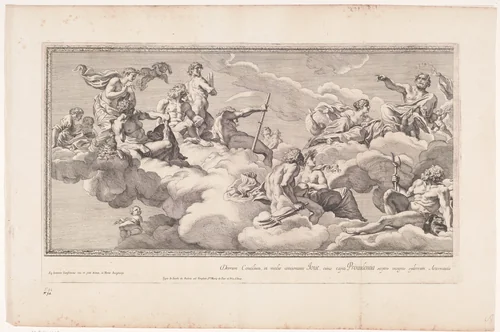
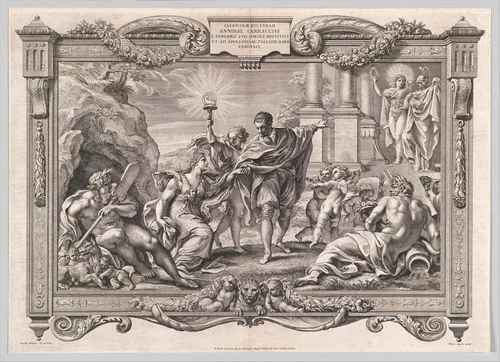
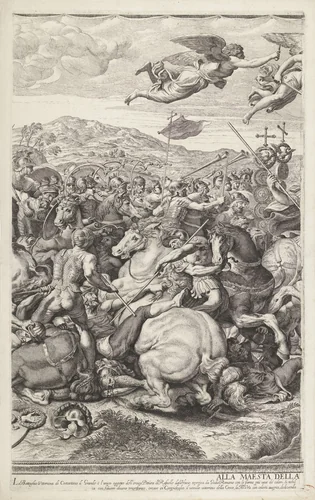
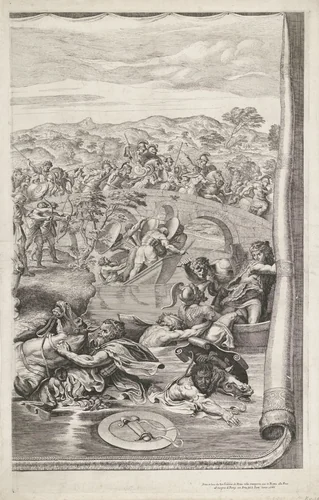
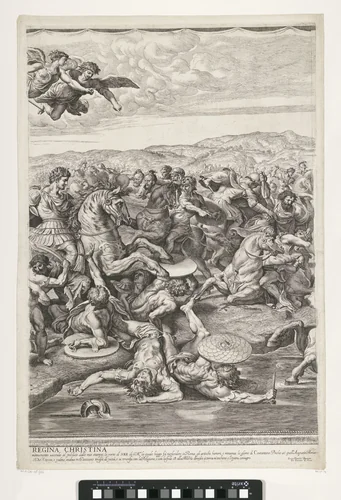
Aquila’s artistic specialty lay in rendering complex historical and mythological compositions, demonstrating an exceptional aptitude for managing narrative scope within the confines of a copper plate. He frequently tackled grand scenes originally executed by master painters, a practice that demanded careful planning to maintain spatial and figural continuity. This is most evident in multi-plate works like the two-part Slag bij Arbela (Battle of Arbela), designed to convey the immense scale of historical conflict. His work frequently intersected with classical allegory, as seen in the dynamic composition of Verzameling van goden op de Olympus (Gathering of Gods on Olympus), and his allegorical depiction of the arts in Annibale Carracci Introduces Painting to Apollo and Minerva.
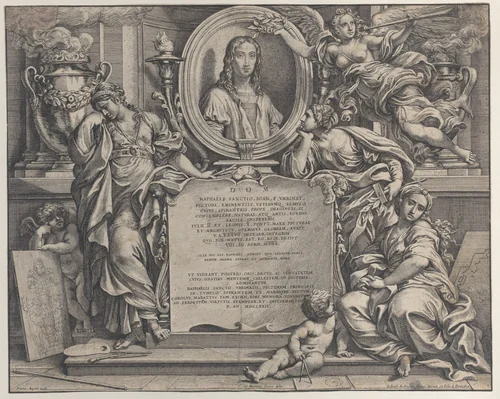
Although often working after the designs of others, Aquila’s technical proficiency ensured his etchings possess a striking clarity and textural complexity that elevates them beyond mere reproduction; they operate as autonomous works of art. This mastery of line work is exceptionally clear in detailed pieces such as the elaborate Frontispiece with oval portrait of Raphael, with three allegorical figures of the Arts supporting the tablet at center, which conveys rich architectural depth. Aquila ensured his legacy extended beyond his own active period, notably by mentoring his nephew, Francesco Faraone Aquila, thereby contributing to the next generation of printmakers. Today, much of Aquila’s extensive graphic output resides in the public domain, allowing institutions and enthusiasts to access and reproduce these seventeenth-century works as downloadable artwork. His legacy rests on the fact that his detailed, precise prints became the primary vehicle through which many European audiences experienced the dramatic power and grand scale of contemporary Italian painting.
Source: Wikipedia · CC BY-SA 4.0