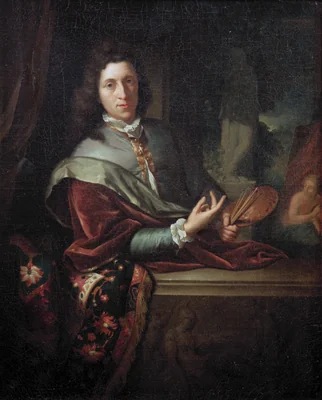
Pieter van der Werff
Pieter van der Werff was a significant Dutch Golden Age painter active during the final decades of the 17th century. Focusing primarily on portraiture, he secured a vital role documenting the merchant aristocracy of Rotterdam at the height of the Republic’s economic supremacy. His active period, stretching approximately from 1675 to 1695, places his refined technique firmly within the late-Baroque classical tradition.
Pieter’s professional trajectory was initially defined by his close collaboration with his older brother, Adriaen van der Werff, a highly renowned artist favored by European royalty. Serving as Adriaen’s indispensable assistant, Pieter absorbed a commitment to meticulous finish and smooth, polished surfaces, hallmarks of the fijnschilder style, though he applied this precision to a different subject matter than his brother's favored mythological scenes.
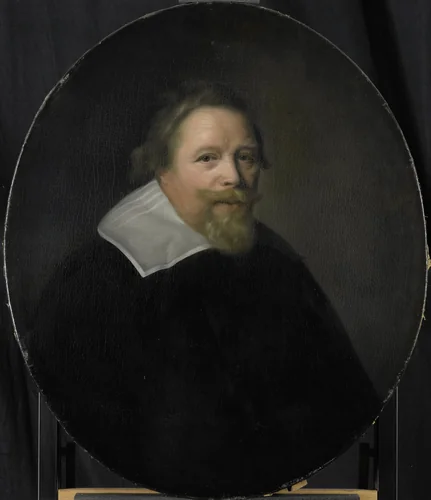
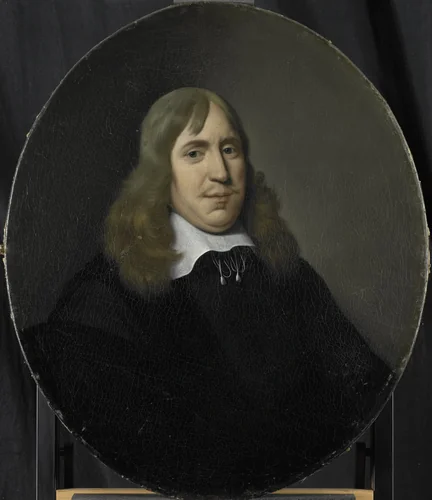
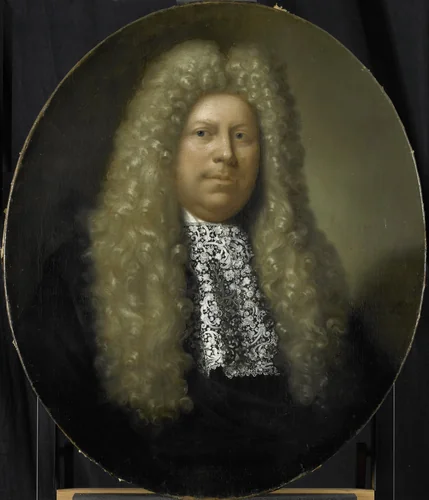
The known oeuvre of Pieter van der Werff paintings, comprising fourteen oils and a single drawing, reveals a marked concentration on civic and corporate patronage. His most historically significant commissions involved the powerful Directors of the Rotterdam Chamber of the Dutch East India Company (VOC). Works such as Portrait of Claes Maertensz Thoveling and Portrait of Cornelis Jansz Hartigsvelt are more than just likenesses; they are sober, formal studies of the individuals whose management of global commerce fundamentally shaped Dutch political and financial history. The paintings are characterized by their clarity of light, accurate rendering of luxurious textiles, and the serious dignity required of men entrusted with staggering wealth.
It is perhaps Pieter van der Werff's unique contribution that he preserved these faces of bureaucratic power with such unpretentious directness. Unlike court portraitists, he resisted overt flattery, presenting his subjects not as mythic figures but as serious, highly successful administrators. This unflinching focus provides modern viewers with invaluable insight into the managerial class of the Dutch Golden Age. His notable surviving works, including Zittend vrouwelijk naakt, een voet afdrogend and several Director portraits, are held in prestigious collections like the Rijksmuseum. These museum-quality works, often made available as high-quality prints through digitization efforts, ensure that the legacy of this important painter, now often in the public domain, remains accessible to scholars and admirers of Dutch painting.
Source: Wikipedia · CC BY-SA 4.0