Pieter van Bleeck
Pieter van Bleeck (Petrus Johannes van Bleeck) established himself as a significant figure in the London art world of the mid-eighteenth century, following his relocation from the Netherlands around 1723. While trained initially as a painter, his enduring contribution rests almost entirely on his mastery of the mezzotint technique, the dominant medium for portrait reproduction during that era. His active period, stretching from roughly 1735 to 1757, coincided with a surge in demand among the rising professional class for affordable, yet high-quality prints documenting notable personalities.
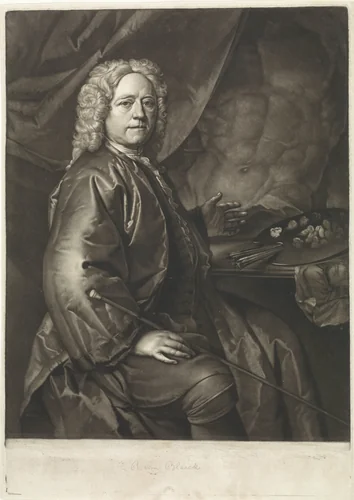
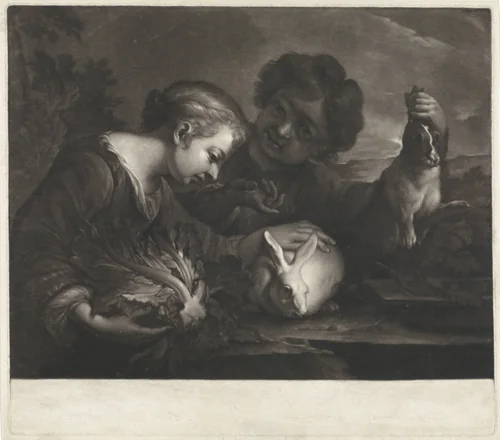
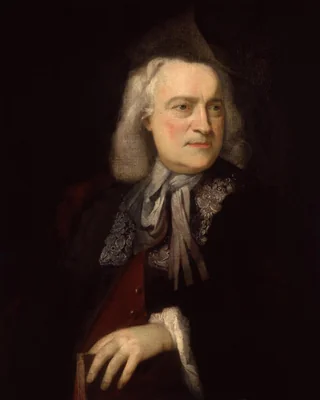
Van Bleeck capitalized expertly on mezzotint’s unique ability to render rich, velvet shadows and textural subtlety, features crucial for capturing the gravitas and defining details of a sitter. His output was highly specialized, focusing nearly exclusively on portraiture, allowing him to create striking, moody images that functioned both as artistic objects and effective public records. It is a telling detail of the period’s obsession with documentation that one of his most powerful early prints is a portrait of his own family member, titled Portret van Richard van Bleeck, suggesting a practical convergence of personal ties and professional expertise in his output.
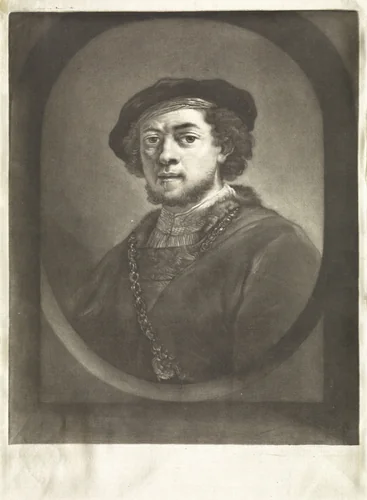
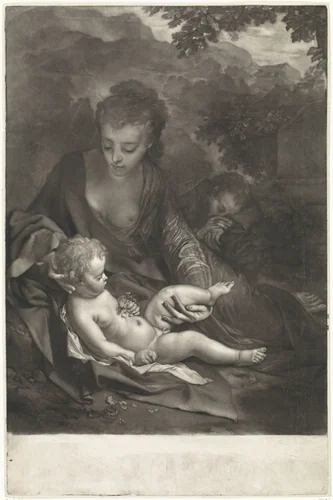
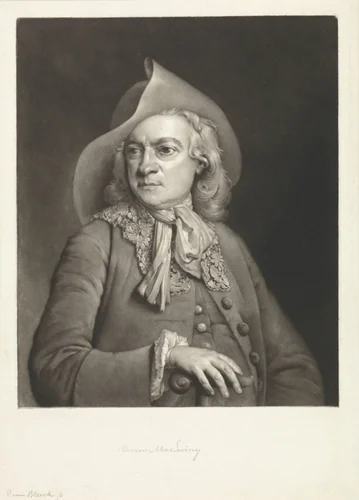
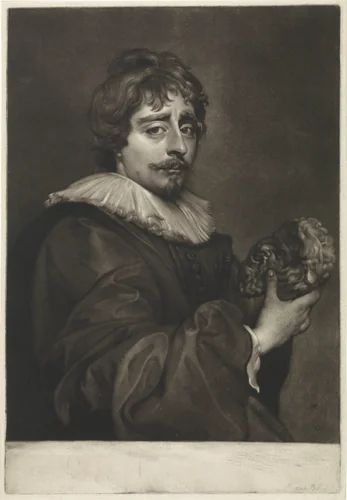
Beyond family, Van Bleeck’s work focused on commemorating influential figures of contemporary renown. His skills translated readily to interpreting the works of others, ensuring the circulation of important artistic concepts across Europe. Notable examples include his interpretation of master compositions, such as Rest on the Flight into Egypt, alongside commissions immortalizing political and cultural movers. The production of Portret van Owen MacSwiny and Portret van François Duquesnoy placed him firmly within the network of influential London patrons and connoisseurs. His thoughtful interpretation of the Dutch foundational master, seen in Portret van Rembrandt van Rijn, further underscores his connection to Dutch artistic traditions even while operating successfully in the competitive British market.
Van Bleeck’s concentrated output of consistently high-quality prints ensured his place in major institutional holdings. Nine of his significant known prints are held today in the collection of the Rijksmuseum, upholding the museum-quality standard of his work. Because much of his artwork, like that of his contemporaries, now resides in the public domain, those interested in eighteenth-century portraiture can often access downloadable artwork directly from major digital archives, ensuring his legacy as a master mezzotint engraver is preserved for new generations.
Source: Wikipedia · CC BY-SA 4.0