Pieter Molyn
Pieter de Molijn (1595–1661) was a pivotal figure in the evolution of Dutch Golden Age landscape painting, an artist whose work helped redefine the genre from idealized studio settings to a naturalistic study of the domestic environment. Though born in London, his Flemish heritage and subsequent establishment in Haarlem placed him squarely within the artistic epicenter of the Netherlands, where he became active from 1626 onward. Molijn was equally proficient as a painter and an engraver, and his graphic output remains a critical component of his legacy.
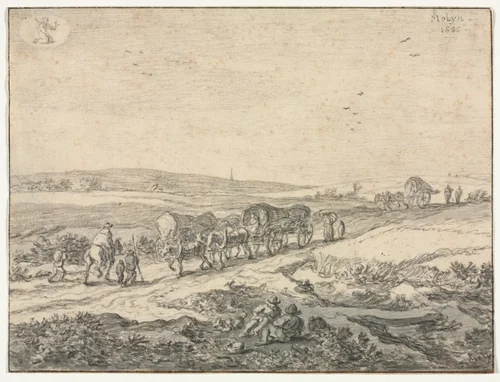
His style is characterized by a mastery of atmospheric effects and composition, frequently employing low horizons and expansive, dramatic skies that endow his seemingly simple scenes with unexpected depth. Molijn specialized in integrating genre scenes, typically featuring laborers, travelers, or military personnel, into the vastness of the Dutch countryside. This focused approach to realistic observation places him among the innovators who championed the "monochrome" or tonal landscape style prevalent in Haarlem.
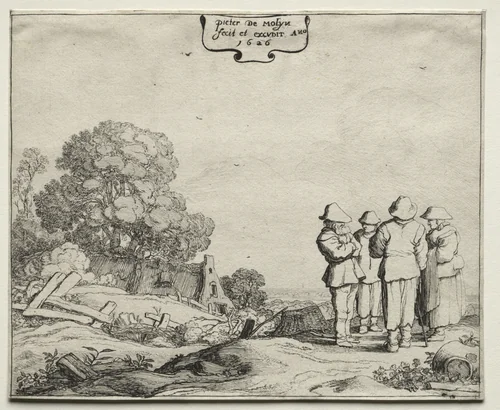
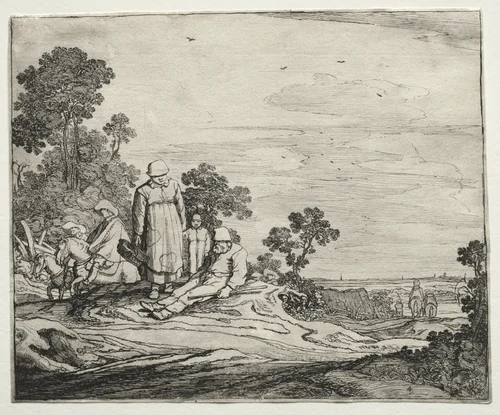
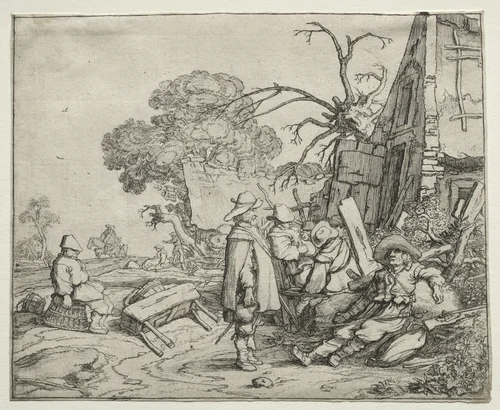
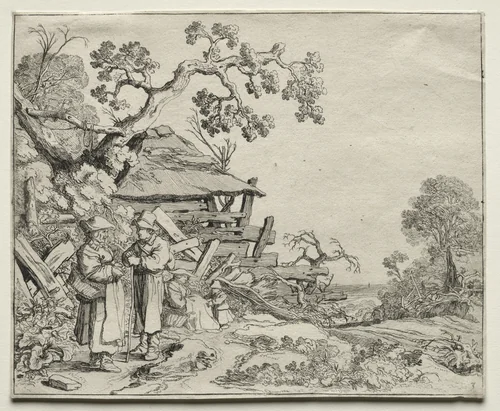
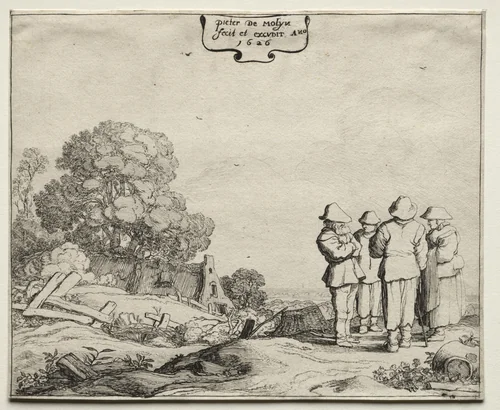
Molijn’s body of work is notably concise, comprising paintings, drawings, and a distinctive group of etchings. The latter, including five known prints and one drawing held in major institutions like the Cleveland Museum of Art, are particularly valued for their technical precision. Works such as Landscape with Four Peasants Conversing and Landscape with Soldiers illustrate his recurring interest in depicting the quiet, often unrecorded, interactions defining everyday life. It is an interesting observation that despite the implied tension inherent in the presence of military figures within the agricultural landscape, Molijn frames the action with an almost non-judgmental neutrality, allowing the environment itself to dictate the mood.
The foundation laid by Molijn and his contemporaries ensured the lasting success of the Dutch landscape tradition throughout the century. His meticulous drawings and Pieter Molyn prints are essential references for the study of 17th-century graphic arts. Happily, much of this foundational graphic work, including numerous high-quality prints derived from his original plates, is now in the public domain, ensuring these exemplary, museum-quality pieces remain accessible globally for appreciation and study.
Source: Wikipedia · CC BY-SA 4.0