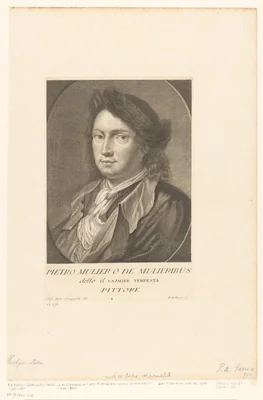
Pieter de Molijn
Pieter de Molijn (1605-1650), a significant yet often overlooked master of the Dutch Golden Age, occupied a crucial position in the rapid development of 17th-century landscape art. Although born in London and of Flemish ancestry, his entire active career established him firmly within the Haarlem school of painting and engraving. De Molijn was active during a transformative period when artists moved decisively away from Mannerist fantasy toward direct, naturalistic observation, focusing on the specific atmospheric qualities of the local Dutch environment.
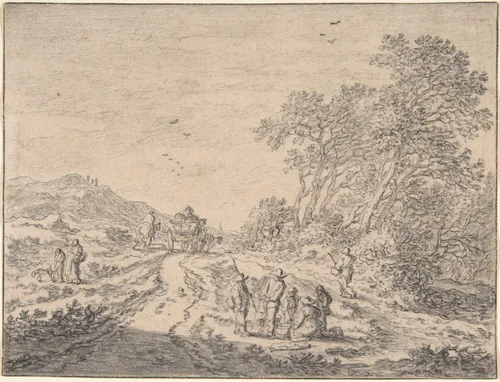
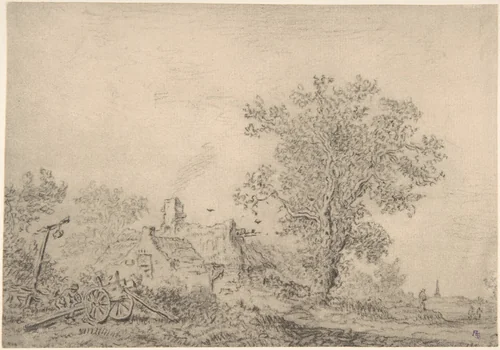
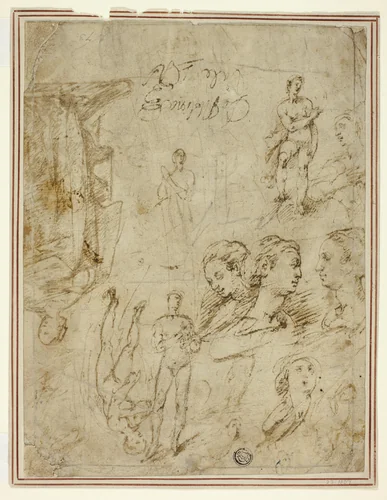
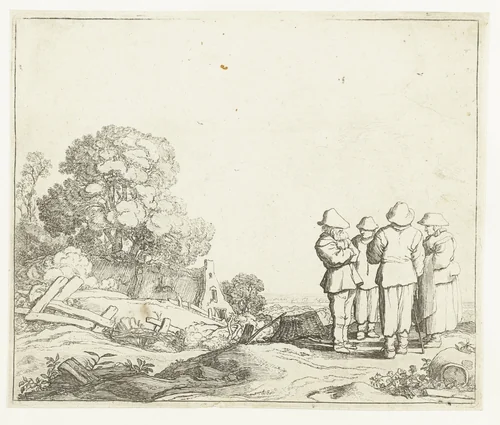
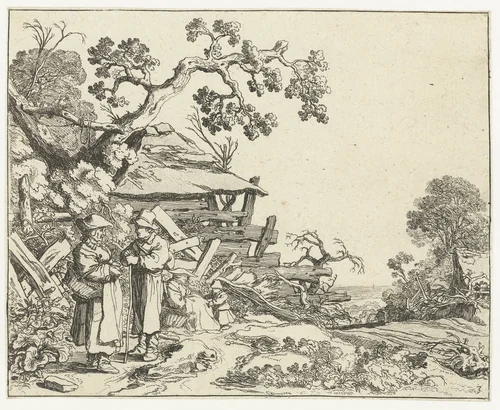
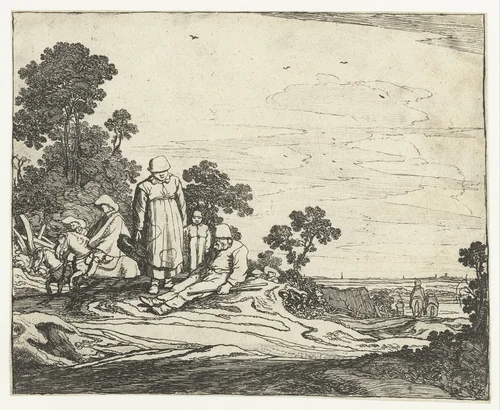
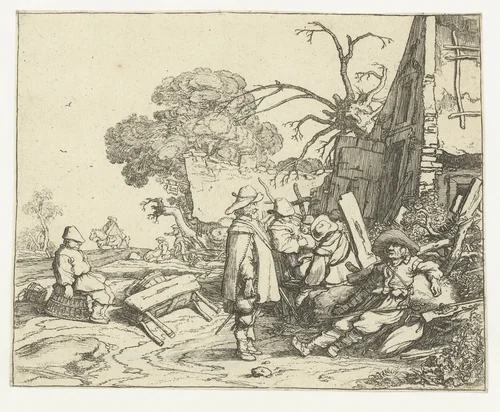
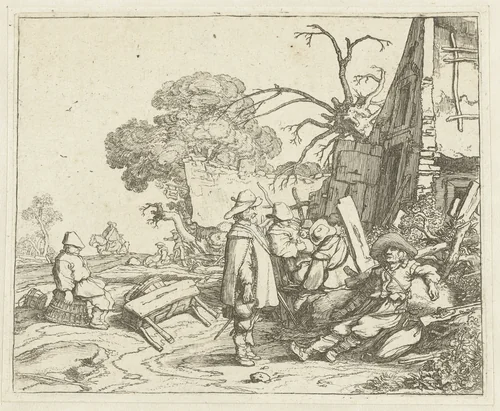
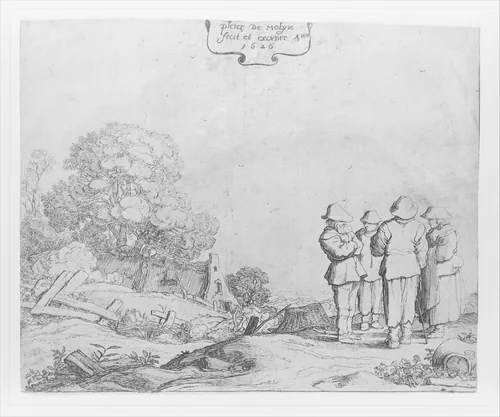
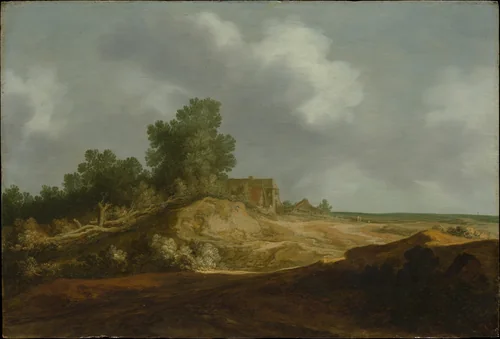
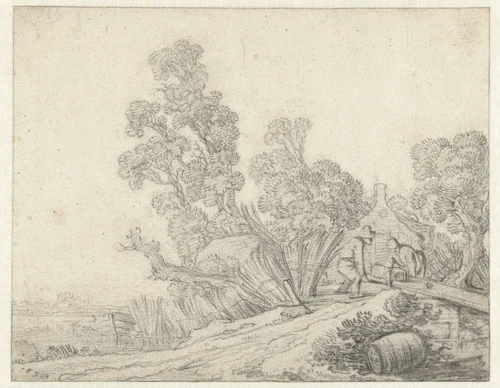
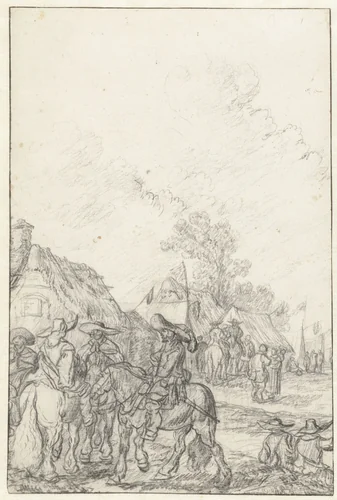
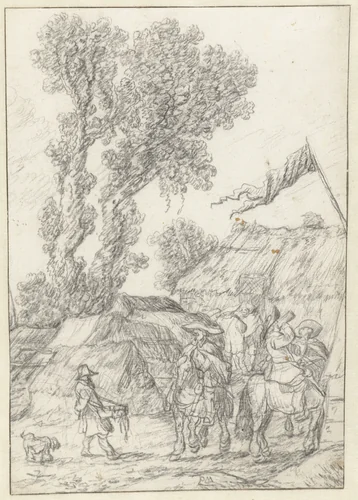
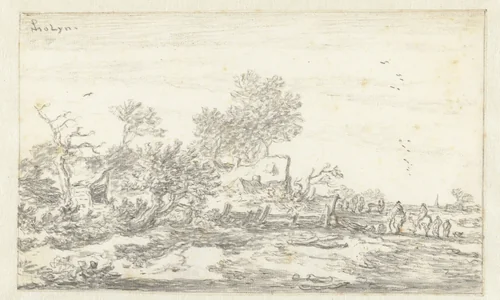
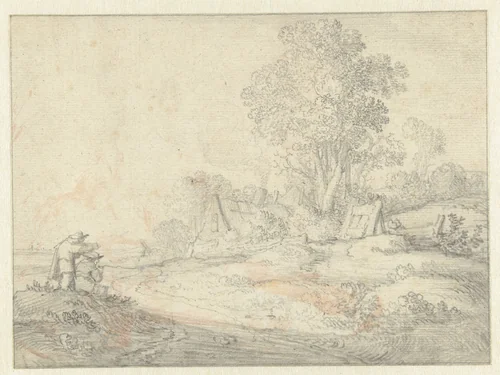
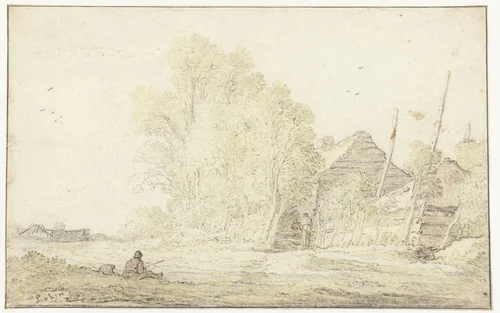
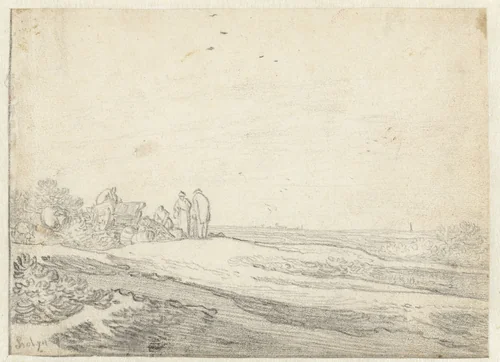
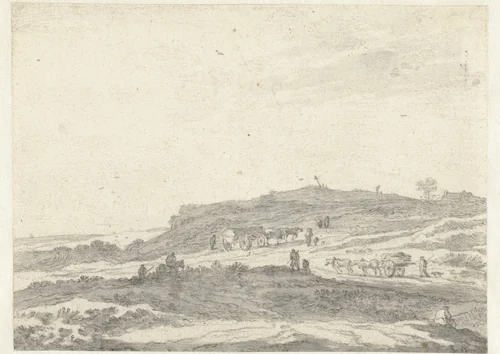
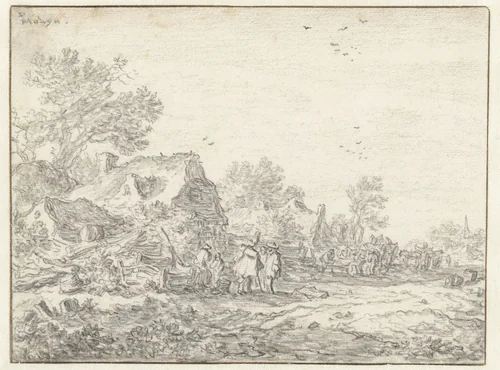
While recognized as a painter, his surviving oil works, such as the rare Landschap met drie boeren en een boerin, suggest his historical importance rests predominantly on his prolific output of graphic work. The small surviving corpus, consisting primarily of eight drawings and six prints, highlights his foundational contributions to the genre. De Molijn’s style is characterized by a restrained approach to detail, favoring tonal contrasts—subtly shifting values of light and shadow—to convey vast, heavy skies and deep pictorial space. Drawings like Landscape with cottages and a figure by a cart and the detailed studies in Sketches of Figures and Heads demonstrate a masterful economy of line, prioritizing the momentary experience of light over highly finished perfection.
De Molijn's work influenced a generation of tonal landscapists who sought to capture the understated beauty of the Dutch polder landscape. It is perhaps a subtle irony that an artist of English birth became so central to defining this quintessential Dutch genre during its Golden Age.
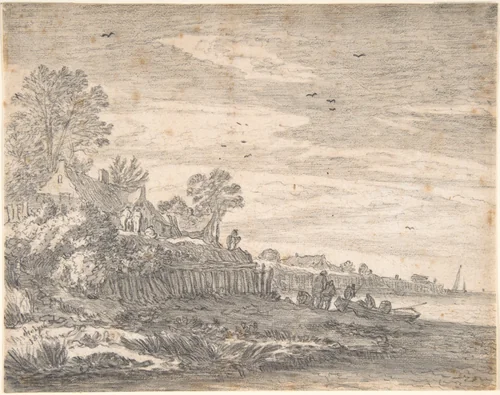
Though his paintings are few, the legacy of Pieter de Molijn prints is considerable, with museum-quality impressions held in leading institutions including the Rijksmuseum, the Metropolitan Museum of Art, and the Art Institute of Chicago. These works provide vital insight into the evolution of artistic realism. For contemporary scholarship and public appreciation, many of these historical assets, once strictly held in institutional archives, are now widely accessible. Today, high-quality prints of works like Village on an estuary, with a rowing boat on the shore are often available as downloadable artwork, ensuring his foundational role in Golden Age graphic arts remains highly visible and royalty-free for researchers globally.
Source: Wikipedia · CC BY-SA 4.0