Pieter Coecke van Aelst
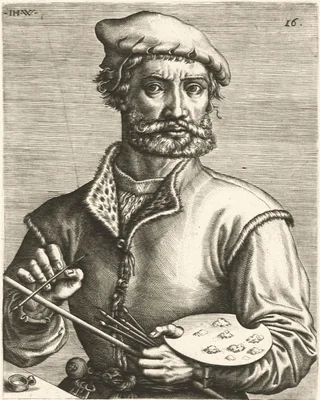
Pieter Coecke van Aelst (1512-1553) was one of the Northern Renaissance’s most prolific and versatile masters, a true polymath whose influence extended far beyond traditional painting. Operating primarily out of Antwerp and Brussels in the Duchy of Brabant, Coecke simultaneously functioned as a sculptor, architect, author, and comprehensive designer. His skill spanned an extraordinary range of media, encompassing everything from intricate goldsmith’s work and stained glass to monumental tapestries and complex woodcut series. This facility across multiple disciplines, combined with his authoritative studio practice, secured his prestigious appointment as court painter to Charles V, Holy Roman Emperor.
While Coecke’s principal output focused on large-scale Christian religious themes, such as the surviving panel painting Gevangenneming van Christus (The Capture of Christ), his most significant impact lay in his role as an entrepreneur of visual imagery. He masterfully created reproducible designs that could be executed by specialized artisans across Europe. His graphic output was critical for the dissemination of contemporary cultural knowledge and design standards.
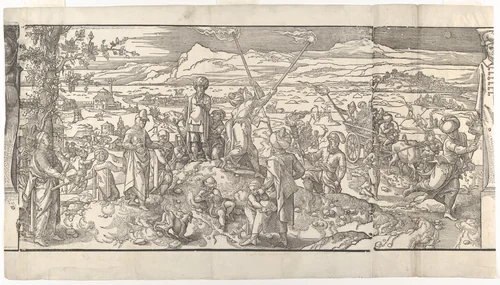
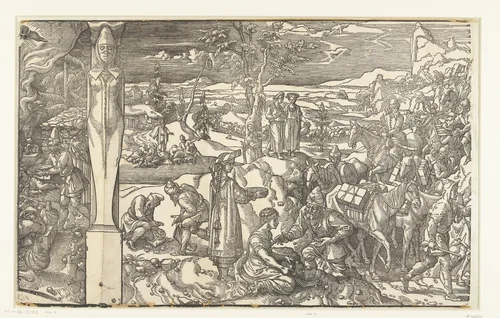
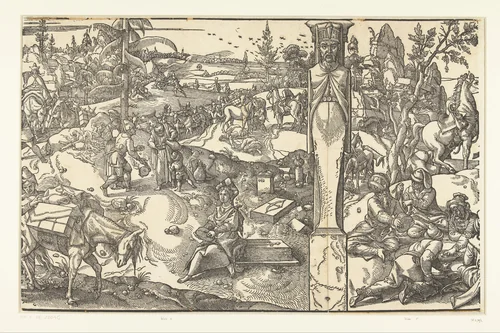
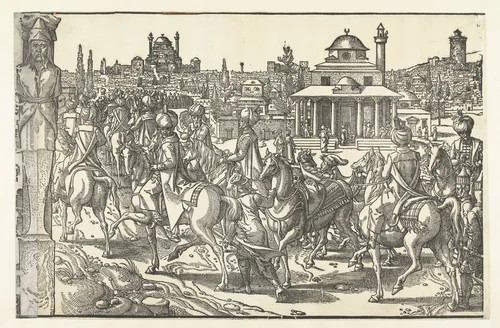
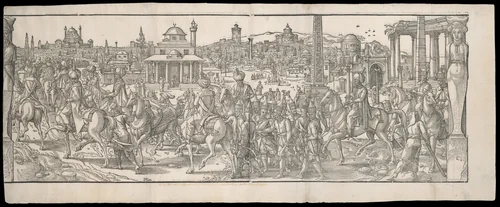
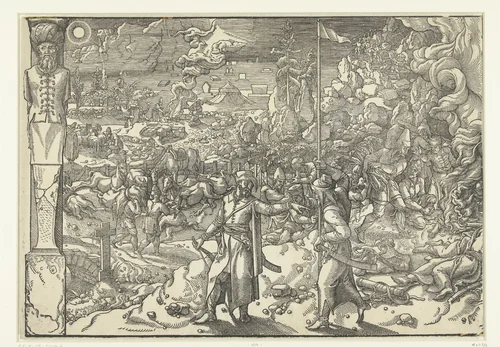
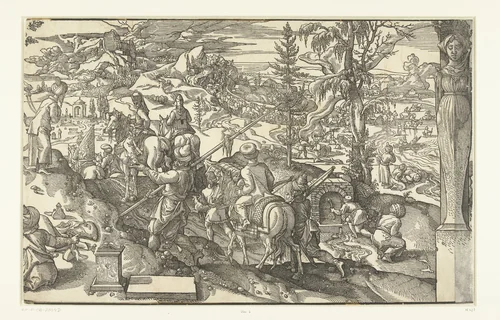
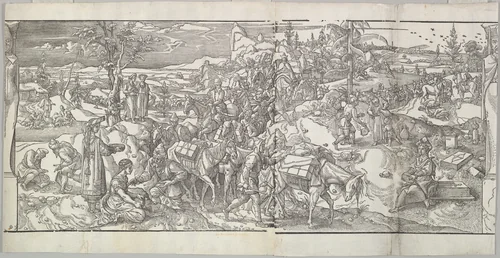
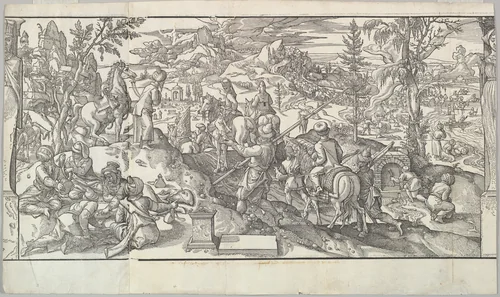
His most remarkable and revealing printed work is the woodcut series Ces Moeurs et fachons de faire de Turcz (Customs and Fashions of the Turks). For an artist whose career was steeped in Christian doctrine and imperial patronage, Coecke displayed a surprisingly open-minded curiosity regarding the Ottoman Empire, producing one of the most detailed and sophisticated visual records of Turkish culture available in the West during the era. Other substantial design works include large-scale narratives intended for weaving, such as the elaborate sequence illustrated in Agamemnon musters the Greek troops at Aulis from the “Story of Iphigenia.”
Today, the legacy of Pieter Coecke van Aelst endures not only in his surviving Pieter Coecke van Aelst paintings, but in the extensive collection of his preparatory drawings and prints. Institutions such as the Rijksmuseum and the Metropolitan Museum of Art hold key examples, including works like Minerva Leading a Procession of Women and The Jews Collecting the Twelve Stones from the River Jordan. Because much of his highly influential graphic output has entered the public domain, art enthusiasts worldwide can access and appreciate his unique style through downloadable artwork and high-quality prints, confirming his crucial role in establishing museum-quality design standards for succeeding generations of Flemish masters.
Source: Wikipedia · CC BY-SA 4.0