Pieter Claesz
Pieter Claesz stands as one of the most refined and influential Dutch Golden Age painters specializing in the still life genre. Active primarily in Haarlem between 1620 and 1636, Claesz was instrumental in developing the monochrome banketje, or small breakfast piece, a genre characterized by its simplicity, limited color palette, and acute focus on the physics of light. His works from this relatively brief period established the compositional standards for still life painting, influencing a generation of Haarlem artists, including his son, Nicolaes Berchem.
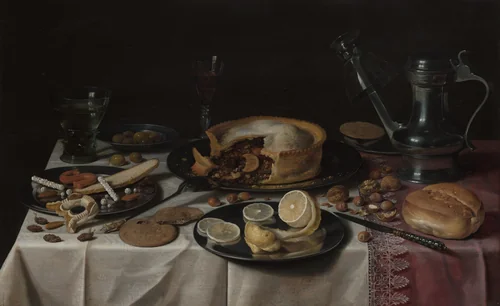
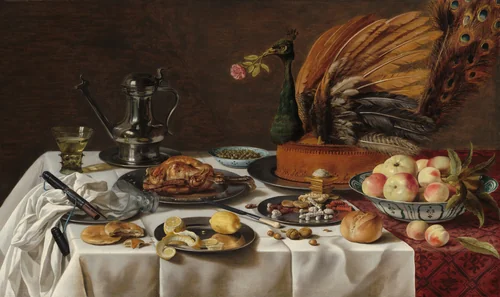
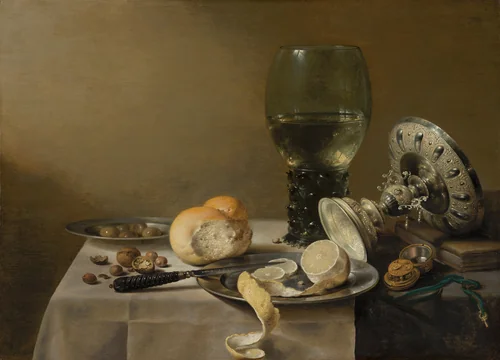
Claesz’s compositions are defined by elegant restraint, focusing not on lavish displays of wealth but on the subtle interaction between modest, everyday objects. He was a master of sensory texture, possessing a remarkable ability to transform items like pewter plates, overturned glass römers, or crinkled linen into compelling studies of light and shadow. His palette is almost always subdued, employing variations of brown, olive green, and silver-grey, which contributes to the profound sense of atmosphere achieved through sophisticated chiaroscuro effects. It is perhaps testament to the realism of his rendering that one can almost discern the precise acidity level of the lemon peel resting dramatically, half-unfurled, on a silver dish.
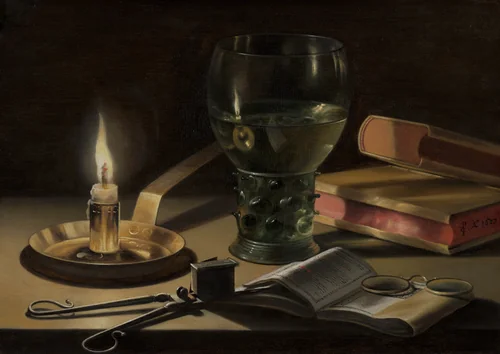
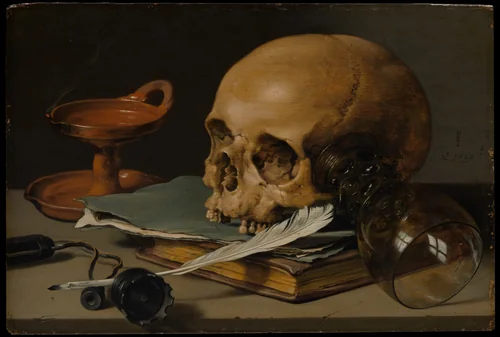
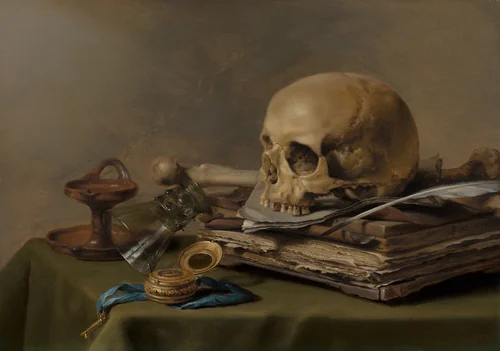
While famous for the intimate breakfast scene, Claesz was equally adept at moralizing subjects, using the still life format to explore the ephemeral nature of earthly existence through the vanitas tradition. Works such as Vanitas Still Life and Still Life with a Skull and a Writing Quill feature traditional iconography, including skulls, hourglasses, and extinguished candles, reminding the 17th-century viewer of mortality. The precise, fading illumination depicted in Still Life with Lighted Candle serves as a potent visual metaphor for life’s brevity.
Today, discerning collectors and museums value Pieter Claesz paintings for their technical precision and historical importance. His meticulous artistry shaped the trajectory of the genre in the Northern Netherlands for decades. His celebrated compositions, foundational to the understanding of Dutch realism, remain cornerstones of major institutions worldwide, including the Mauritshuis, the National Gallery of Art, and the Art Institute of Chicago. Many of his significant compositions, now in the public domain, are accessible to scholars and enthusiasts globally, ensuring that demand for high-quality prints of his work remains consistently high.
Source: Wikipedia · CC BY-SA 4.0