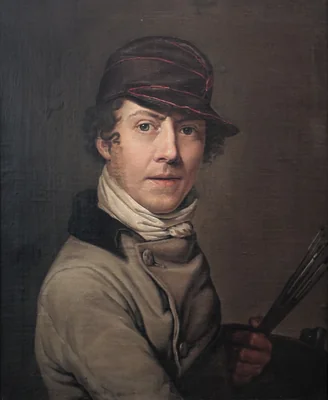
Pieter Christoffel Wonder
Pieter Christoffel Wonder (active 1812-1832) was a Dutch painter whose professional life was largely spent working within the flourishing cultural sphere of England. Though the documented period of his career was relatively concise, spanning approximately two decades, his significance is confirmed by the placement of his limited yet compelling oeuvre in major institutional collections, including the Metropolitan Museum of Art and the Cleveland Museum of Art.
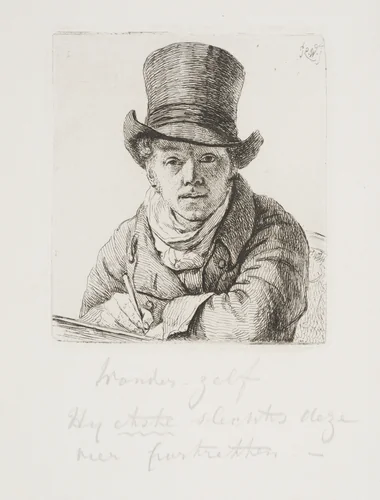
Wonder specialized in portraiture, working during a period of significant transition in British visual culture that bridged the late Regency era and the beginnings of the Victorian aesthetic. His methodology reflects a commitment to the meticulous realism and precise draftsmanship characteristic of early nineteenth-century European academic training. His known body of work, comprising four paintings and two prints, offers distinct character studies and documented likenesses.
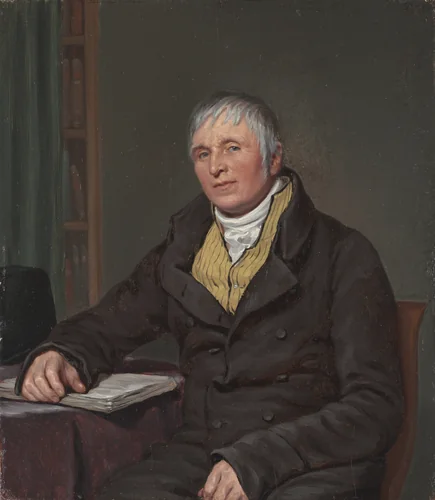
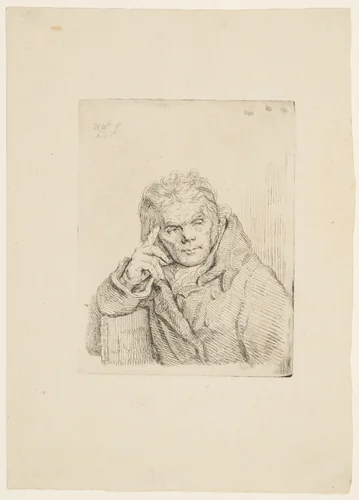
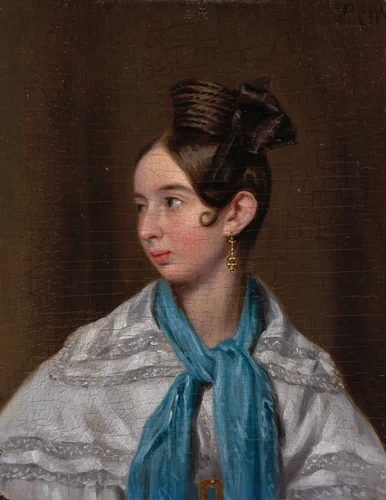
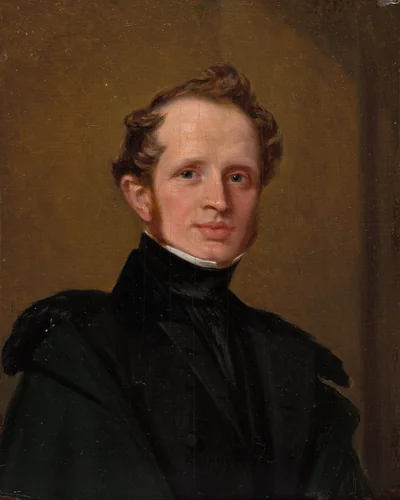
Among his celebrated works, the intensity of the gaze captured in the Self-Portrait establishes an immediate, intimate connection with the viewer, providing a rare glimpse of the artist outside the requirements of a commission. This sense of detailed observation is equally present in formal portraits such as Charles Thompson, and in the sensitive rendering of the family commissions, including Elisa Pearson Playter and Henry Francis Playter. Perhaps his most visually textured study, An old man in a fur coat sitting on a chair, exemplifies Wonder’s mastery in depicting fabric and shadow, transforming a simple domestic study into a powerful exploration of age and dignity.
It remains a minor curiosity that this Dutch painter, highly active in London, found his most enduring institutional legacy across the Atlantic in American collections. His precision ensures that Pieter Christoffel Wonder paintings are valued not only for their artistic merit but also for their fidelity as historical records. As many of these important historical works are now considered part of the public domain, the potential for broader academic study and appreciation increases. Scholars and enthusiasts can easily access high-quality prints and downloadable artwork derived from these primary sources, furthering the reach of this dedicated, yet briefly documented, portraitist.
Source: Wikipedia · CC BY-SA 4.0
![Mrs. Pearson [possibly Sarah Thompson Pearson] by Pieter Christoffel Wonder, painting, 1832-1842](https://img.artbee.org/718798e3-d3e0-438e-ba61-f8b5b001e0da/small.webp)