Pieter Aertsen
Pieter Aertsen (c. 1508-1575) holds a seminal position in Netherlandish painting, recognized primarily as the inventor of the monumental genre scene. Working within the dramatic and sometimes overtly complex compositional language of Northern Mannerism, Aertsen fundamentally shifted the traditional hierarchy of subject matter, providing a crucial bridge between early Renaissance painting and the burgeoning specialization of the Dutch Golden Age. His prolific career saw him actively engaged in both his native Amsterdam and Antwerp, the era's undisputed center of artistic commerce and innovation.
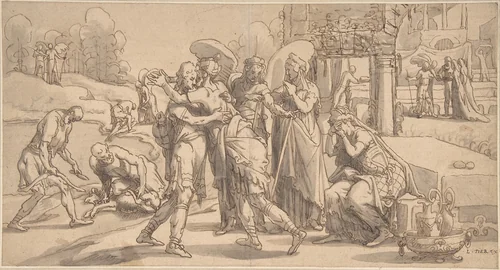
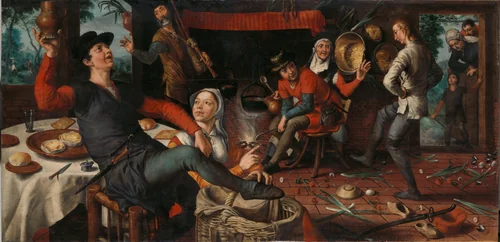
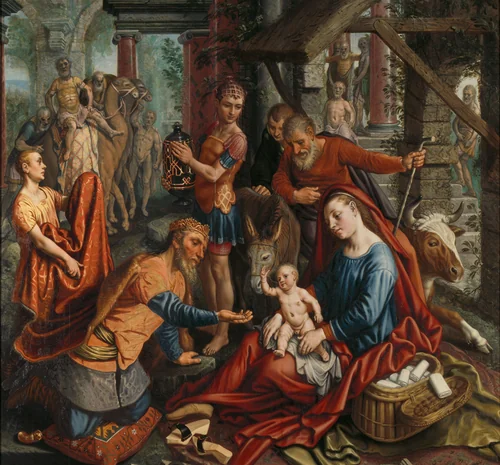
Aertsen’s true innovation lies in his strategic merging of genres. His large-scale paintings feature detailed still life elements and robust genre figures, often dominating the foreground with astonishing clarity and scale. Masterpieces such as The Egg Dance demonstrate a commitment to textural realism in the depiction of foodstuffs, domestic implements, and the physical vitality of common laborers. Crucially, these secular arrangements operate as sophisticated visual inversions; the religious narrative, such as the biblical context referenced in Raguel's Reception of Tobias at Ecbatana or The Adoration of the Magi, is relegated to a distant corner or rendered in smaller scale. This strategic placement required viewers to actively seek out the sacred context, while the abundant, worldly objects commanded immediate attention. This compositional device proved extraordinarily influential for succeeding generations of genre specialists in the Low Countries.
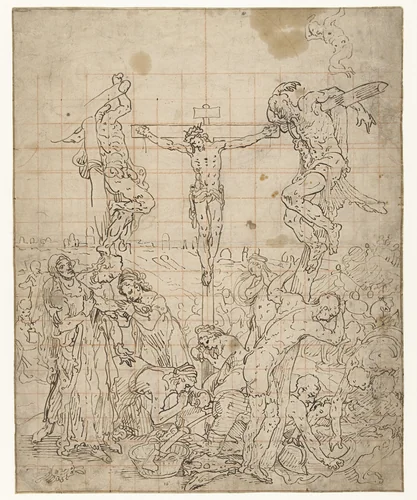
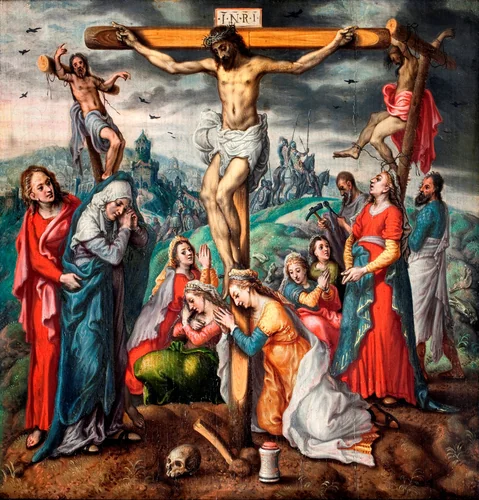
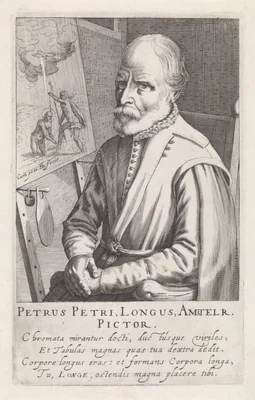
Though his name is often cited for this pioneering integration of the mundane, Aertsen maintained a broad scope, executing traditional religious panels like The Crucifixion alongside his experimental genre work. A subtle personality element exists in his contemporary moniker: Aertsen was widely known as Lange Piet (Tall Piet) due to his imposing physical height, an understated observation that grounds the towering figure in the historical record.
Today, Aertsen's works are essential components of major global collections, including the Mauritshuis, the Rijksmuseum, and the Metropolitan Museum of Art. His enduring legacy ensures that original Pieter Aertsen paintings remain fixtures of museum-quality exhibitions worldwide. Fortunately, many of his historically significant drawings and paintings are now in the public domain, providing researchers and art enthusiasts with access to downloadable artwork and high-quality prints for continued study and appreciation.
Source: Wikipedia · CC BY-SA 4.0