Piet Verhaert
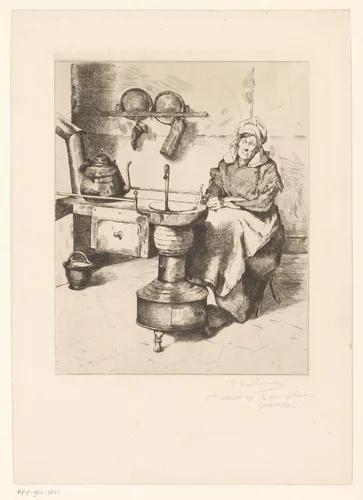
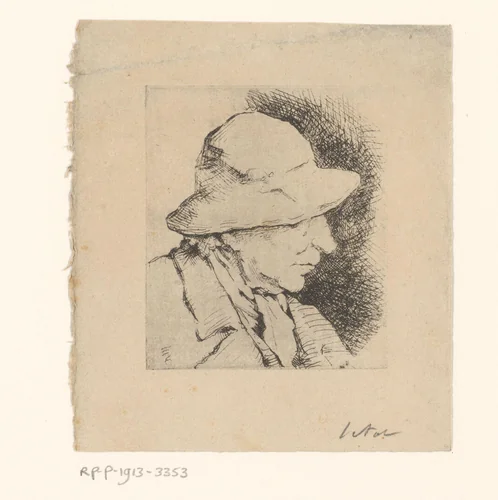
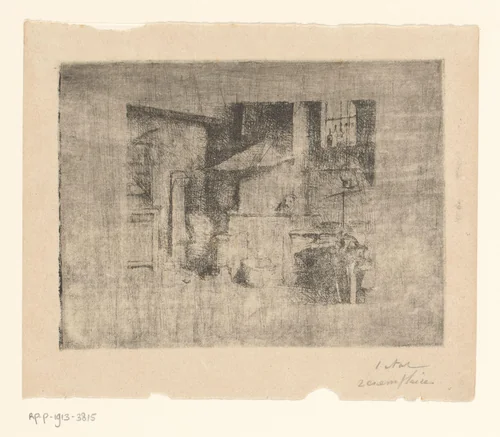
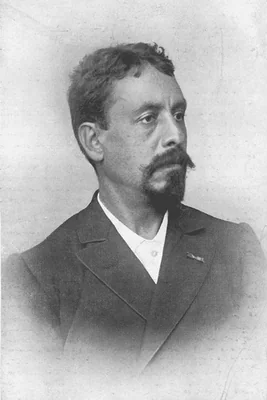
Piet Verhaert (1862-1880) was a crucial Belgian figure whose career exemplified the tensions and eventual synthesis between established Academic tradition and the burgeoning modern sensibilities of the late 19th century. Primarily known as a skilled painter and meticulous etcher, his extensive oeuvre encompassed intimate genre scenes, evocative cityscapes, detailed interiors, and observant figure studies. Verhaert’s technical mastery of printmaking, particularly etching, cemented his legacy, evidenced by works such as Vrouw warmt haar voeten bij een kachel in de keuken and the insightful study Hoofd van een man met hoed, holdings which are preserved in significant institutions like the Rijksmuseum.
Verhaert occupied a paradoxical position within the Belgian art infrastructure. While he served as a teacher at the highly traditional Academy of Antwerp, shaping the practices of the next generation, he simultaneously advocated for revolutionary artistic freedom. This deep dissatisfaction with the conservative jury systems and restrictive selection policies governing the official academic salons propelled him into action. He was a foundational member of several crucial avant-garde associations, including De XIII and the notoriously influential Les XX (The Twenty). These organizations deliberately sought to bypass state control and provided necessary, progressive exhibition platforms for artists exploring techniques and subject matter previously excluded by the establishment.
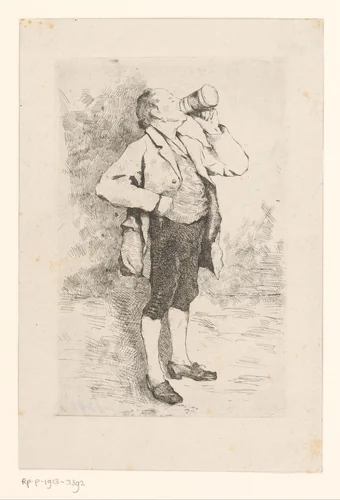
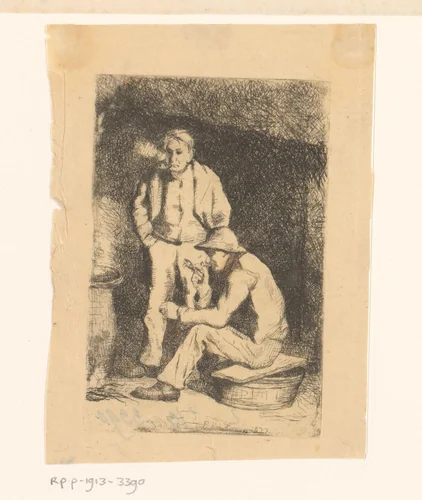
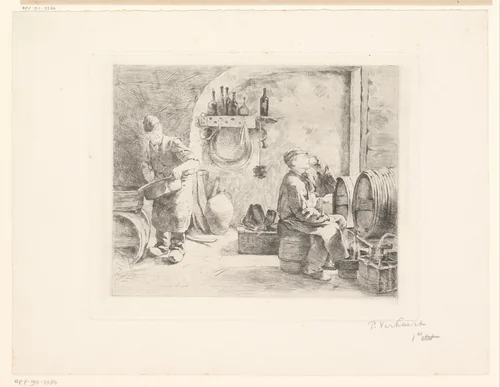
His ambition extended beyond the realm of fine art. Verhaert was also an accomplished designer of decorative panels, reflecting the period's growing interest in integrating art into domestic and commercial environments. However, it is his genre studies, often focused on unvarnished daily life, that remain the most compelling. Prints like Drinkende man and Twee rokende mannen function as perceptive social documents, prioritizing the subtle dramas found in taverns and workshops. While his active professional period was brief, the dedication to high-quality prints and drawing ensures his continuous relevance. Today, much of his visual output is now available in the public domain, allowing scholars worldwide to examine the minute details of these museum-quality observations, proving that even the fleeting moments of ordinary Belgian life, when observed sharply, possess enduring visual weight.
Source: Wikipedia · CC BY-SA 4.0