Pierre Soulages
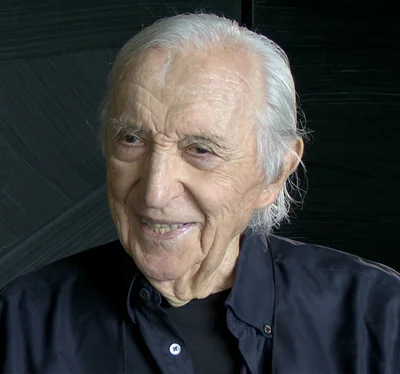
Pierre Jean Louis Germain Soulages (1919-2022) established himself as one of the definitive French masters of postwar abstraction, committed to a rigorous and profound exploration of the color black. He achieved such international critical prominence that, in 2014, French President François Hollande declared him "the world's greatest living artist." While his career spanned eight decades and encompassed sculpture and graphic work, his painting output between 1955 and 1980 cemented his historical significance and defined his relentless inquiry into material texture and light reflection.
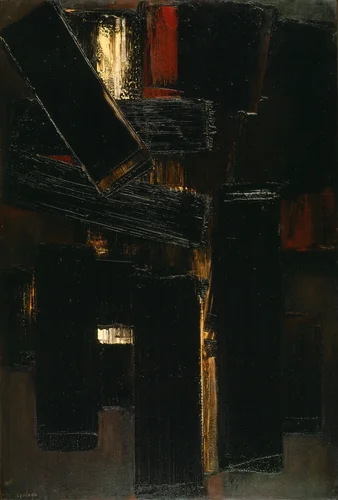
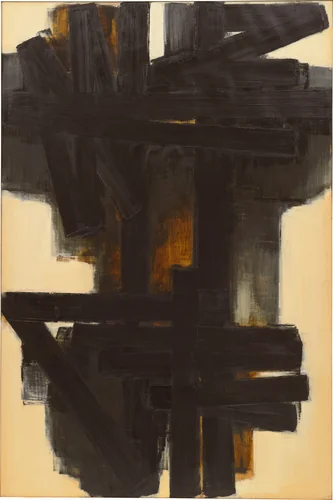
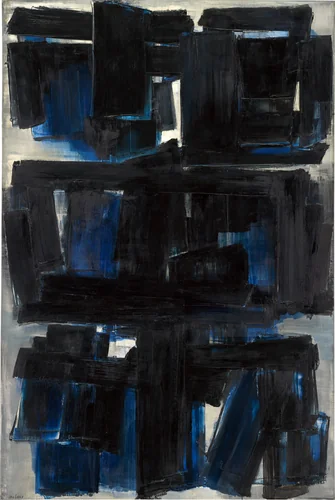
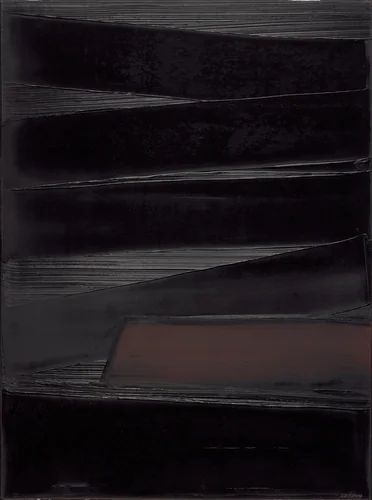
The mid-1950s marked a particularly focused period, producing key canvases now housed in major collections, including the National Gallery of Art. Works such as Peinture 130 x 89 cm, 6 mars 1955 and Peinture 195 x 130 cm, 30 octobre 1957 exemplify his rejection of traditional color theory. Soulages treated black not as an absence of light, but as a source of energy, using it to structure and reflect ambient illumination. He applied thick impasto strokes, often scoring and scraping the surface with custom tools, thereby turning the pigment into a dynamic surface that caught light along its ridges and valleys. This technique provided a unique optical dimension to Pierre Soulages paintings, transforming monolithic fields into experiences of pure reflectivity.
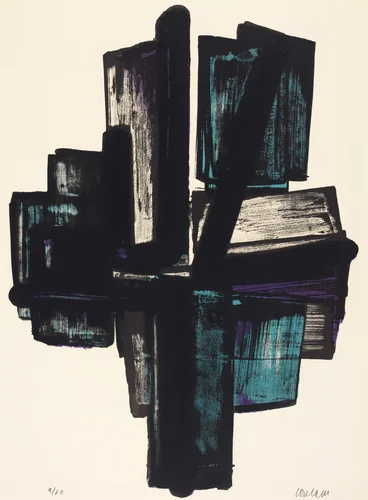
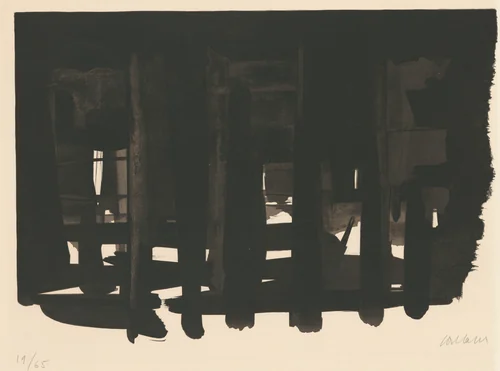
His conceptual rigor translated effectively to other media. His work as a printmaker resulted in significant pieces such as Lithograph no. 4 and Lithographie No. 16, where the same textural and light-management concerns were adapted through the precision of stone and ink. Although the visual language of Soulages is often intensely austere, centered almost exclusively on the infinite variations achievable within black, his professional reception was exceptionally warm and enduring.
Soulages’s legacy extends across the globe, with his artworks held by leading museums. The ultimate measure of his status resides in the Musée Soulages in his native Rodez, a museum dedicated solely to his oeuvre. For scholars and collectors alike, his artistic language remains widely accessible; select early works are now available as high-quality prints through various public and private collections, ensuring the continued study of this monumental figure in twentieth-century art.
Source: Wikipedia · CC BY-SA 4.0