Pierre Rousseau
Pierre Rousseau (Pierre Jean-Baptiste Rousseau) stands as a fascinating, if sometimes elusive, figure operating deliberately at the intersection of Enlightenment philosophy and practical aesthetics in late 18th-century France. While primarily recognized by contemporaries as an essayist, astronomer, and insightful journalist, Rousseau brought the same disciplined inquiry he applied to epistemological theory directly into his visual practice. This unusual duality reflects the era’s ambitious push to unify empirical observation and scientific precision with established artistic interpretation, positioning Rousseau as a crucial polymath during the volatile years preceding the Revolution.
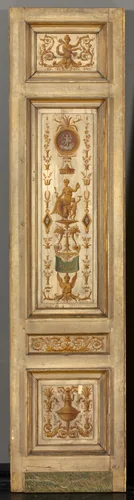
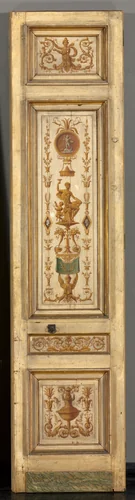
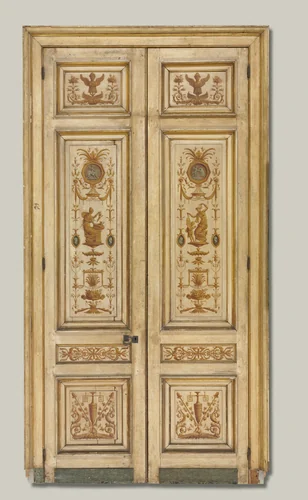
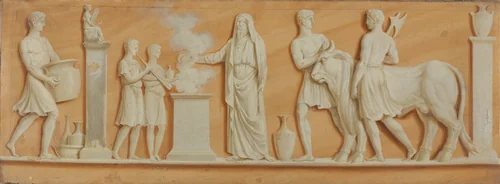
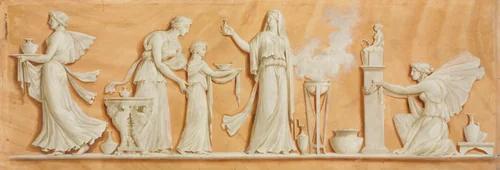
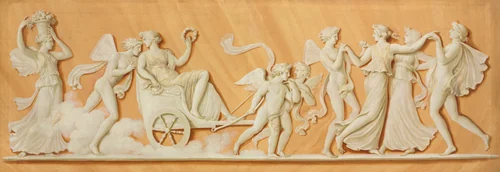
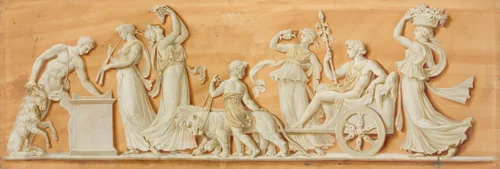
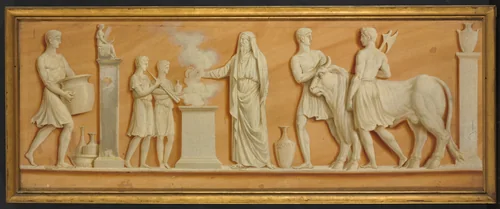
Rousseau’s focused artistic output, dating predominantly to the 1790s, consists of approximately fifteen recorded works, the majority of which are significant Decorative Panels. These works, often executed on a scale appropriate for grand domestic or public architecture, reveal a sophisticated understanding of classical motifs coupled with the emergent structural clarity of the Neoclassical style. The panels are less narrative than they are architecturally supportive, serving as refined visual complements to highly structured interior design schemes.
That such a forceful advocate for fundamental scientific research managed to produce delicate, high-quality prints suitable for discerning Parisian salons offers a subtle but compelling observation regarding the necessary flexibility of a public intellectual’s income. The rigorous attention to symmetry and proportion evident in his visual works mirrors his intellectual dedication to promoting hard science to a broader populace, an endeavor he strongly advocated for during the period of "post-war disenchantment."
The presence of several of these major compositions in significant institutional holdings, including the Cleveland Museum of Art, secures his position as a key contributor to the transitional decorative arts. Through their systematic execution, these Pierre Rousseau paintings demonstrate the late 18th-century faith in reason as the foundation for artistic beauty. Today, the structural clarity evident in Rousseau’s design vocabulary remains a valuable object of study. A portion of his oeuvre now resides in the public domain, making downloadable artwork and royalty-free images widely accessible for researchers and enthusiasts seeking museum-quality reproductions of his work.