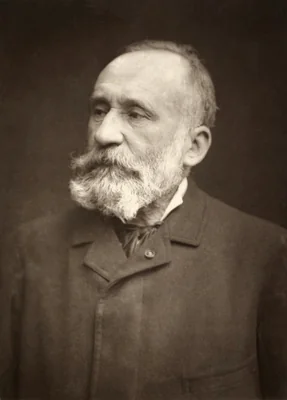
Pierre Puvis de Chavannes
Pierre Puvis de Chavannes was the paramount French decorative painter of the late nineteenth century, a figure who fundamentally shaped the trajectory of modern mural art. Often lauded as "the painter for France," he redefined the role of public art during the formative years of the early Third Republic. His enduring significance rests on his ability to synthesize classical composition and allegorical weight with a modernist restraint, resulting in compositions that feel timeless yet strikingly innovative.
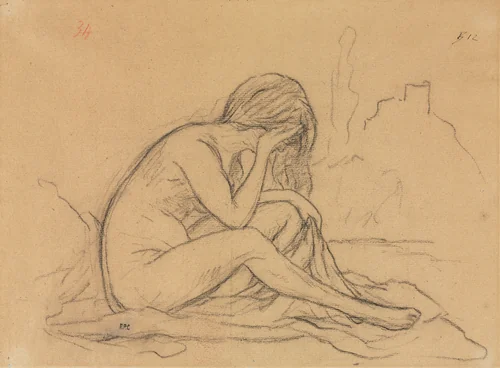
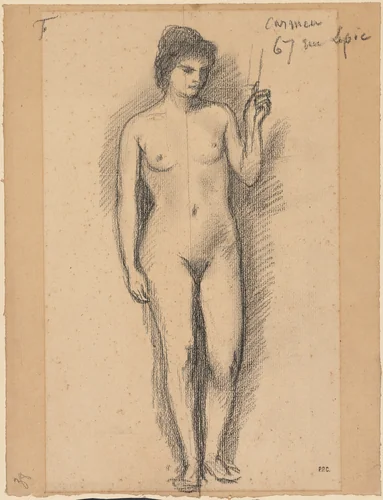
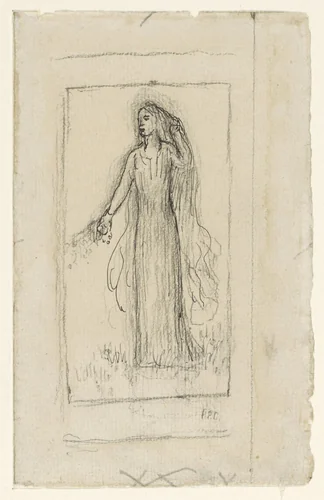
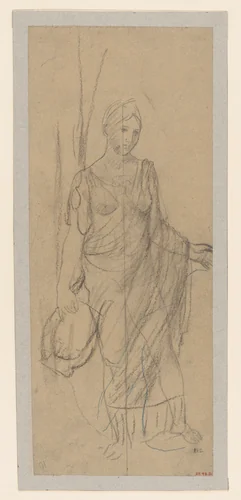
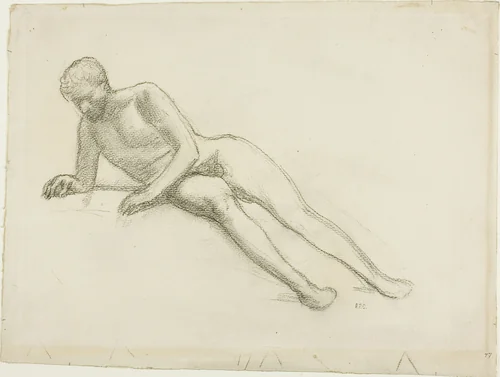
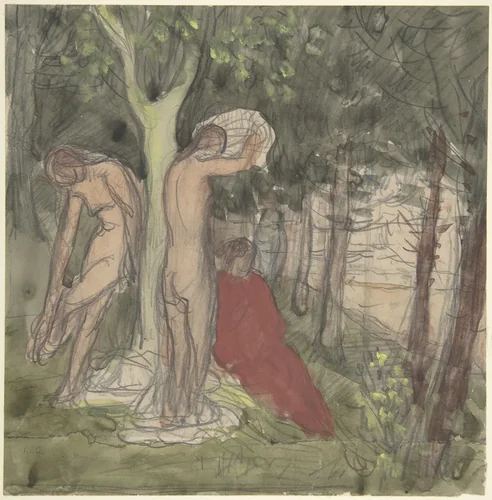
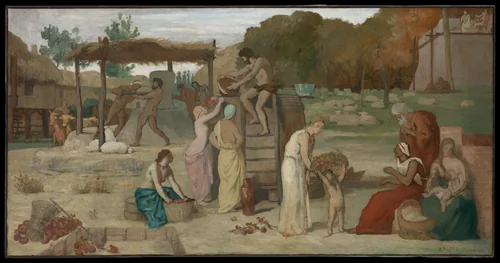
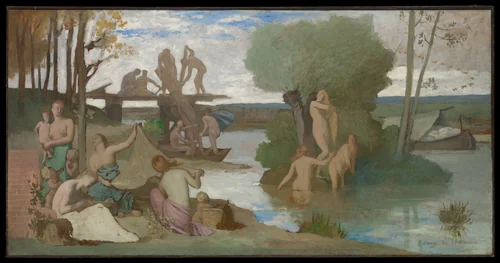
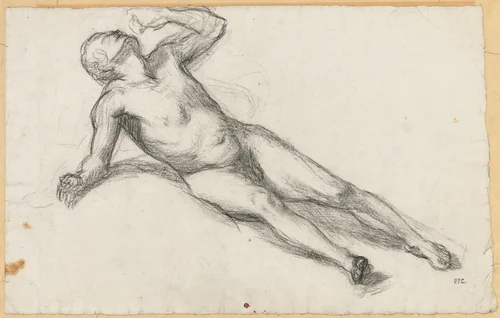
Puvis’s signature style utilized flat planes, deliberately restrained color palettes, and frieze-like arrangements of figures. This approach provided a clear, contemplative contrast to the detailed realism and chromatic intensity of his contemporaries. His massive commissioned works, found in institutions like the Panthéon and the Sorbonne, emphasized synthesis and repose, prioritizing symbolic communication over narrative detail. This aesthetic, visible even in works on paper like the Study of a Female Nude (possibly for an unrealized allegorical painting), was highly influential, serving as a critical bridge to subsequent movements like Symbolism.
The artist's impact extended far beyond his monumental canvases. He was a major institutional player in the Parisian art world, notably co-founding and serving as the first president of the Société Nationale des Beaux-Arts. It is a subtle but interesting observation that an artist whose vision was so deeply defined by serene, mythic quietude was also such a powerful and active force in challenging the conservative establishment.
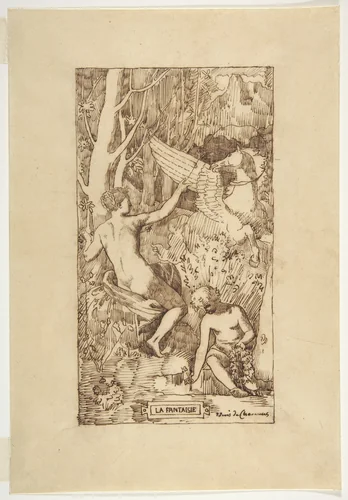
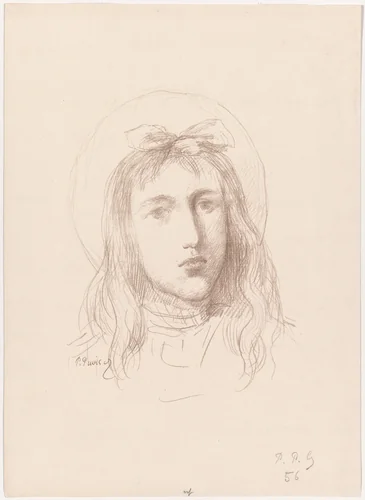
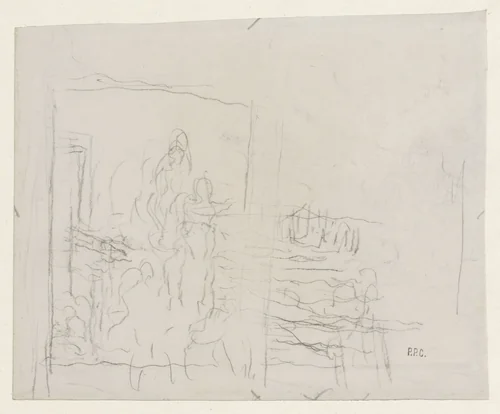
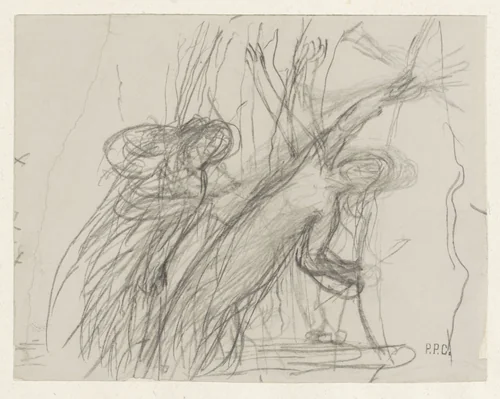
Puvis de Chavannes’s stylistic innovations resonated across disciplines; he provided guidance to medallists and was a direct source of inspiration for younger artists, including Robert Genin. The critic Émile Zola admired the intellectual rigor beneath the tranquility, famously describing the artist’s output as "an art made of reason, passion, and will." Today, his rigorous mastery of form is evident in the many Pierre Puvis de Chavannes prints and studies housed in leading collections such as the Cleveland Museum of Art and the Metropolitan Museum of Art. Much of this extensive body of work is now in the public domain, enabling the widespread study of his legacy through high-quality prints and downloadable artwork.
Source: Wikipedia · CC BY-SA 4.0