Pierre Philippe Choffard
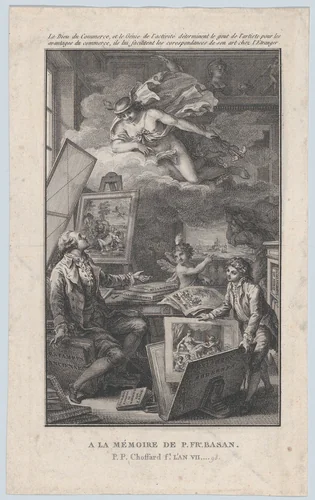
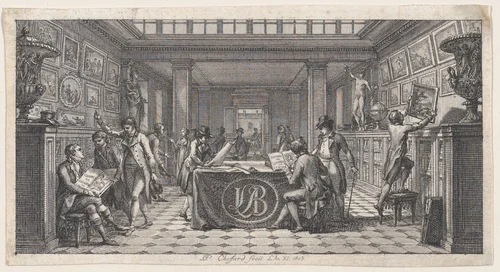
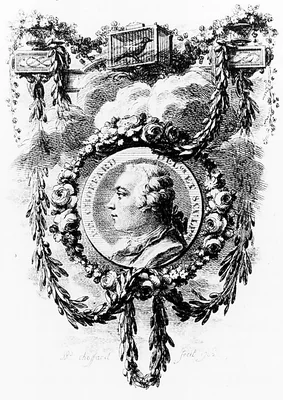
Pierre Philippe Choffard (1730–1772) was a highly accomplished French draughtsman and engraver whose career spanned the transition from the elaborate Rococo style toward the disciplined clarity of Neoclassicism. Active for over four decades, Choffard cemented his reputation by specializing in highly detailed etched and engraved illustrations for Parisian publishing houses. His precision and command of the burin were essential to his success, transforming what were often commercial commissions into enduring works of technical and artistic merit. His relatively short life resulted in a focused, powerful portfolio of work, preserved today in major institutional collections, including the Metropolitan Museum of Art and the National Gallery of Art.
Choffard’s surviving oeuvre demonstrates a remarkable versatility and consistent adherence to refined detail. He excelled both in historical portraiture and in creating sophisticated decorative components crucial for high-end book illustration. Among his noted works are the elegant depictions of French monarchs, including the Portrait of Henry IV, the Portrait of Louis XIII, and the Portrait of Louis XIV, all executed with a formal dignity befitting the historical subjects. Conversely, his capacity for lighter decorative motifs is evident in works such as A Cartouche with Theater Masks, which captures the playful sensibility required by late 18th-century Parisian patrons.
The medium of engraving allowed Choffard to wield considerable, if understated, influence over the dissemination of contemporary literature and popular history. He often faced the technical challenge of managing complex narrative demands within a highly compressed visual frame, a task he performed with consistent success. For example, he created the Frontispiece, from Bussy-Rabutin's "Histoire amoureuse des Gaules," illustrating a notoriously scandalous chronicle of court life. Choffard handled the inherently dramatic subject matter with professional coolness, rendering the controversial scene with precise, museum-quality craftsmanship—a pragmatic approach that perhaps summarizes his artistic outlook.
Though known primarily through his meticulously rendered prints, Choffard’s enduring legacy rests on his consistent delivery of technically superb images that defined the standards of the era. His commitment to detail means that modern researchers and enthusiasts can still appreciate the artistry of his hand. Today, many of his high-quality prints are accessible to scholars and the public through the public domain, securing Choffard's position not only as a successful 18th-century artisan but also as an accessible master of the French engraving tradition.
Source: Wikipedia · CC BY-SA 4.0
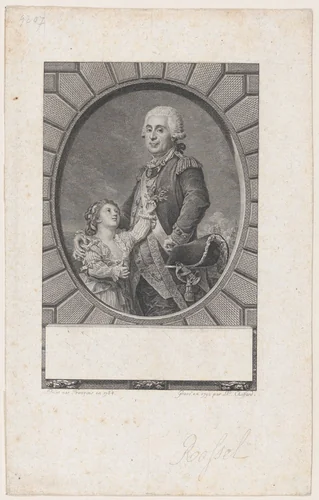
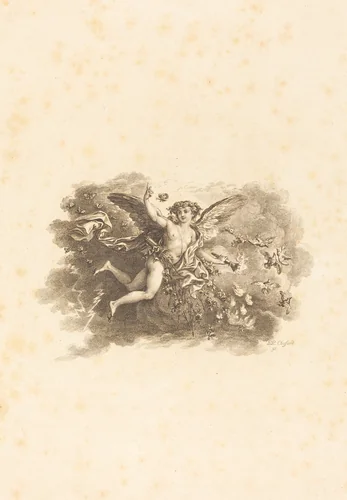
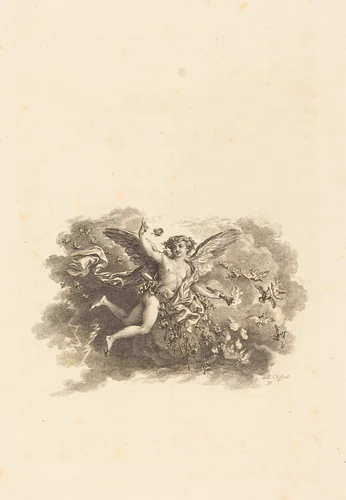
![In Memory of P. FR. Basan [for the catalogue of the collection of P.-F. Basan] by Pierre Philippe Choffard, print, 1798](https://img.artbee.org/2c93e641-d8f1-456a-a7ea-97b7106890e1/small.webp)