Pierre Moreau
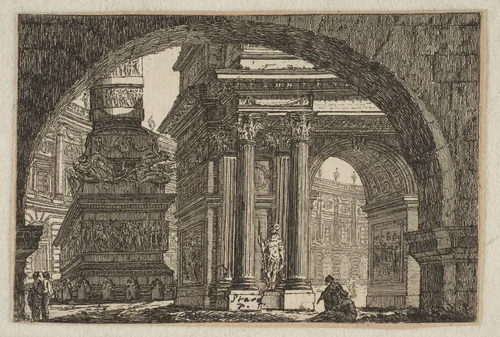
Pierre Moreau (1682-1755) remains a profoundly influential figure in the history of European graphic arts, a master draftsman and etcher whose legacy is preserved in the collections of institutions such as the Metropolitan Museum of Art and the National Gallery of Art. Active during the first half of the eighteenth century, Moreau specialized almost exclusively in the capriccio: highly imaginative architectural compositions that defy topographical reality. His work sits squarely within the tradition of sophisticated printmaking that flourished in Italy and France, pushing the boundaries of perspective study and dramatic staging.
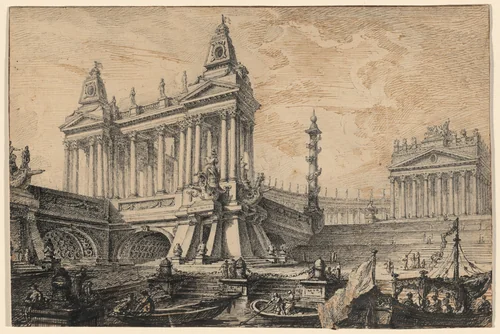
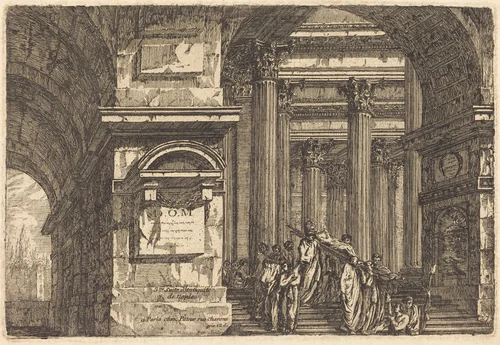
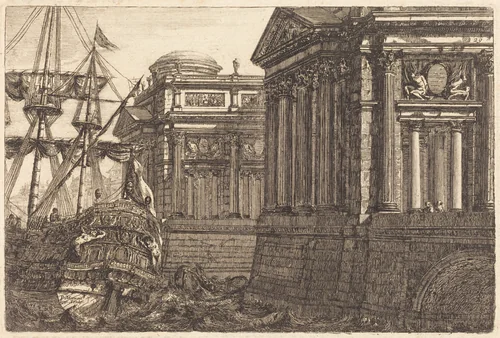
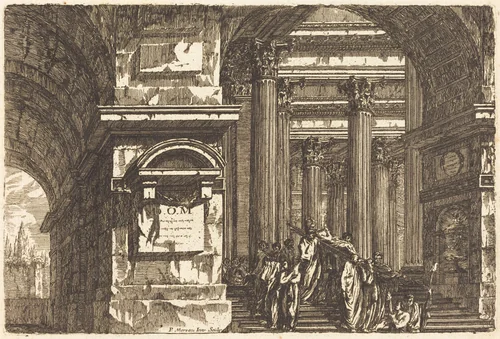
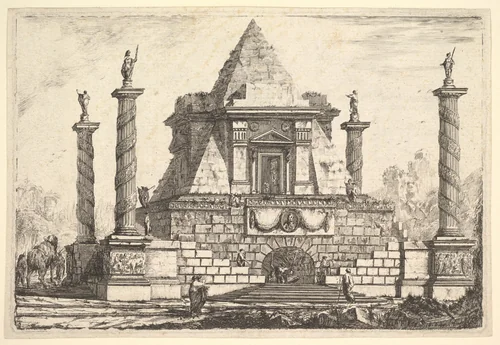
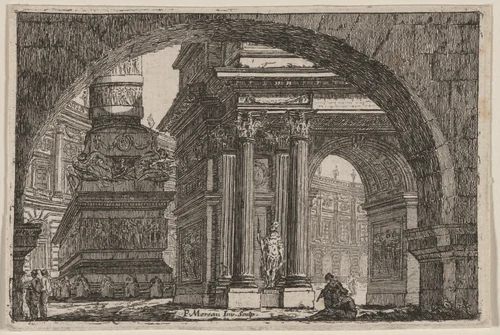
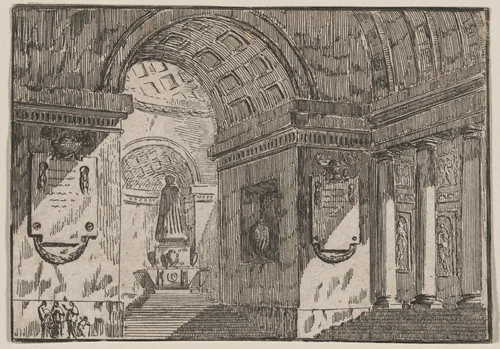
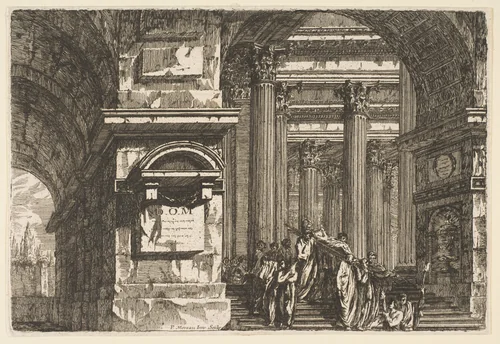
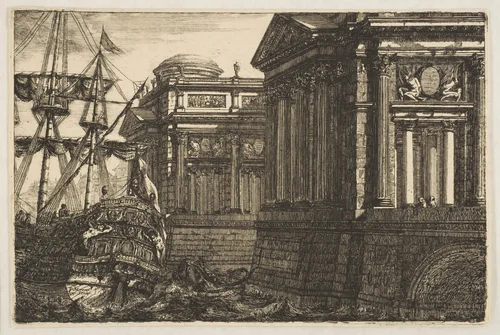
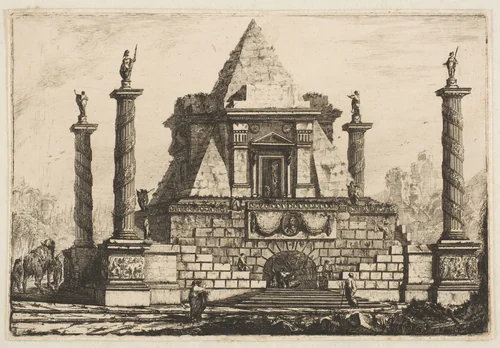
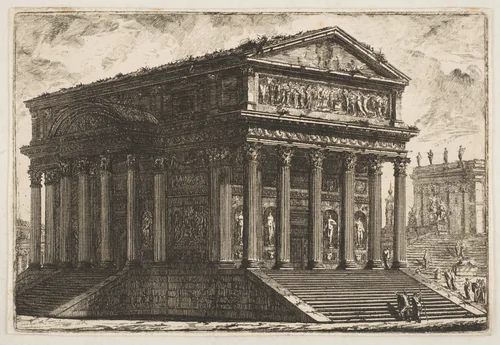
Moreau’s existing oeuvre, consisting of approximately ten prints and five detailed drawings, demonstrates a consistent preoccupation with the monumental and the ruined. Unlike artists who documented existing structures, Moreau’s primary objective was the invention of space. Works such as Architectural Fantasy of a Magnificent Ancient Port and The Entrance of a Temple are meticulous studies in light and shadow, using intricate cross-hatching to create a sense of overwhelming scale and atmospheric depth. These scenes are less concerned with history than with the mood created by the conjunction of human figures dwarfed by colossal, decaying structures.
He was clearly conversant with earlier generations of printmakers, often utilizing established motifs but investing them with a sense of theatrical grandeur characteristic of the high Baroque period. His homage, Imaginary Architecture with Camel and Figures, after Della Bella, confirms his engagement with the established lineage of Italian vedutisti while simultaneously establishing his own distinct voice. Moreau possessed a specific, almost perverse, interest in complexity; he seemed determined to render the most intricate possible structure within a single plate. His refusal to depict simple, existing buildings, preferring instead to craft increasingly elaborate and impossible spaces, suggests a deliberate and rather witty resistance to the practical constraints of his own time.
The enduring technical quality of Moreau’s graphic output confirms his status as a museum-quality artist. His detailed, highly finished compositions were widely circulated, ensuring that Moreau’s prints significantly shaped contemporary ideas regarding classical antiquity and romantic decay. Today, much of this foundational material, including the original etched plates and early impressions of Pierre Moreau prints, now resides securely in the public domain, offering accessible, high-quality prints for scholars and enthusiasts globally.
Source: Wikipedia · CC BY-SA 4.0