Pierre Mignard
Pierre Mignard (1620-1679), often designated Mignard I and known during his lifetime as "Mignard le Romain," stands as a distinguished figure in 17th-century French Baroque art. Operating during a period of intense institutionalization of the arts in France, Mignard specialized in grand religious and mythological narrative scenes, alongside elegant, psychologically perceptive portraiture. His significant output during this era solidified his position among the foremost painters competing for high-level court and ecclesiastical patronage.
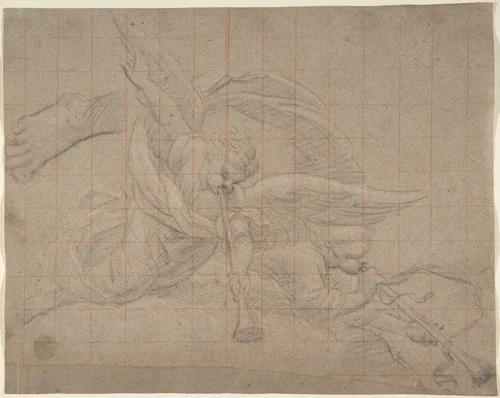
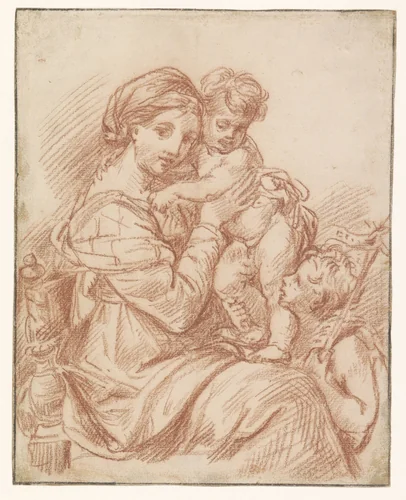
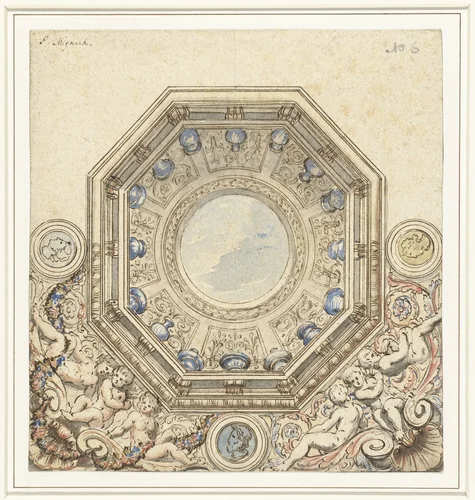
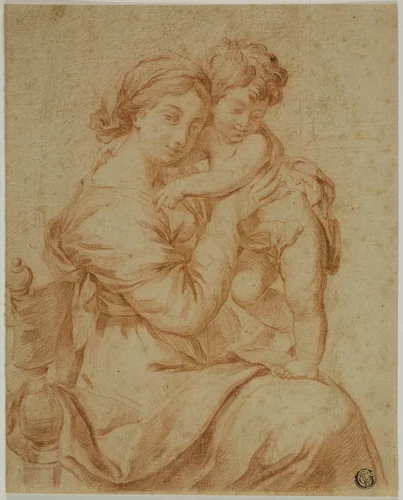
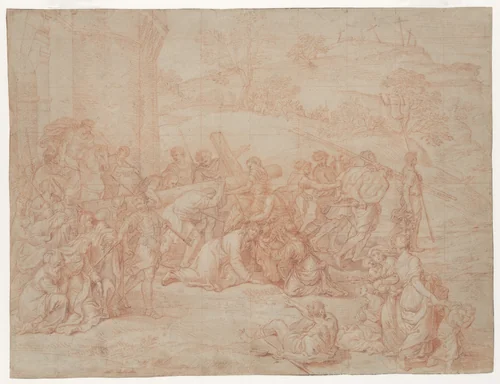
The breadth of his work is captured in the collections of the world’s leading museums, including the Rijksmuseum, the Metropolitan Museum of Art, and the Art Institute of Chicago, testifying to the enduring relevance of his technical skill. Mignard’s mastery of academic draftsmanship is especially evident in his preparatory studies, which survive as some of the most accessible examples of his genius. Drawings such as Two Angels, Study for the Val de Grâce confirm his crucial involvement in large-scale decorative programs, while devotional pieces like Madonna and Child and Christ Carrying the Cross illustrate his ability to combine emotional intensity with controlled compositional rigor.
His career, spanning nearly six decades, was defined not just by artistic achievement but by a high-stakes professional tension that occasionally animated the Parisian art world. Mignard was a near-contemporary of Charles Le Brun, the powerful Premier Peintre du Roi and de facto art director for Louis XIV. The professional relationship between the two men was defined by a notorious, lifelong rivalry, a fascinating subplot that underscores the ferocious competition for official commissions and influence. Mignard skillfully navigated this landscape, securing significant private support even as Le Brun dominated the Académie Royale.
Today, the meticulous detail inherent in Pierre Mignard paintings and drawings remains a subject of continued study. Many of his works have entered the public domain, enabling institutions and enthusiasts to access high-quality prints and downloadable artwork, ensuring his contributions to the French Baroque continue to be appreciated globally.
Source: Wikipedia · CC BY-SA 4.0