Pierre Aveline
Pierre Aveline (1656–1722) was a pivotal figure in the golden age of French engraving, known not merely as an artist but as an influential éditeur d'estampes—a print-publisher and seller whose commercial enterprise defined late Baroque visual culture. Active from the final decades of the seventeenth century until his death, Aveline’s workshop played a crucial role in translating the monumental scope of royal patronage and the burgeoning Rococo aesthetic into accessible, portable forms. His prolific practice spanned the reproduction of Old Masters, the documentation of contemporary court life, and the creation of original decorative subjects, establishing him as a central fixture in the artistic administration of Paris.
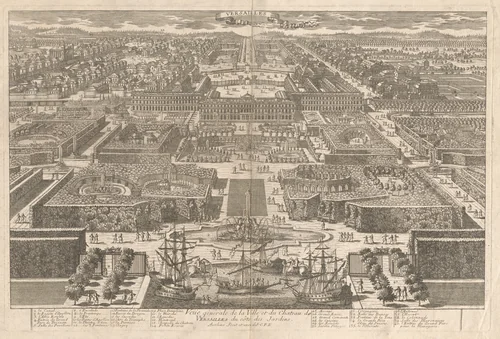
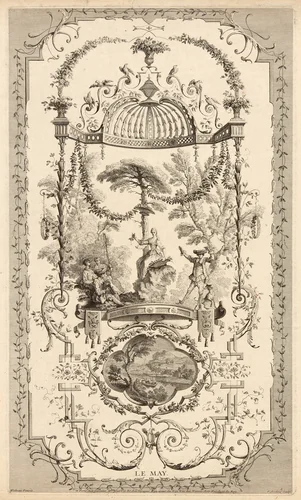
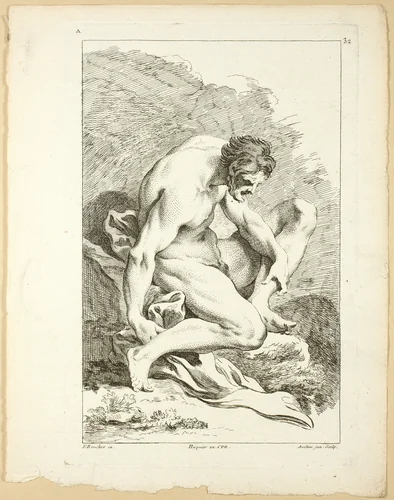
His artistic output reflects the diverse and demanding tastes of the Parisian market. Among his most celebrated efforts are the grand topographical views, such as Veüe générale de la Ville et du Chateau de Versailles du côté des Jardins, which provided viewers across Europe with an authoritative, detailed document of Louis XIV’s architectural ambitions. Aveline excelled in reproductive engraving, serving the crucial function of disseminating the era’s most desirable compositions, notably contributing significant plates, including Le May, to the foundational collection L'Oeuvre d'Antoine Watteau. This work ensured that masterworks of painting were widely circulated as high-quality prints, shaping the visual vocabulary of the following generation. Furthermore, his involvement in foundational projects like the Premier Livre de Figures d’Academies connects him directly to the pedagogical structures of the Académie Royale, cementing his status within the established artistic hierarchy.
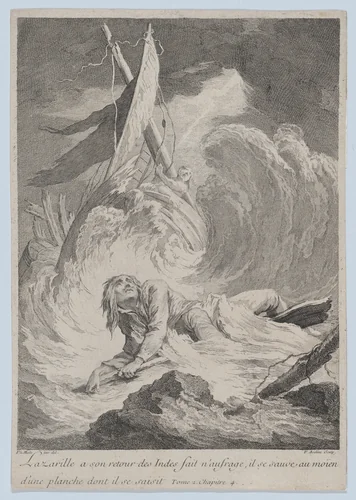
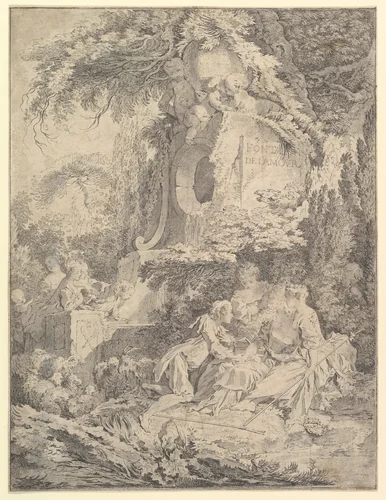
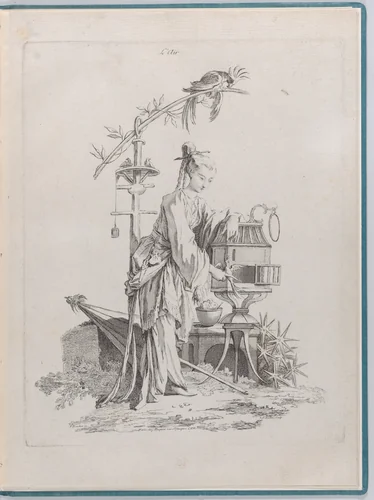
Aveline’s range was remarkable, moving seamlessly from the precise architectural study to narrative whimsy, exemplified by the exotic scene Lazarille à son retour des Indes fait n'aufrage..., and charming decorative subjects like Fountain of Love. This willingness to capture both the serious and the playful aspects of courtly existence provides a fascinating window into early eighteenth-century taste. It is an understated observation of his commercial acumen that, while many French artists were confined to local patronage, Aveline’s publications established a global market for fine French imagery. Today, his meticulously rendered Pierre Aveline prints are housed in premier institutions including the Metropolitan Museum of Art, the National Gallery of Art, and the Art Institute of Chicago. Given the historical importance of his publishing house, much of his work has entered the public domain, making his essential contribution to French art readily available as downloadable artwork for study and appreciation.
Source: Wikipedia · CC BY-SA 4.0