Piero di Cosimo
Piero di Cosimo (Piero di Lorenzo, c. 1462-1522) holds a singular and often eccentric position within the highly competitive landscape of the late Florentine Renaissance. Active primarily between 1480 and 1508, he was a master of color and intricate detail, celebrated for his highly personalized interpretation of mythological and allegorical subjects. While his younger contemporaries were rapidly embracing the idealized symmetry and classical vocabulary of the emerging High Renaissance, Piero steadfastly employed an essentially Early Renaissance style well into the 16th century, granting his later compositions a unique and slightly anachronistic character.
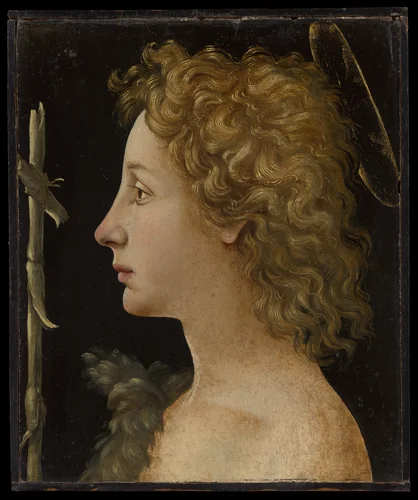
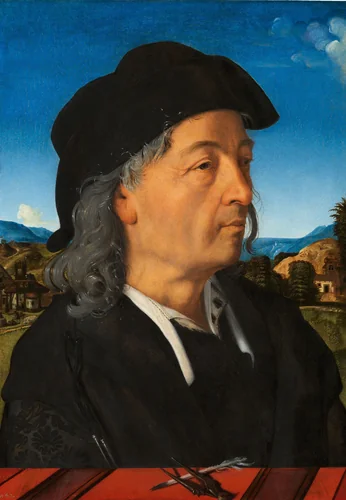
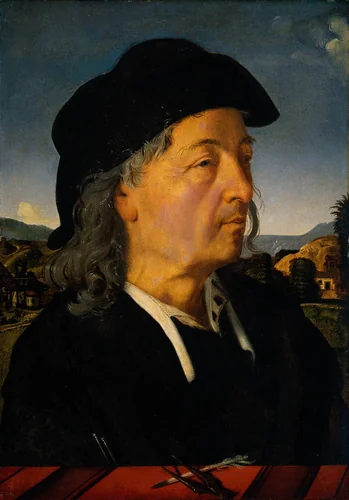
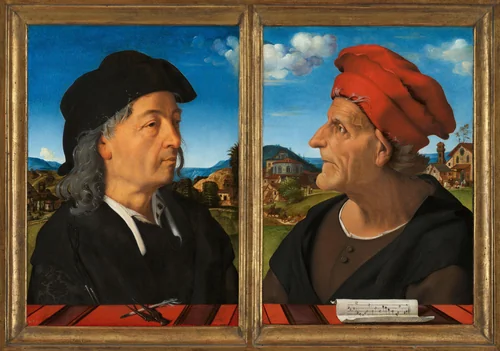
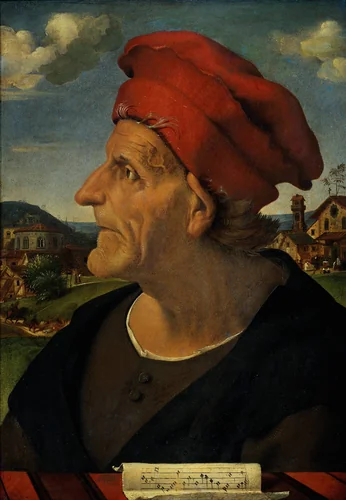
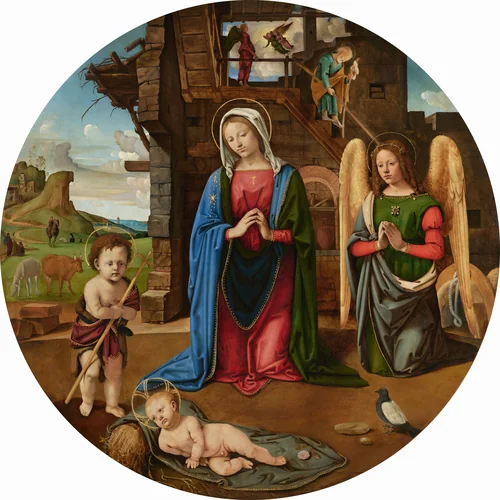
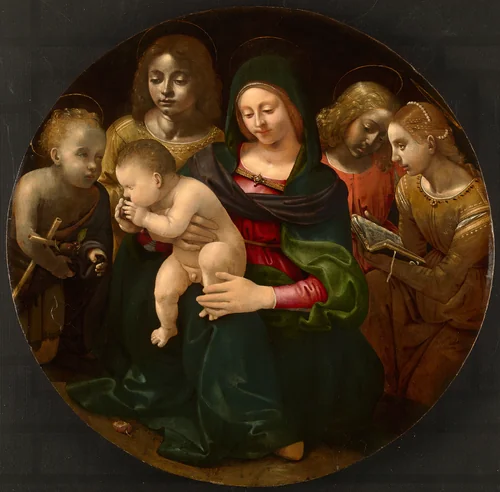
His surviving oeuvre, though modest in number, demonstrates remarkable range. His mastery of profile portraiture is evident in commissions such as the panels documenting influential architects, including Portraits of Giuliano and Francesco Giamberti da Sangallo. These works are characterized by the rigorous use of clear outlines and a keen psychological acuity that recalls the meticulous traditions of Netherlandish painting favored in Florence. Conversely, his religious work, such as The Young Saint John the Baptist, shows his dedication to traditional devotional themes.
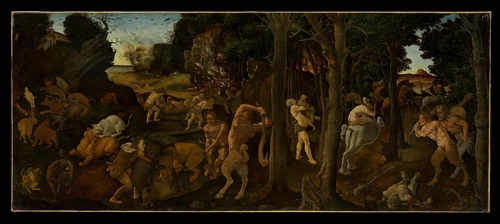
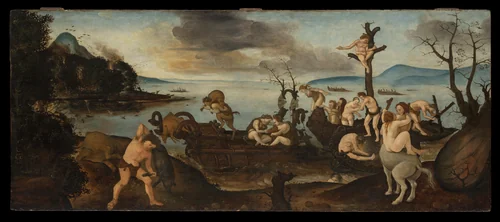
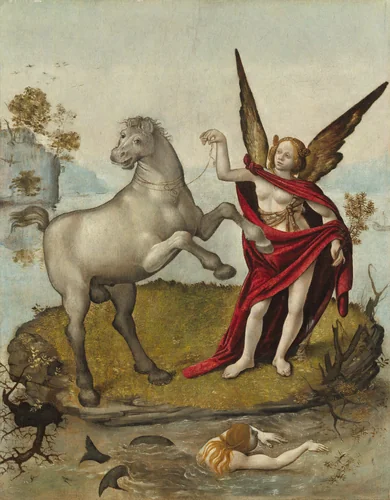
Piero’s true genius, however, often lay in his inventive approach to narrative. He possessed an evident delight in the peculiar, filling his canvases with unconventional subjects and a subtle strain of the surreal. This idiosyncratic sensibility led him to create some of the most memorable and complex pictorial myths of the period. This inclination toward the bizarre, coupled with his technical proficiency, proved subtly influential, foreshadowing the more theatrical sensibilities of the subsequent Mannerism movement.
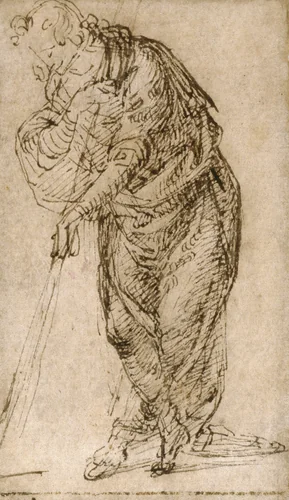
Despite his relatively limited production, confirmed Piero di Cosimo paintings and drawings are foundational to understanding the transition between the 15th and 16th centuries. Today, his works are secured in prominent international institutions, including the Art Institute of Chicago, the National Gallery of Art, and the Metropolitan Museum of Art. Many of these important works now reside within the public domain, offering the opportunity for scholars and enthusiasts to acquire high-quality prints and downloadable artwork for study and appreciation worldwide.
Source: Wikipedia · CC BY-SA 4.0