Philips Koninck
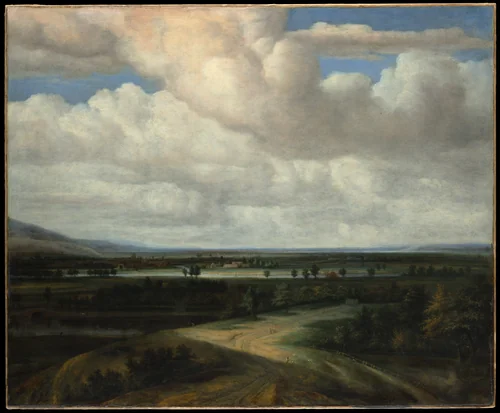
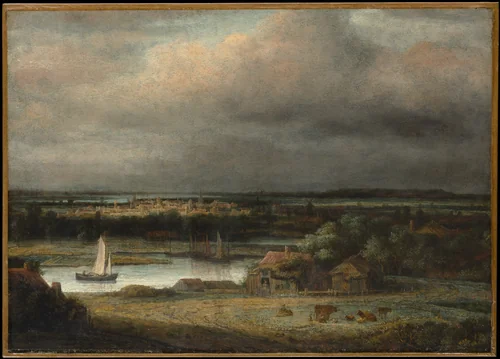
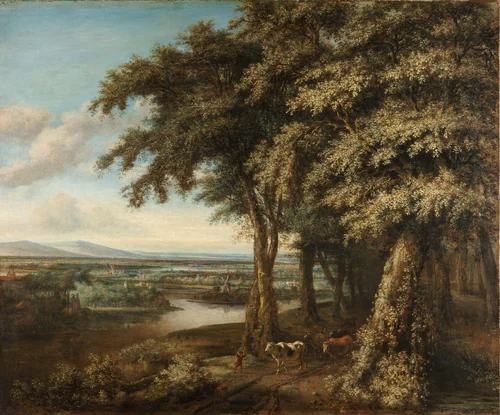
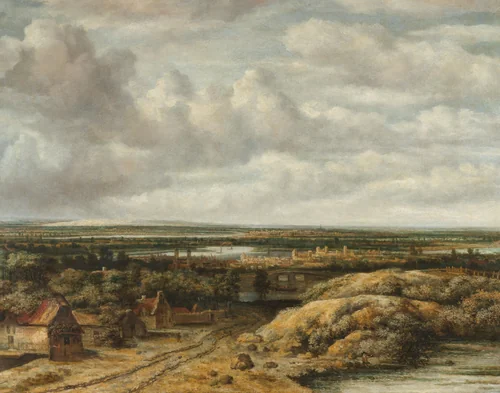
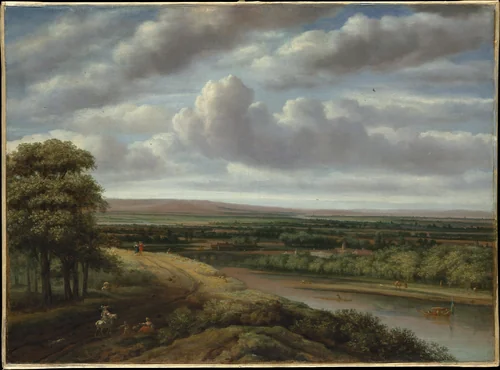
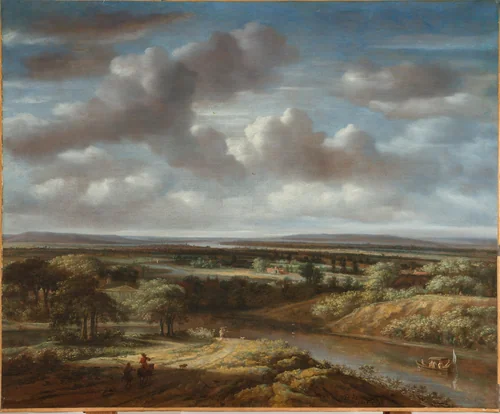
Philips Koninck (1619-1688), often spelled Philip de Koninck, stands as a pivotal figure in 17th-century Dutch landscape painting. While the Dutch Golden Age was saturated with skilled practitioners, Koninck distinguished himself by mastering the expansive ‘bird’s-eye view,’ an innovative approach that transformed the traditional horizon line into a dizzying, cinematic sweep of plains and sky. This technique allowed him to capture the genuine scale and atmosphere of the Netherlands, rendering vast distances with a clarity and formal consistency few contemporaries achieved.
Unlike earlier painters who focused heavily on topographical exactitude or anecdotal incident, Koninck’s mature vision prioritized atmosphere and sheer visual monumentality. His most celebrated works, such as A Panoramic Landscape with a Country Estate or the dramatic Wide River Landscape, employ strong diagonals and highly textured, fluid cloud formations to guide the viewer’s eye across immense spaces, often punctuated only by tiny figures, isolated trees, or the sails of distant vessels. His characteristic palette tends toward warm ochres, deep earth tones, and cool blues, creating an effect both monumental and intimately felt. It is perhaps surprising that a painter known for such dramatically expansive vistas was the younger brother of Jacob Koninck, whose documented output was decidedly less ambitious in scope.
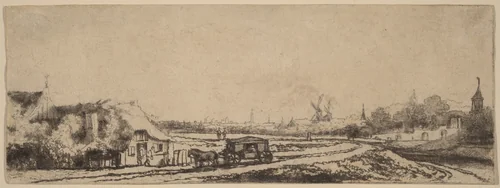
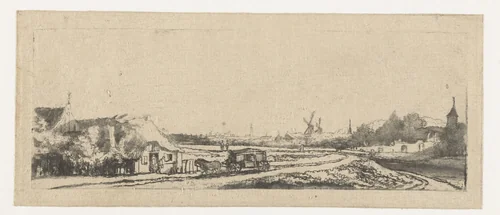
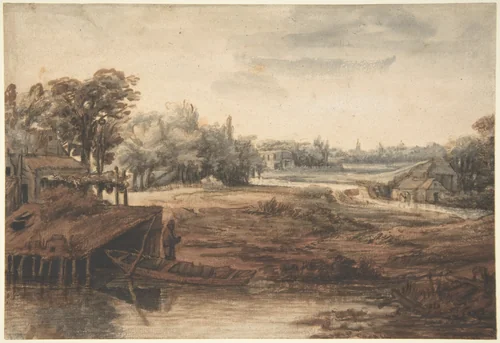
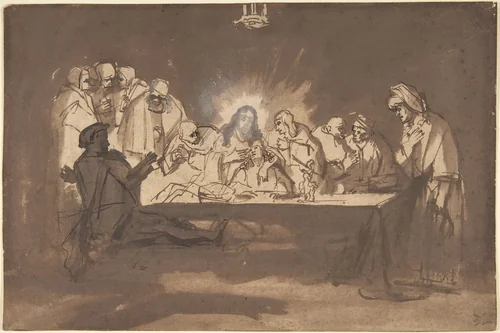
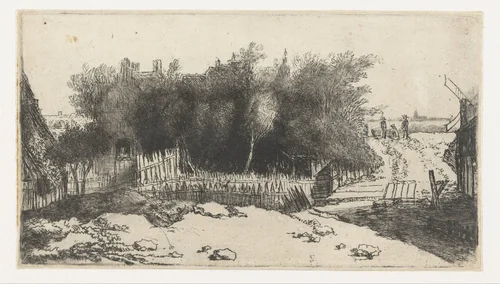
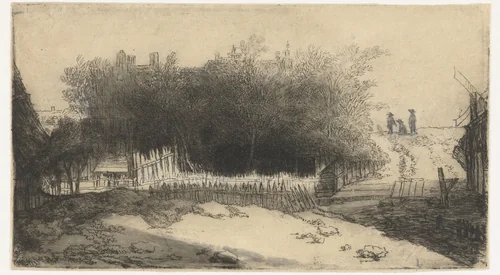
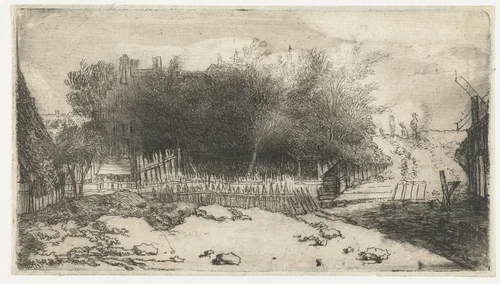
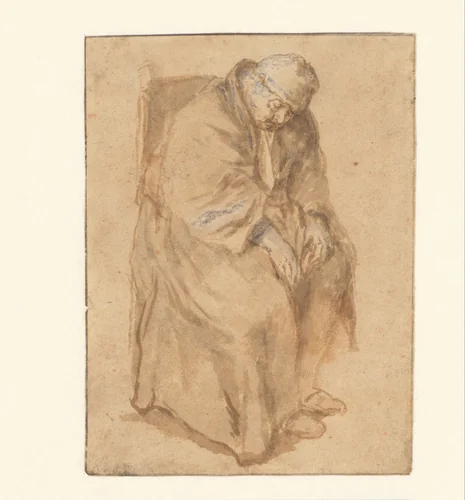
Koninck’s surviving oeuvre is relatively modest, comprising approximately seventy paintings, yet it is supported by a crucial body of drawings and Philips Koninck prints. These latter works, often overlooked, demonstrate his profound technical skill in conveying texture and light through refined line work and careful application of wash. Key examples of his meticulous detail, including the oil painting Landscape with a Coach and the drawing River Landscape with a Man Standing by a Boathouse, are preserved in major international collections, notably the Rijksmuseum, the Metropolitan Museum of Art, and the National Gallery of Art. Today, his masterful interpretations of the Dutch horizon remain widely accessible, with significant portions of his output available as downloadable artwork in the public domain, ensuring scholars and enthusiasts can readily study his unique contribution to the history of landscape art.
Source: Wikipedia · CC BY-SA 4.0