Philips Augustijn Immenraet
Philips Augustijn Immenraet (Active: 1637) secures his place in the history of Flemish art as an innovative landscape painter and distinguished engraver. While records suggest a relatively brief period of activity centered around 1637, his surviving œuvre of approximately seven prints and one documented drawing reveal a focused mastery of the genre. Today, his limited yet impactful body of work is preserved in major institutions, including the celebrated collection of the Rijksmuseum.
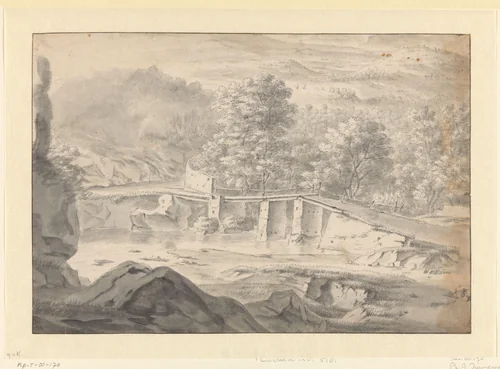
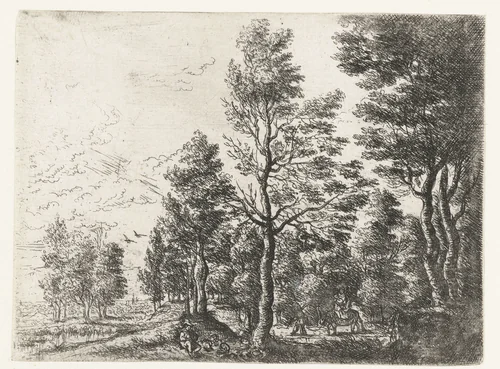
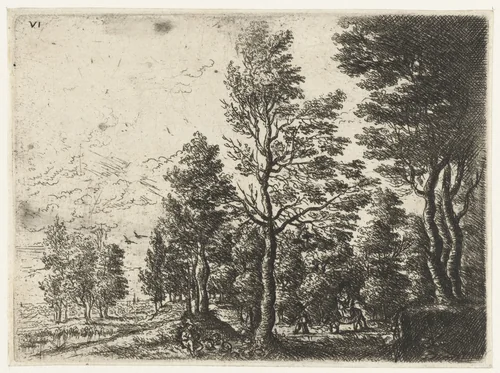
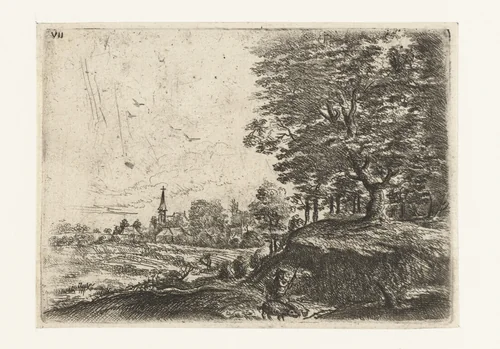
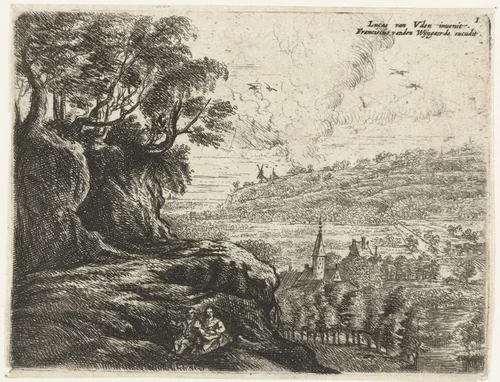
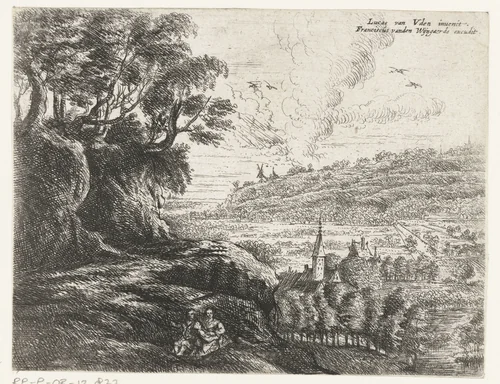
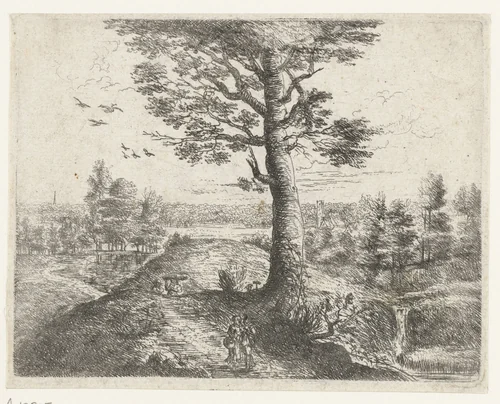
Operating within the established framework of the Flemish Baroque landscape, Immenraet quickly demonstrated an inclination towards formal experimentation. The traditional compositional model of the era typically relied on obliquely receding planes, guiding the viewer deep into the scene via a clear diagonal path. Immenraet chose to subtly fracture this convention. His landscapes, such as Heuvelachtig landschap met een bruggetje over een rivier and the various iterations of Landschap met een man met een ezel, introduce a notable compositional shift, favoring an internal spatial dynamism that feels less regimented than the works of his immediate predecessors.
A key attribute of Immenraet's innovation is his introduction of a distinct brightness into the natural setting. This quality not only elevates his technique beyond the customary tonalities of the period but also suggests a burgeoning sensitivity toward mood and atmosphere. In his best works, this subtle shift away from Baroque formalism toward an emotional rendering of nature anticipates developments often associated with later artistic movements. Indeed, several scholars have noted a pre-Romantic character manifesting in the clarity and poetic disposition of his scenes.
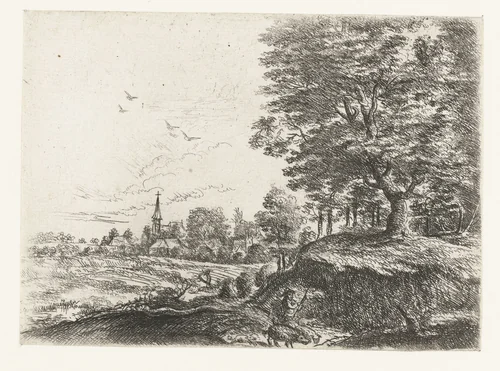
The consistent quality found across his small output, which includes scenes like Landschap met een man met varkens, validates his technical precision as an engraver. For modern collectors and historians, the importance of this historical output is enhanced by its increasing accessibility; many of the surviving high-quality prints and related works are now moving into the public domain, offering institutions and enthusiasts royalty-free access to these rare images. The work of Philips Augustijn Immenraet provides a fascinating case study in how quiet innovation, even across a narrow window of activity, can leave a lasting imprint on the stylistic trajectory of landscape painting.
Source: Wikipedia · CC BY-SA 4.0