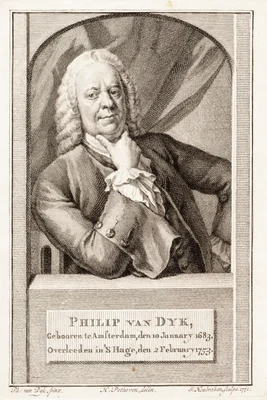
Philip van Dijk
Philip van Dijk established himself as a prominent 18th-century painter in the Dutch Republic, active from 1693 until 1735. His sophisticated output successfully bridged the aesthetic of the late Dutch Golden Age with the emerging refinement of the Rococo period, securing his reputation particularly among the wealthy administrative class of The Hague and Middelburg. The presence of his works in key national institutions, including the Mauritshuis and the Rijksmuseum, confirms his standing as a technically precise master of characterization and light.
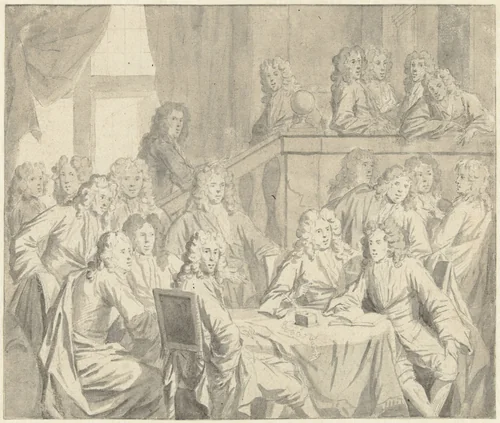
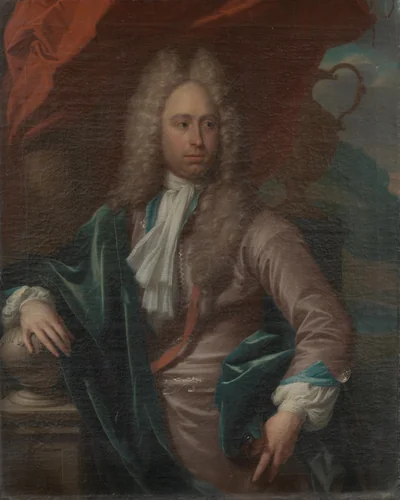
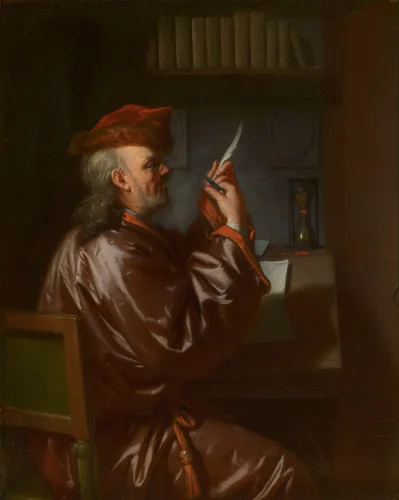
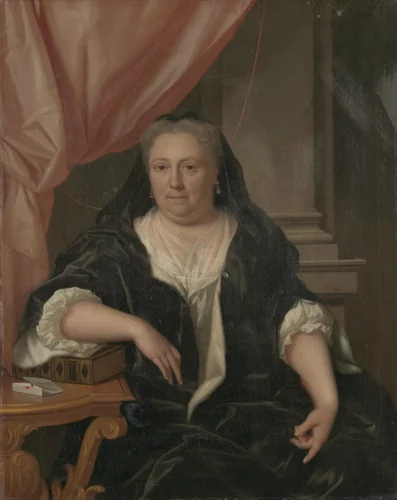
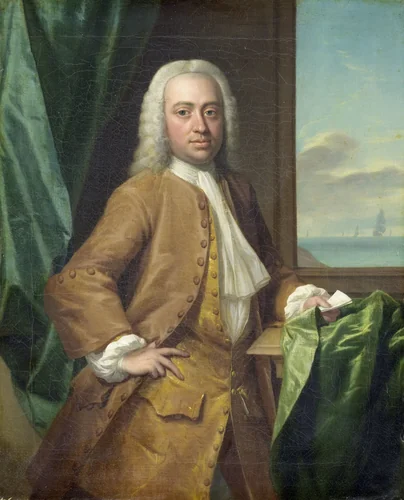
Van Dijk's surviving oeuvre encompasses rigorous official portraiture and intimate genre scenes. His fastidious attention to costume and material texture is especially evident in official commissions, such as the portrait of Caspar Adriaen Parduyn (1685-1735), the Bailiff of Middelburg, where he manages to convey both the sitter's social weight and distinct individual personality. Similarly, his handling of complex group dynamics, as seen in the ambitious Vergadering van Haagse boogschutters (Assembly of Hague Archers), demonstrates an impressive command of composition, maintaining clarity and individual identity across multiple figures within a unified setting.
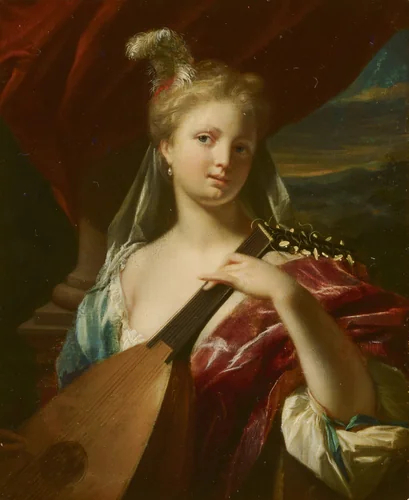
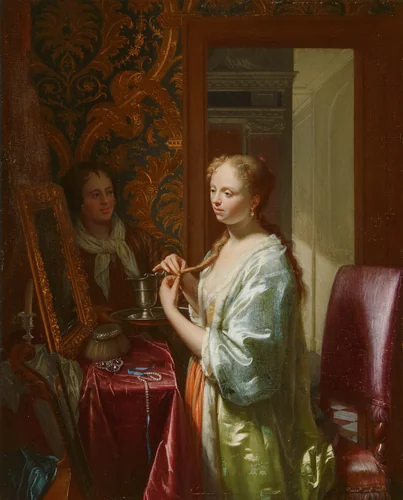
Unlike many of his contemporaries who focused exclusively on faces of power, Van Dijk also possessed a refined sensibility for the domestic interior, producing evocative cabinet pieces. Works like Woman Playing the Lute showcase a delicate handling of diffused light and shadow, recalling the thematic introspection of earlier 17th-century masters. This duality reveals an artist deeply engaged in documenting the serious business of the Republic while recognizing the quieter, civilized pleasures enjoyed by the 18th-century elite.
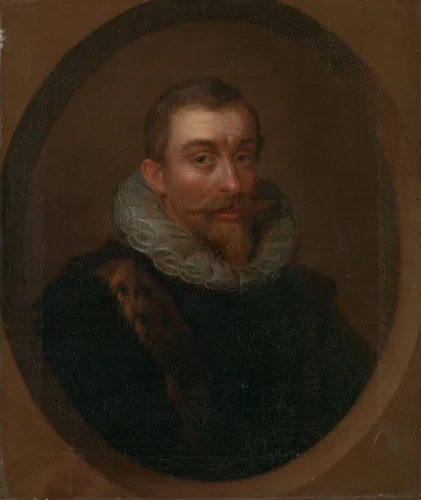
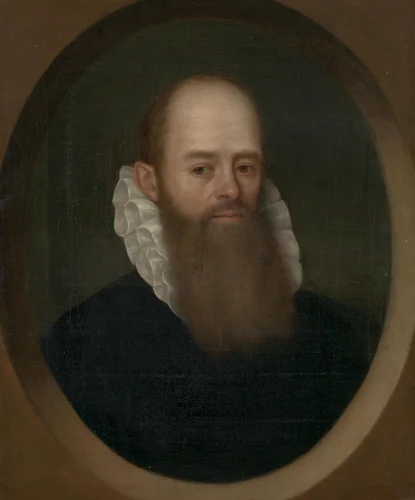
Van Dijk served as a careful chronicler of the establishment, detailing figures integral to governance, such as Aernout van Citters (1561-1634) and Cornelis van Ceters (1503-99). The historical significance of Philip van Dijk paintings continues to be assessed by scholars, especially since many of his works are now securely within the public domain. This accessibility, which facilitates the creation of high-quality prints and downloadable artwork, ensures that Van Dijk’s significant contribution to Dutch art history remains critically visible for generations.
Source: Wikipedia · CC BY-SA 4.0