Philip Johnson
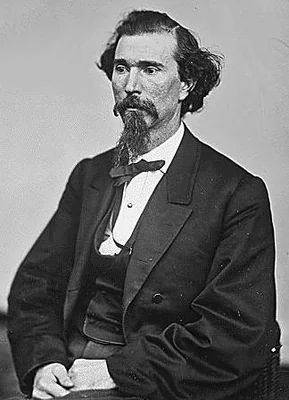
Philip Cortelyou Johnson (1906–2005) stands as one of the most consequential and frequently discussed American architects of the twentieth century. His career spanned nearly seven decades, during which he acted not merely as a designer, but as a critical figure who helped define, and then deliberately abandon, the prevailing architectural styles of his era. An obituary in The New York Times accurately assessed his output as being "widely considered among the architectural masterpieces of the 20th century."
Johnson was instrumental in ushering Modernism into the American consciousness, most famously demonstrated by his 1949 residential masterpiece, the Glass House in New Canaan, Connecticut. Constructed largely of glass and steel, this residence served as a seminal declaration of stripped-down elegance and transparency, becoming a canonical text for mid-century architects. By the late 1970s, however, Johnson had moved on, famously pivoting to champion the vibrant language of Postmodernism. This shift was perhaps best encapsulated by the striking 550 Madison Avenue (originally designed for AT&T) in New York City, which introduced historicist elements like a broken pediment atop a massive office tower, signaling a decisive break from the severity of the International Style. His influence extended across civic and cultural projects, including the 190 South La Salle Street in Chicago, the soaring IDS Tower in downtown Minneapolis, and the elegant Sculpture Garden at New York City’s Museum of Modern Art. If architecture is often a slow-moving discipline, Johnson made sure he was perpetually setting the pace, always eager to explore what came next.
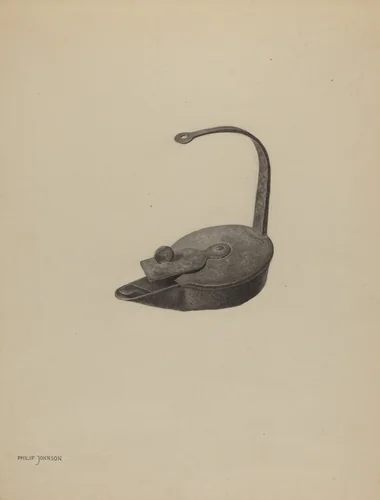
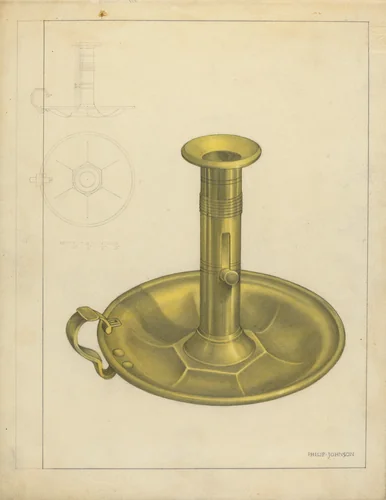
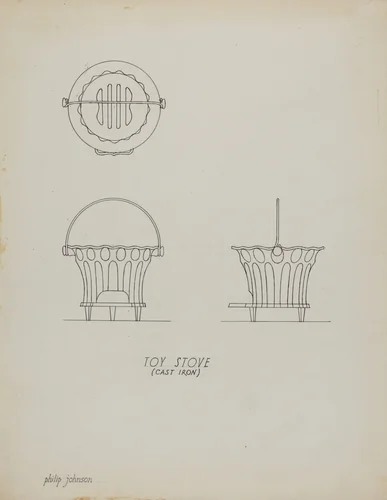
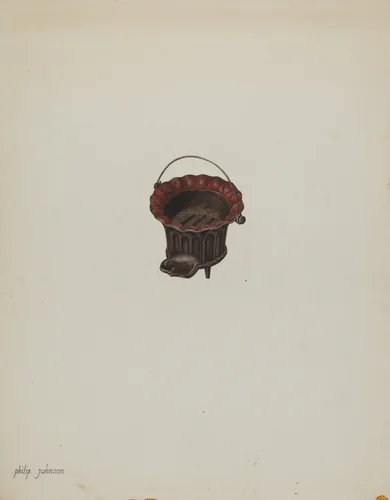
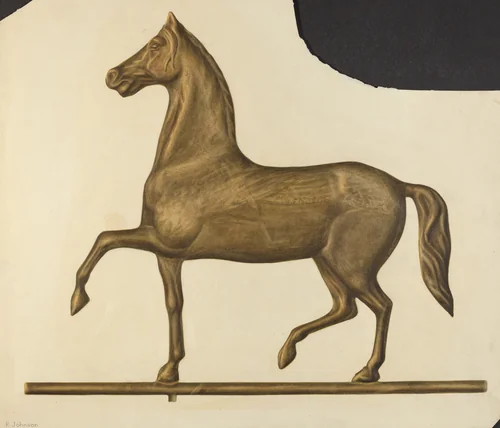
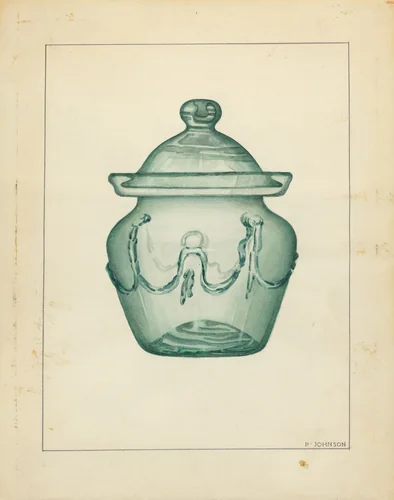
Prior to achieving international fame in architecture, Johnson contributed to the Index of American Design between 1935 and 1936. Working under the federally funded relief program of the Works Progress Administration, he cataloged and documented domestic objects that defined American material culture, a crucial early effort to recognize the importance of everyday design. The resultant detailed renderings of objects, such as a Candlestick, a Mug, and a Toy Wagon, now reside in the collection of the National Gallery of Art. These early documents of vernacular design are held in the public domain and remain available for study, often distributed as high-quality prints that showcase the meticulous detail of the original drawings. This early exposure to the American design vocabulary proved foundational, providing context for the sweeping, large-scale structures he would later design.
Source: Wikipedia · CC BY-SA 4.0