Phil May
Philip May, known professionally as Phil May (1864–1903), was a defining figure in late Victorian British graphic art, whose distinctive style dramatically influenced the evolution of illustration and modern cartooning. Active primarily between 1877 and his premature death, May is celebrated for his unparalleled mastery of the economy of line, stripping away the dense detail common to Victorian illustrative work to capture character and scene with extraordinary immediacy.
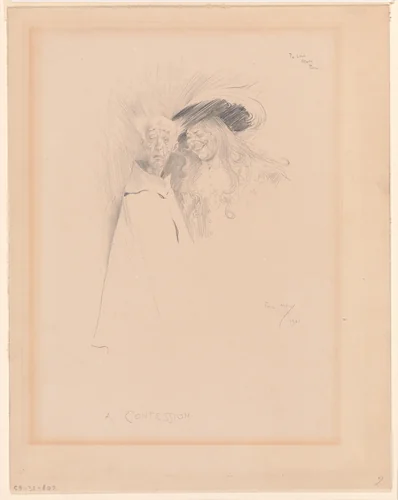
His drawings eschewed superfluous ornamentation, focusing instead on dynamic simplicity. This concise approach made him a highly sought-after contributor to leading periodicals of the era, including Punch and The Graphic. May’s innovative methodology, which distilled complex human interaction and social observation into essential, vigorous strokes, set a new standard for speed and authenticity in mass-produced visual media.
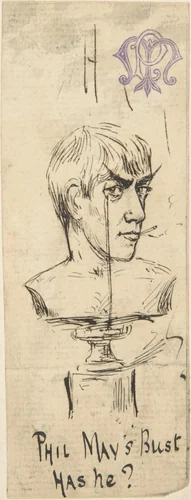
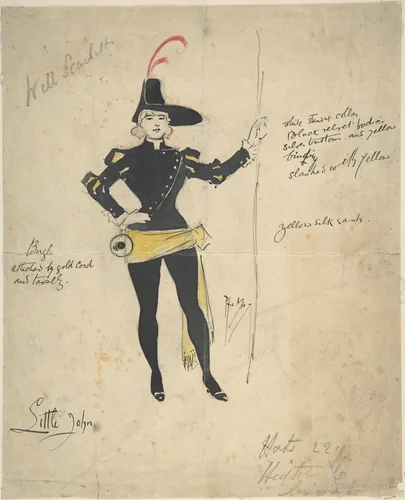
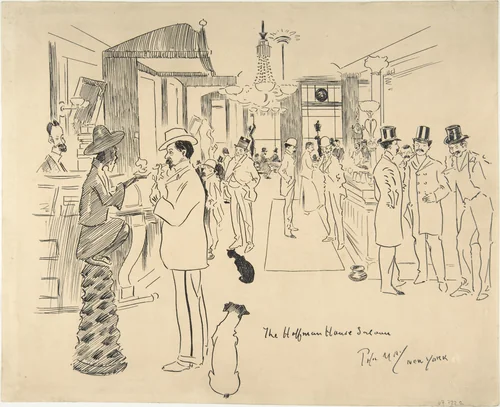
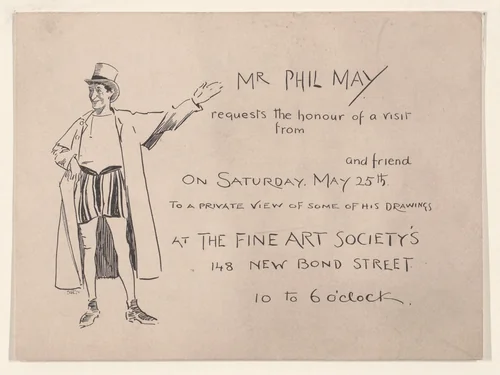
May’s subjects spanned the breadth of urban life, from high society satire to atmospheric depictions of the working class and theatrical figures. His range is evident in works that capture both detailed costume studies, such as the Costume Drawing for Little John, and broader observational pieces, including The Hoffman House Saloon, New York, which vividly renders the energy of a popular American establishment. Even when turning his observant gaze inward, May maintained an understated wit, evidenced by the wry self-assessment of his drawing "Phil May's Bust. Has he?" His influence extended to commercial and personal ephemera, documented by items like the Invitation from Phil May to a Private View of his Drawings at the Fine Art Society, 148 New Bond Street.
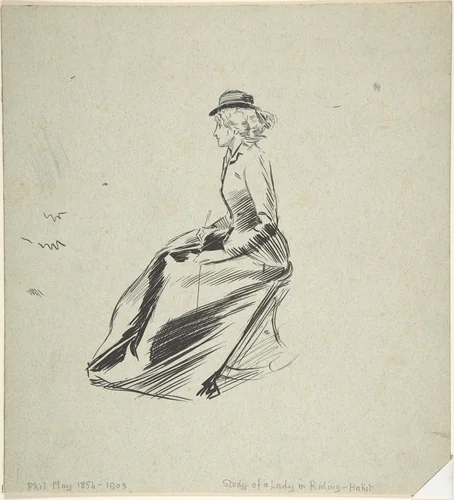
Though his career was relatively brief, May’s impact on graphic arts remains substantial. He was instrumental in transitioning illustrative caricature toward the clean, rapid style required by emerging 20th-century print technology. Today, many of his observational drawings, such as the elegant Study of a Lady in a Riding Habit, are recognized for their museum-quality status and housed in significant institutions, including the Metropolitan Museum of Art. The clarity and strength of his visual commentary ensure that high-quality Phil May prints and drawings continue to be studied and admired today.
Source: Wikipedia · CC BY-SA 4.0