Petitpierre et Cie
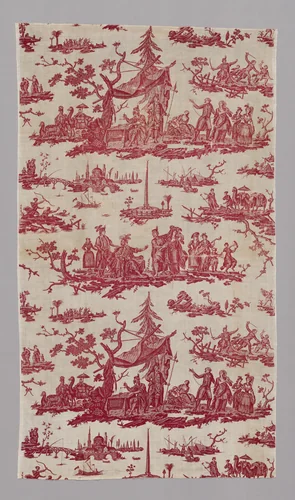
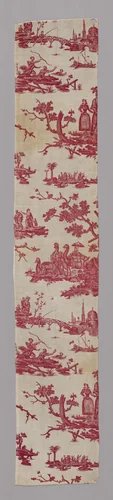
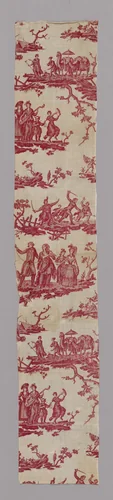
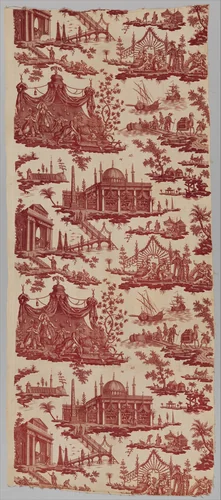
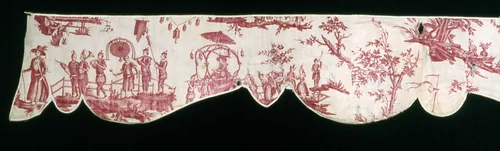
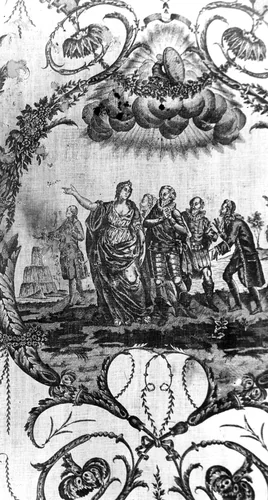
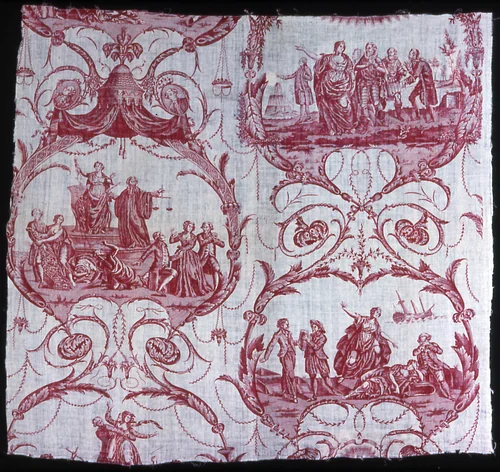
Petitpierre et Cie was a textile workshop or company active during the late 18th century, with recorded operations spanning the years 1770 through 1788. The firm specialized in the design and production of textiles, particularly furnishing fabrics featuring intricate narrative and figurative compositions characteristic of late Rococo and early Neoclassical design.
Eleven textiles attributed to Petitpierre et Cie are documented in major international institutions, affirming the workshop’s significance in the history of decorative arts. Works held in museum collections, including the Metropolitan Museum of Art and the Art Institute of Chicago, showcase their mastery of complex visual storytelling across various themes.
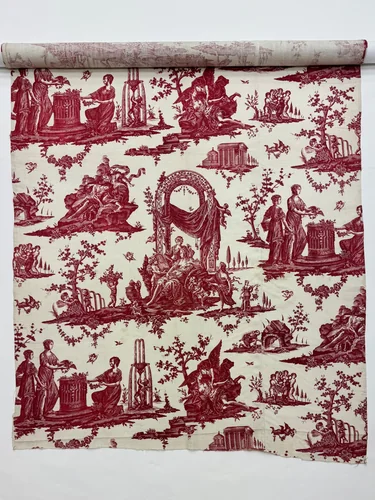
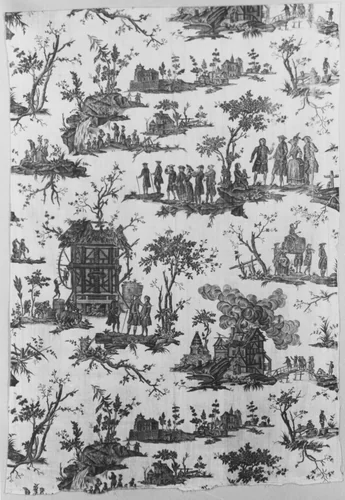
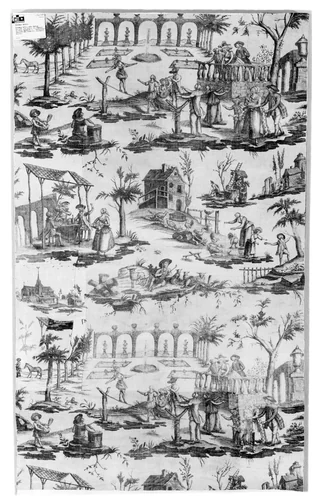
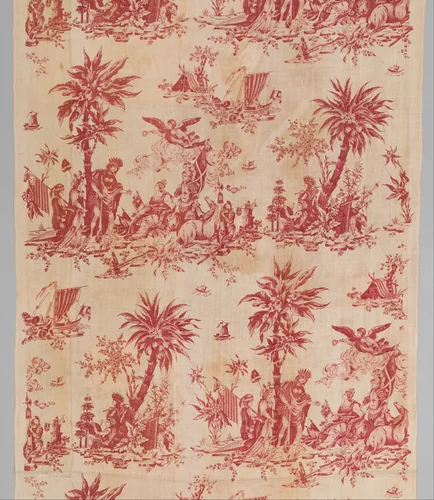
Their subjects ranged from mythological scenes, exemplified by Venus à sa Toilette, to exotic and dramatic narratives such as La Maison Brulante and La Caravane du Caire (The Caravan from Cairo). The workshop also captured contemporary life and literature, evidenced by the inclusion of genre subjects like La Danseuse de Corde (The Tight Rope Walker), and the scene derived from Rabelais, Panurge dans l'île des lanternes.
The survival of these sophisticated, museum-quality textiles establishes the historical importance of the workshop's output. Although specializing in fabrics, the designs of Petitpierre et Cie prints are frequently reproduced and studied today. Due to the age of the original artifacts, much of this material resides in the public domain, allowing historical images to be accessed as downloadable artwork for research and study.