Peter van Lint
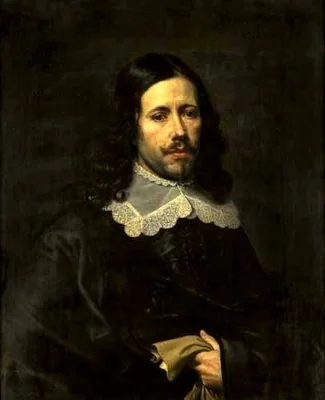
Peter van Lint, a highly versatile Flemish painter and draughtsman active throughout the mid-seventeenth century, holds significance as a pivotal figure who successfully synthesized the dynamism of the Flemish Baroque with the disciplined classicism encountered during his extensive period in Italy. Born in Antwerp in 1609, his early training grounded him firmly within the visual lexicon of the Northern School, yet his commitment to working in both Antwerp and the major cultural centers of Italy ensured a cosmopolitan vision that set him apart from many contemporaries.
Van Lint excelled across a rigorous range of subjects, including history paintings, commissioned portraits, and refined genre scenes. His skill was particularly evident in preparatory studies; he was frequently employed as a designer for large-scale tapestries, a technically demanding specialty requiring mastery of both figurative grouping and spatial complexity. His enduring status as a respected master is confirmed by the presence of six core drawings and Peter van Lint paintings in major institutions globally, including the Rijksmuseum, the Art Institute of Chicago, and the Metropolitan Museum of Art.
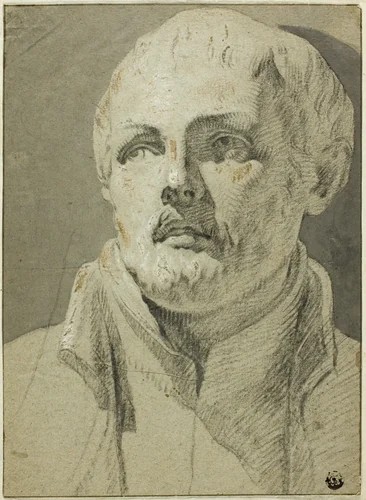
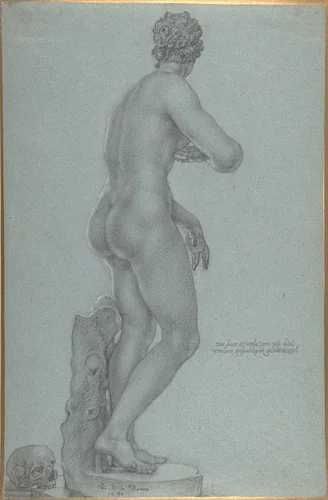
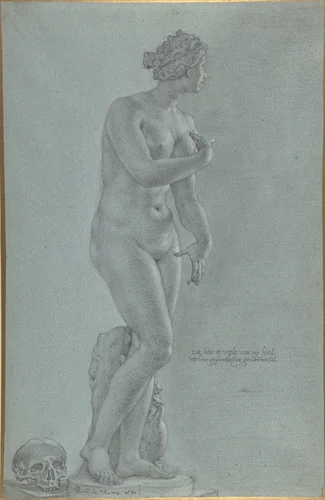
While the documented chronology of his highest activity clusters between 1619 and 1640, his time spent immersed in Roman and Florentine academies profoundly shaped his mature artistic output. This influence is starkly visible in his meticulous studies of antiquity, where he provided detailed, academic renderings of famous sculptures. He possessed a rare ability to translate monumental marble into expressive two-dimensional form; one might observe that Van Lint found the perfect visual compromise between the expressive energy of Antwerp and the sculptural ideals of Rome.
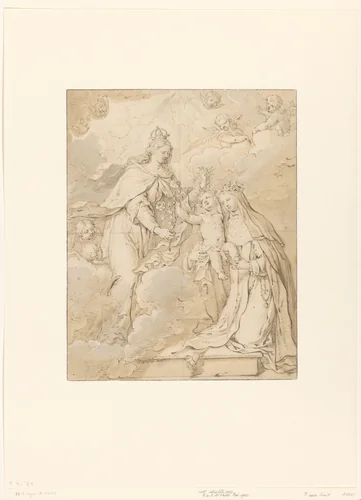
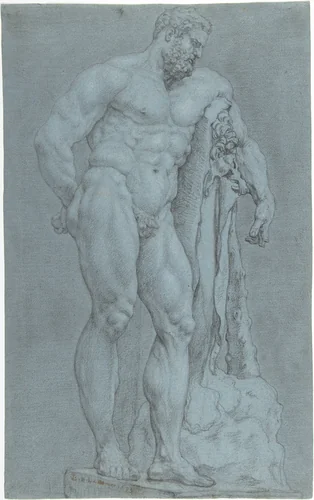
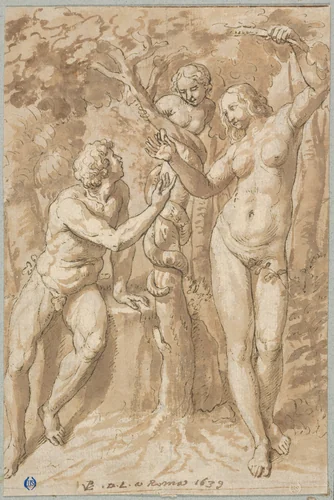
This balance is highlighted in specific works such as The Farnese Hercules and the detailed academic nude, Venus de' Medici; view from the back. These high-quality prints and studies reveal an artist equally comfortable with mythological narratives, like The Temptation of Eve, and devotional subjects, such as Vrouwelijke heilige met Christuskind bij Maria. Van Lint’s lasting contribution lies in his introduction of a polished, academic clarity into the often tumultuous Flemish Baroque. Today, his precise draftsmanship and elegant compositions remain foundational studies, with many of his historical works now entering the public domain, allowing access to museum-quality reproductions for scholarly and personal appreciation.
Source: Wikipedia · CC BY-SA 4.0