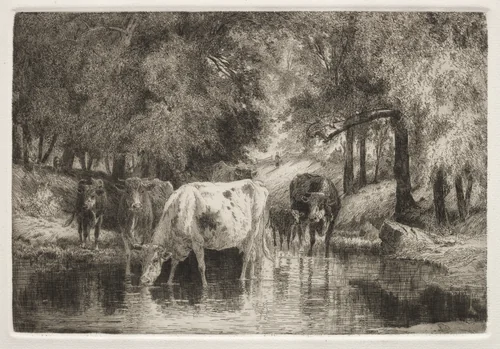
Peter Moran
Peter Moran (1841–1914) occupies a significant, if often understated, position within the 19th-century American artistic establishment. Though born in Great Britain, Moran became a prolific American painter and, crucially, a highly skilled etcher whose work provided detailed visual documentation of the American Southwest during a period of dramatic transformation. His career synthesized the grand tradition of American landscape painting with the technical precision required by graphic arts, establishing him as an important figure during the American etching revival.
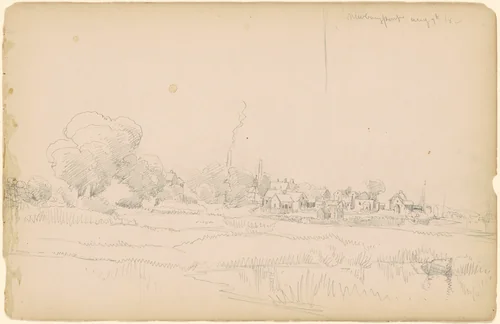
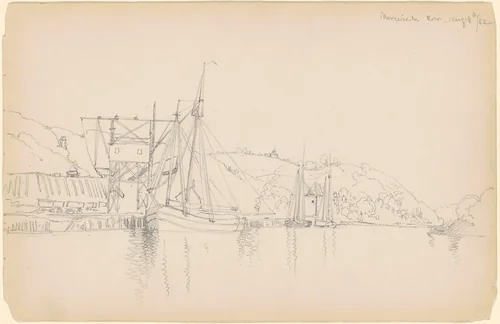
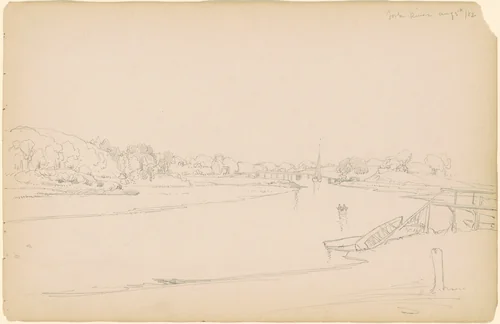
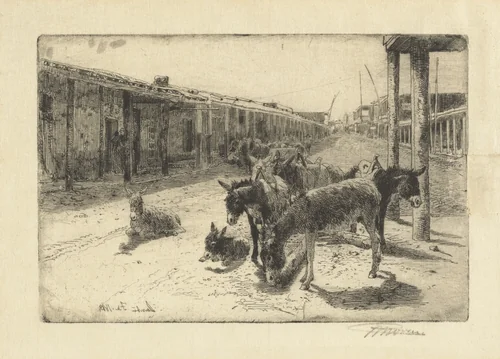
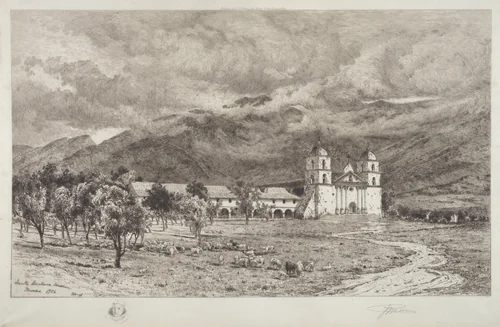
Moran was most productive between the 1870s and 1880s, specializing in capturing scenes of daily life, travel, and agriculture across territories recently opened to exploration and settlement. His compositions reveal a commitment to realism tempered by a graceful handling of light and atmosphere. Unlike some contemporaries who favored grand, idealized panoramas of natural monuments, Moran frequently focused on intimate human and animal interactions within the formidable Southwestern terrain.
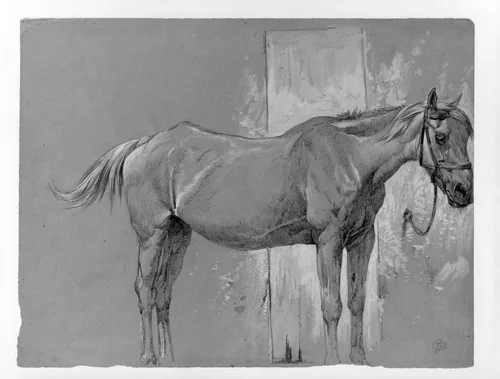
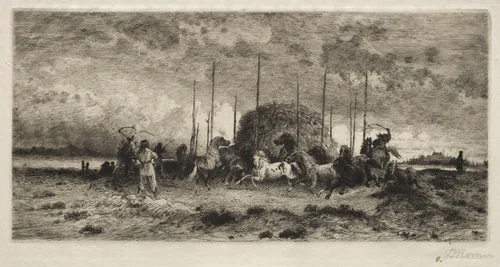
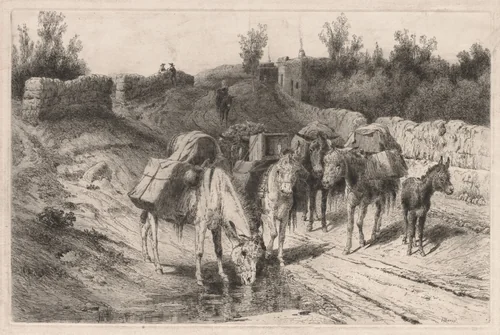
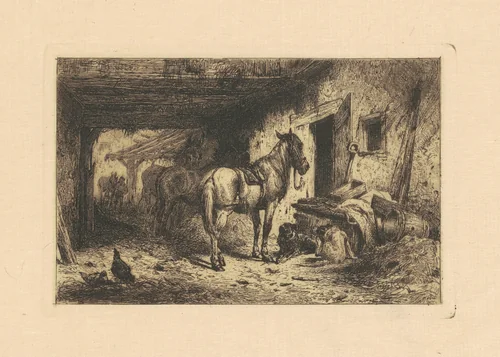
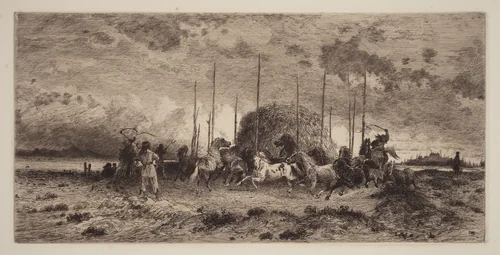
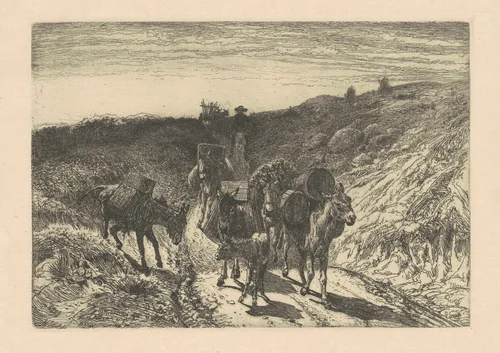
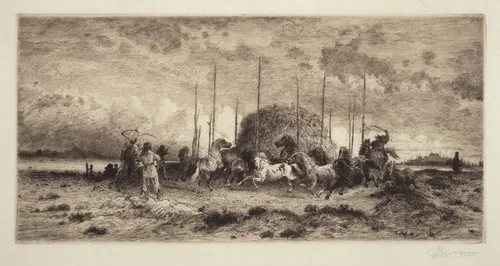
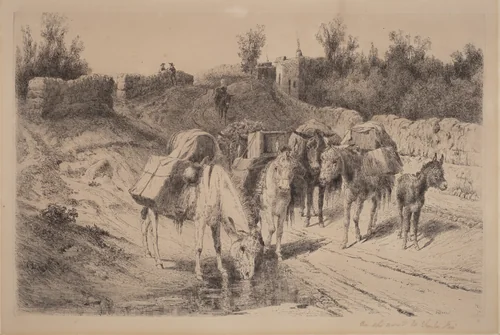
Works such as the poignant study Horse, Fort Stanton, New Mexico and the detailed observation Harvest at San Juan, New Mexico, showcase his acute sense of place. Other pieces, including On the Road to Santa Fe and The Noonday Rest, demonstrate his facility with narrative, capturing the arduous but rhythmic pace of frontier travel. He utilized the expressive potential of the etching plate to give texture and shadow to dusty roads and adobe structures.
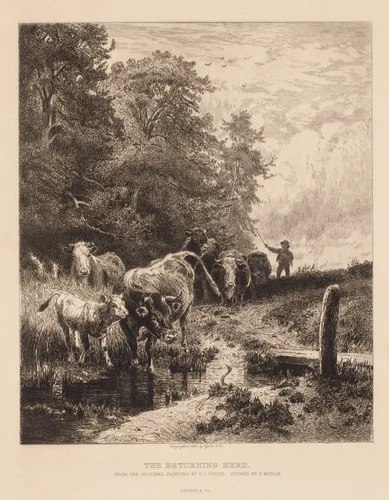
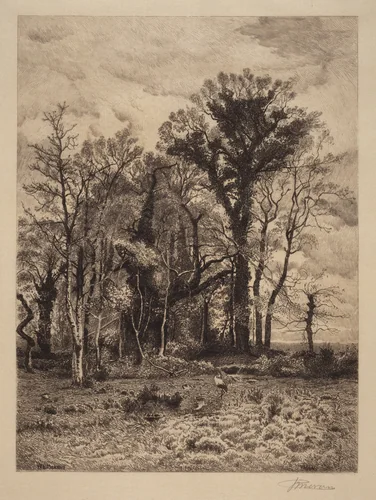
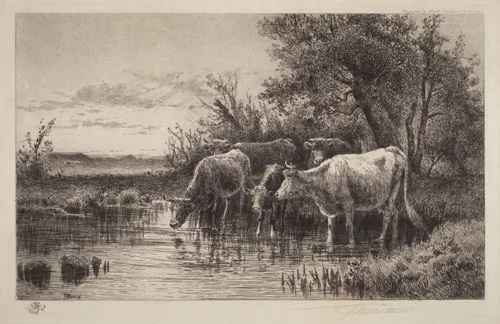
Peter Moran’s legacy often runs parallel to that of his famous older brother, Thomas Moran, yet Peter carved his own formidable niche within the graphic arts. While Thomas ascended through monumental canvases, Peter mastered the nuance of the plate, generating exceptional Peter Moran prints that circulated widely and established his reputation among the etching movement. It is a subtle observation that, while the grand landscape captured the public's imagination, it was often the small, meticulous etchings that carried the visual news of the West back East.
Recognized for their historical and artistic merit, Moran’s works are held in major institutional collections, including the Metropolitan Museum of Art, the National Gallery of Art, and the Cleveland Museum of Art. The lasting quality of these museum-quality pieces demonstrates his mastery of line and composition. Today, many of these carefully preserved historical images are now accessible as downloadable artwork, ensuring that the record provided by these high-quality prints remains available for study and appreciation by a modern audience.
Source: Wikipedia · CC BY-SA 4.0