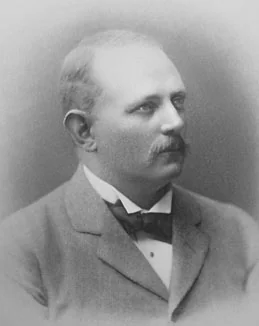
Peter Henry Emerson
Peter Henry Emerson (1856-1936) occupies a foundational position in the history of British photography, primarily recognized as the most vocal early advocate for photography’s status as a serious, unmanipulated art form. Active primarily between 1878 and 1880, Emerson was a crucial figure in the late Victorian era, championing what he termed ‘straight photography’—an approach emphasizing accurate optical rendering and authentic depiction over the highly retouched, painterly, or composite images favored by his contemporaries.
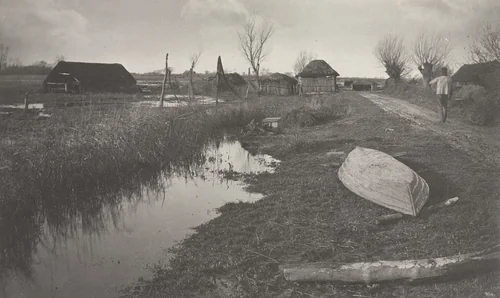
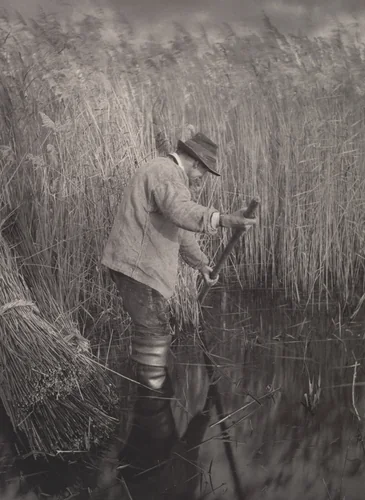
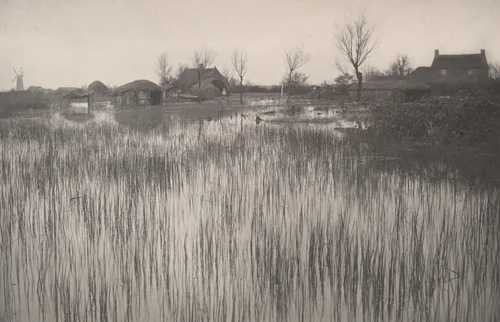
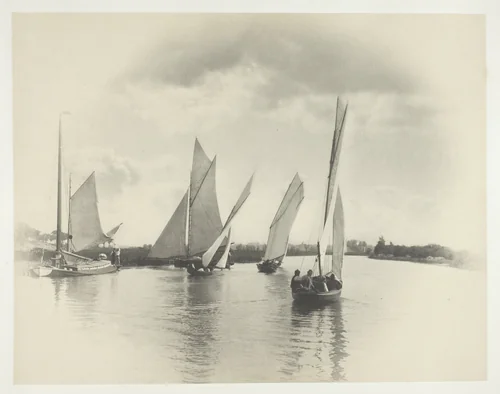
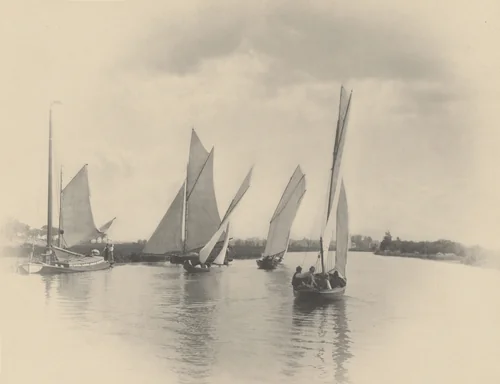
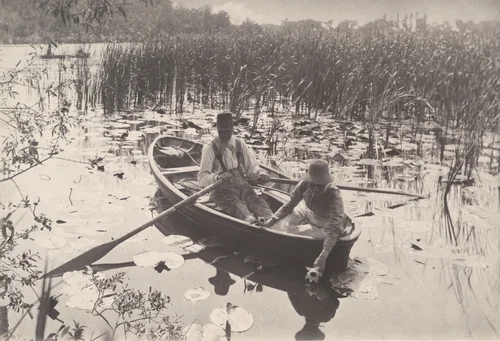
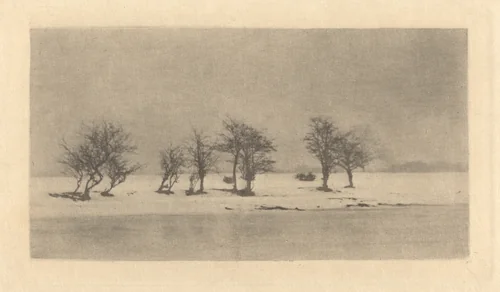
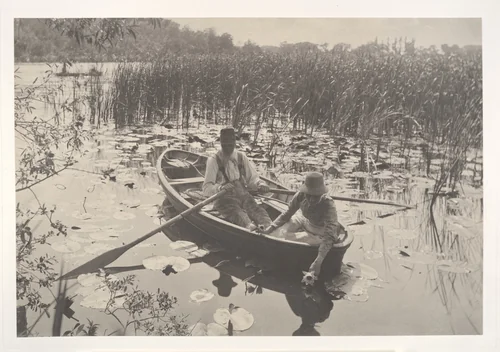
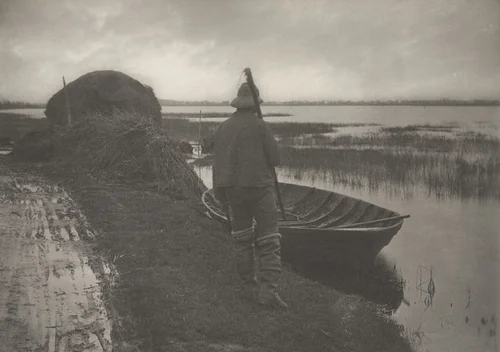
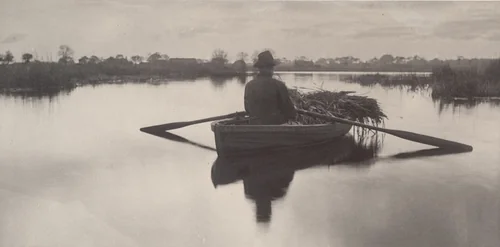
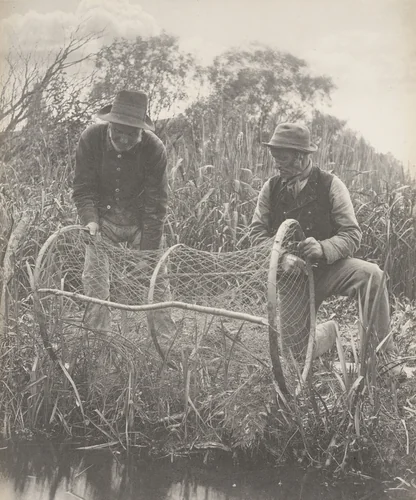
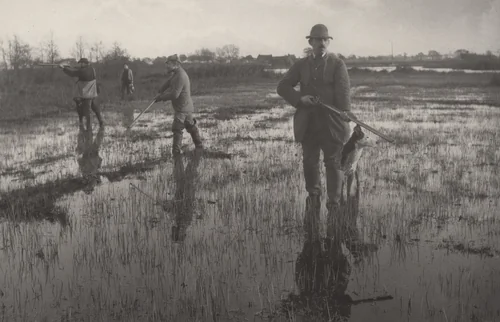
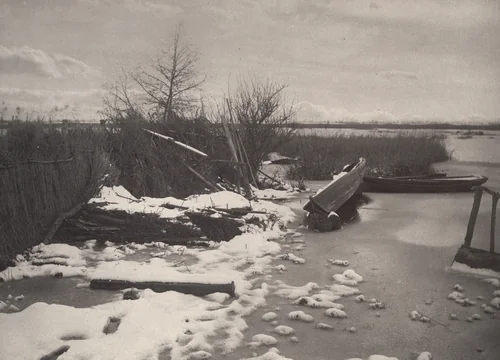
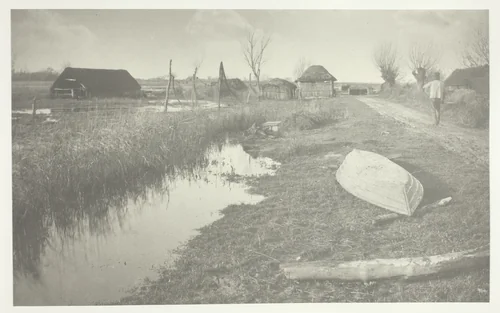
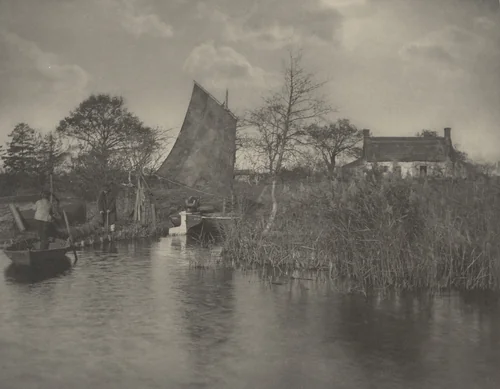
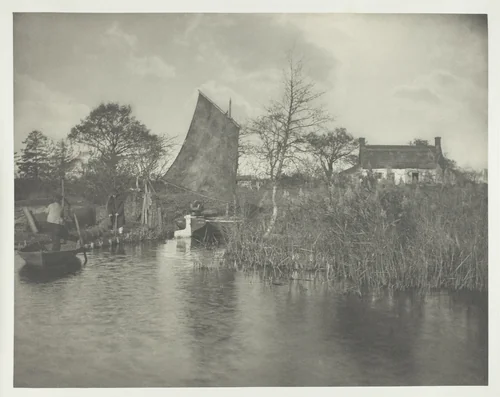
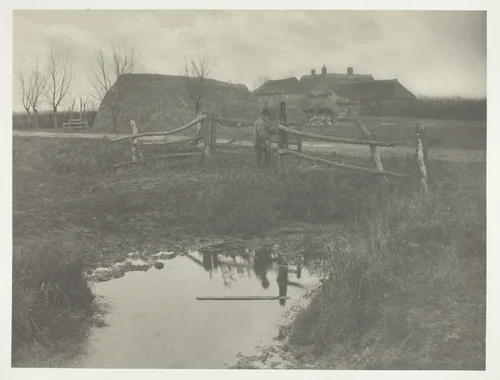
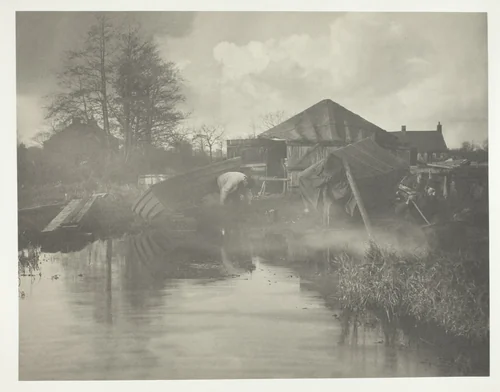
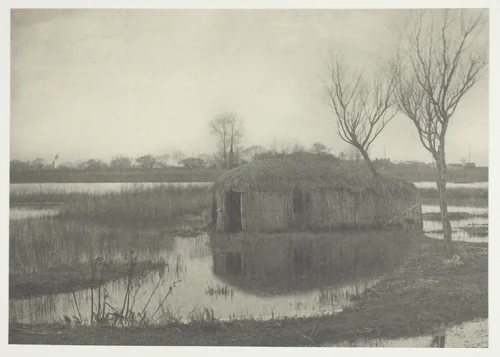
His early photographs, such as the evocative scene In the Haysel (Norfolk) and the stark, atmospheric Leafless March (Suffolk), demonstrate a profound commitment to naturalism rooted in the visual culture of the Eastern Counties. Emerson’s subject matter frequently centered on the unvarnished realities of rural life, especially among the working populace and the natural environments surrounding Norfolk and Suffolk. His meticulous compositional choices, evident in works like The Poacher - A Hare in View, (Suffolk), focused on capturing authentic human activity and atmosphere rather than idealized or Romanticized tableaux. Although many of his surviving images depict the flatlands and waterways of East Anglia, his portfolio also included demanding geological studies, such as "Pickering Tor," Dove Dale and "Pike Pool" (from below), demonstrating his keen eye for diverse topographical detail.
A trained physician, Emerson approached photography with an empirical rigor that often fueled conflict with the art establishment. He engaged in fiery public debates regarding the purpose and meaning of the medium, vehemently rejecting the popular Pictorialist trend which sought to mimic the aesthetic of fine art painting. He argued forcefully that photography possessed its own unique aesthetic identity, separate from that of traditional media. Curiously, for someone so dedicated to capturing visual reality, Emerson possessed a famously volatile relationship with his own previously published theories, even publicly recanting his core scientific principles regarding focus later in his career—a sudden reversal that remains one of the medium’s great historical eccentricities.
Emerson’s relentless insistence on the integrity of the photographic process laid the groundwork for modern documentary and art photography. Today, his key works are conserved in major institutions, including the Metropolitan Museum of Art and the Art Institute of Chicago, providing museum-quality preservation for future generations. His historical importance ensures that many important Peter Henry Emerson prints and photographs are now freely available, residing in the public domain and widely accessible for study and reproduction as downloadable artwork.
Source: Wikipedia · CC BY-SA 4.0