Peter Aubry
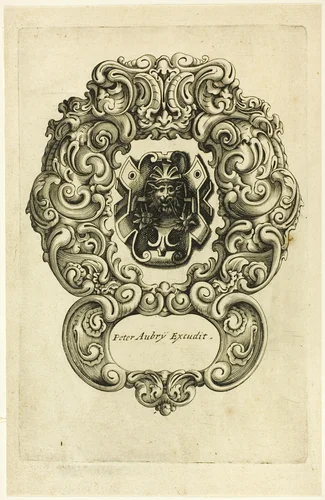
Peter Aubry’s compact output of just fifteen known prints secures his position among the specialized engravers working in Central Europe during the volatile first half of the seventeenth century. Documented as active circa 1630, Aubry operated during a period demanding highly reproducible and affordable imagery, catering to the growing need for both didactic materials and easily disseminated artistic designs across the Continent. His corpus, though small, represents an exemplary illustration of the meticulous technical demands of copperplate engraving during the early Baroque era.
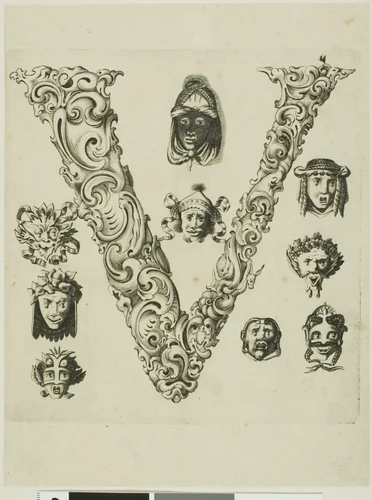
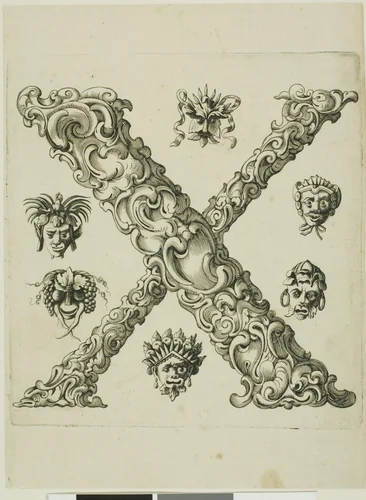
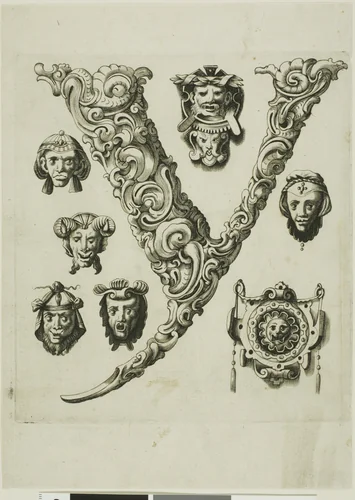
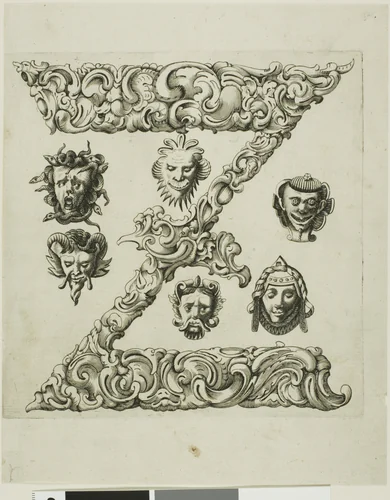
Aubry’s reputation rests primarily on a highly focused series of works known by their elemental descriptions, such as Letter A, Letter B, and Letter D. This categorization strongly suggests the creation of an instructional or typographical alphabet, intended perhaps as an exemplar for calligraphers and type founders, or as visual aids for literacy. The execution of these individual plates demonstrates a masterful command of the burin, characterized by deeply incised, controlled line work and effective use of cross-hatching to achieve dense tonal saturation. These techniques were critical for ensuring that the resulting paper impressions, or Peter Aubry prints, retained clarity and detail after repeated pressings.
His work, primarily focused on informational geometry and precise form, avoids the expressive melodrama often associated with his contemporaries. Instead, Aubry embraced precision and clarity, creating artifacts that functioned as both elegant design studies and vital instruments of visual knowledge dissemination. The persistence of these few works in institutional holdings, including the collection of the Art Institute of Chicago, confirms their value as museum-quality historical documents.
Today, due to the age and nature of their creation, many of these highly detailed images have entered the public domain, making downloadable artwork widely available for researchers and students alike. This digital accessibility ensures that his legacy, built upon a small but perfectly rendered collection, continues to instruct.
Curiously, the name Peter Aubry persists in popular culture, finding perhaps its most unexpected echo not in academic art history, but in contemporary North American athletics; a later bearer of the name achieved renown as a Canadian professional goaltender and coach in the high-stakes theater of ice hockey. Such strange continuities in nomenclature offer a reminder that historical significance is often serendipitous, regardless of the medium employed.