Peru, Probably central coast
The artistic output identified as originating from Peru, Probably central coast dates to the approximate period of 1000 CE. This designation refers to the material culture produced within this specific geographic area of ancient Peru, known primarily for its sophisticated textile production and carved utilitarian objects.
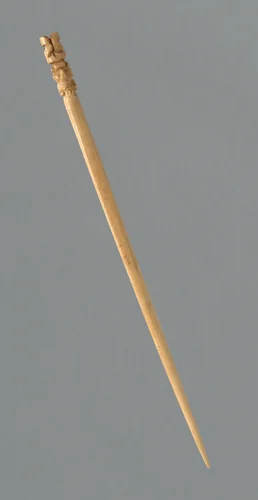
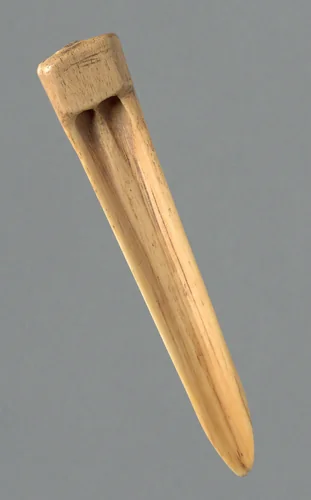
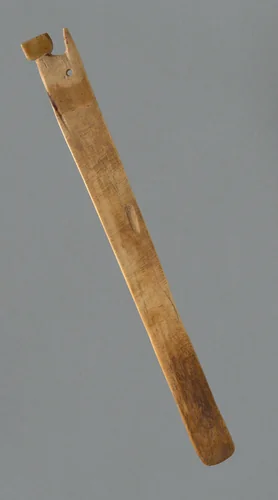
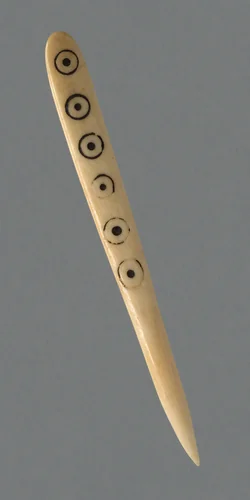
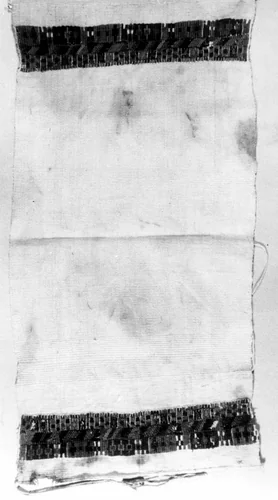
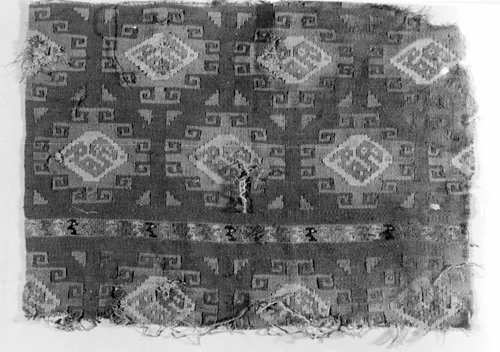
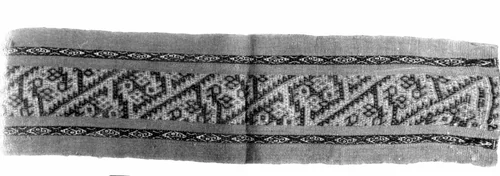
Seven documented objects attributed to this origin are currently preserved in major North American institutions, representing key examples of pre-Columbian craftsmanship. The works documented include four instances of the carved or fashioned object known as Bone Pick, reflecting the use of organic materials for daily items. A large textile, a Carrying Cloth, is also documented, demonstrating the region’s capacity for complex weaving and dyeing.
All documented works are held in the collection of the Art Institute of Chicago. The preservation of these specific pieces ensures that museum-quality examples of Peruvian artistry from this period are maintained for academic study and public view. As these ancient works are frequently cataloged, images of these artifacts are often placed in the public domain, allowing for widespread access. This availability facilitates the distribution of downloadable artwork and high-quality prints, which aids in scholarly research focusing on the pre-Columbian cultures of the Peru, Probably central coast region.