Peregrino da Cesena
Peregrino da Cesena was an artist primarily active as a printmaker during the late 15th and early 16th centuries, with his documented period of production spanning 1490 to 1505. His known output is limited but historically significant, consisting of high-quality prints held by major institutions in the United States.
Seven prints by Peregrino da Cesena are represented in prominent museum collections, establishing his legacy in the history of early graphic arts. His works are preserved in the holdings of the Art Institute of Chicago and the National Gallery of Art.
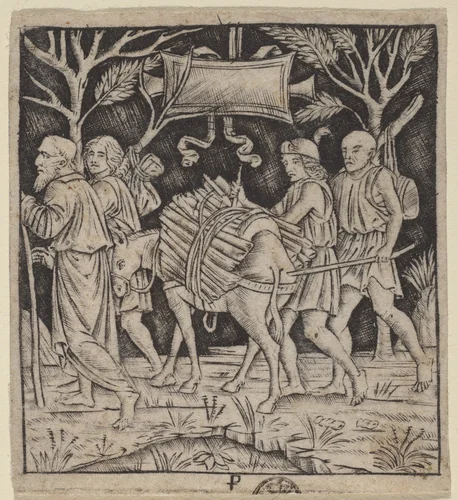
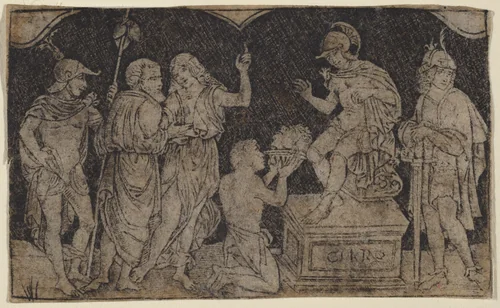
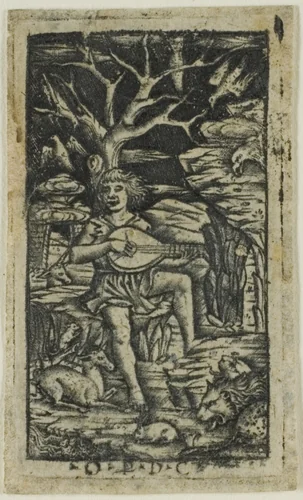
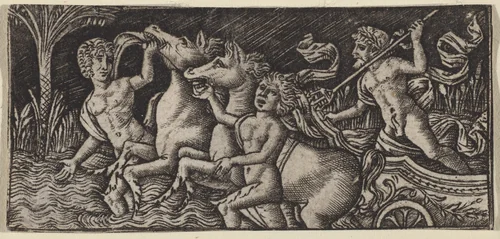
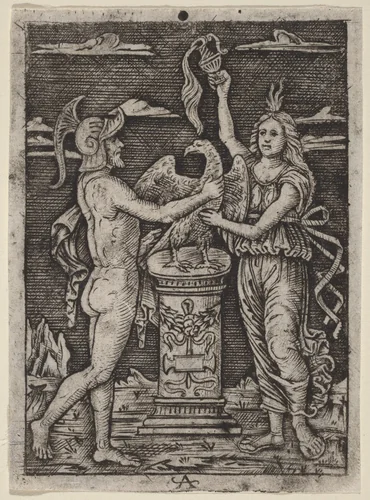
His known subjects address both classical mythology and biblical narratives, illustrating the thematic breadth of printmaking during this era. Notable works include the dramatic scenes Abraham and Isaac on Their Way to Mount Moriah and Artaxerxes Receiving the Head of Cyrus. He also explored classical iconography, as seen in Orpheus Charming the Animals, The Triumph of Neptune, and Consecration of an Eagle.
As an early modern artist, Peregrino da Cesena prints are valuable historical artifacts. Today, due to the age of the original works, many images derived from his prints are now in the public domain, offering researchers access to downloadable artwork for study. Researchers and collectors frequently reference Peregrino da Cesena paintings and prints from this period when examining the development of Northern Italian Renaissance printmaking.