Percy John Delf Smith
Percy John Delf Smith (1880-1959) was a British artist of exceptional versatility whose primary contribution to early twentieth-century graphic arts centered on his intensive series of engravings created in the immediate aftermath of the First World War. Trained across multiple demanding disciplines, Smith established a career defined by mastery in engraving, painting, lettering, calligraphy, and book design. His proficiency across such a wide spectrum of visual communication makes him a distinctive figure among his contemporaries, who often specialized more narrowly.
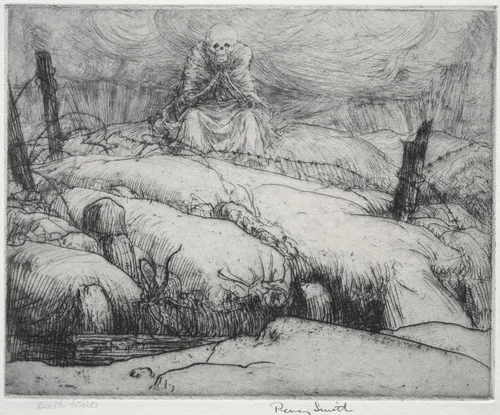
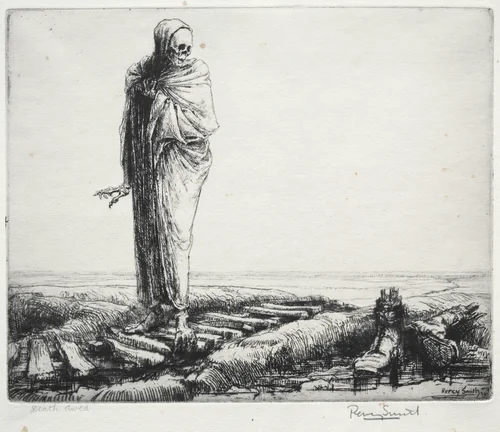
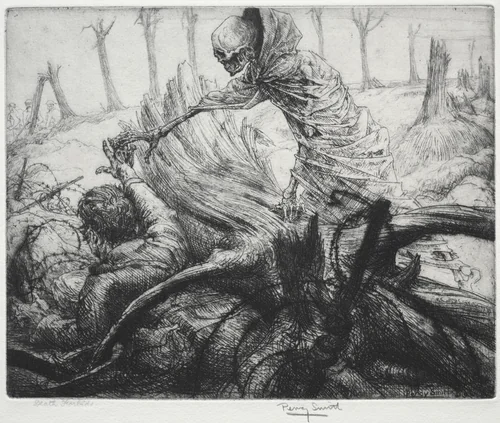
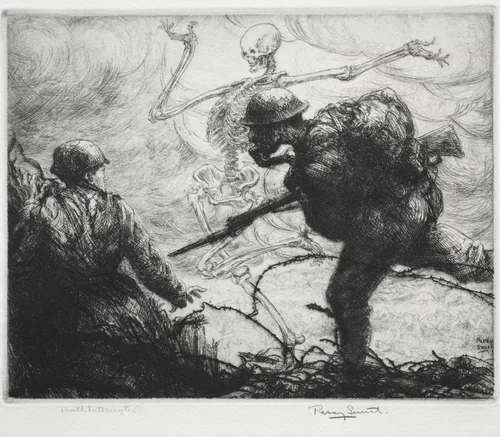
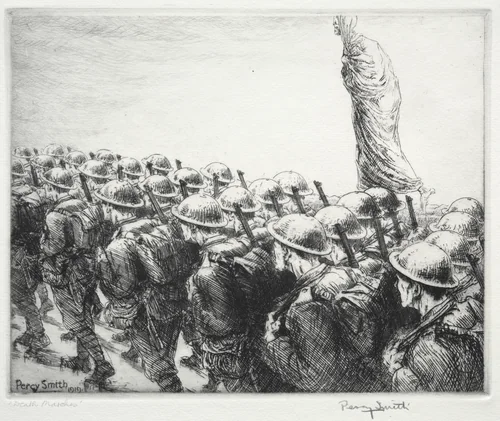
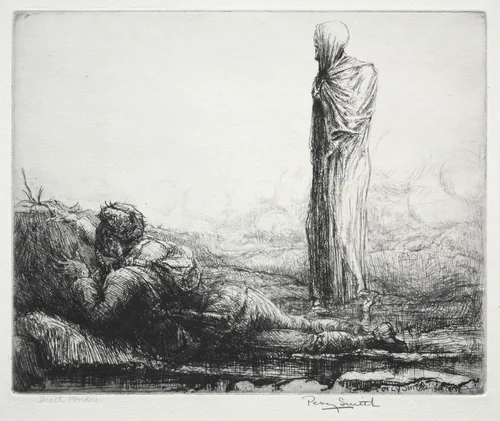
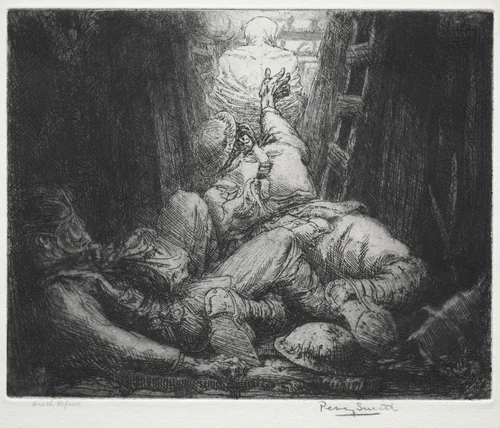
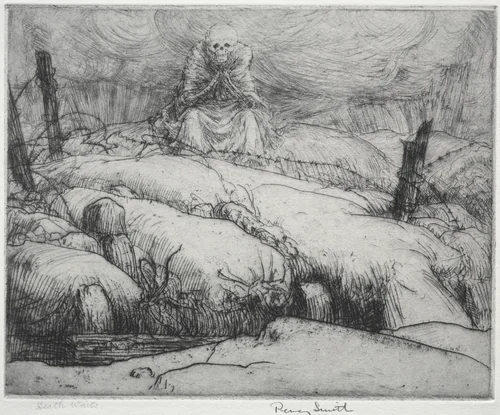
Smith’s most critically recognized body of work, a limited series of eight prints, originated around 1919. This includes the pivotal Dance of Death sequence, a psychologically charged exploration of mortality and chaos that captured the deep anxieties of the post-war era. The five known surviving compositions from this series, including Dance of Death: Death Awed, Dance of Death: Death Forbids, Dance of Death: Death Intoxicated, and Dance of Death: Death Marches, rely on stark contrasts and expressive lines to achieve their chilling effect. These powerful graphics quickly entered major institutions, with key examples of Percy John Delf Smith prints currently housed in permanent collections such as the Cleveland Museum of Art.
What makes Smith’s output particularly intriguing is the sharp dichotomy between his practice. On the one hand, he dedicated himself to the disciplined, rigorous craft of calligraphy and elegant lettering, designing and executing bookplates and precise typographic schemes. On the other, his engravings reveal a dark, almost Expressionistic sensibility, harnessing the medium’s potential for dramatic intensity. It is an interesting juxtaposition that the artist responsible for such meticulous, controlled letterforms also produced such visceral narratives of human frailty.
Beyond his fine art production, Smith made significant contributions to the aesthetics of the printed page through his work in book design, ensuring his influence resonated within both academic and commercial spheres. Today, his graphic works maintain their enduring legacy. Many of these important images have entered the public domain, allowing institutions and researchers worldwide to access downloadable artwork. The historical relevance and sharp execution of these images ensure their continued preservation, with many available today as museum-quality, high-quality prints for study and appreciation.
Source: Wikipedia · CC BY-SA 4.0