Peggy Bacon
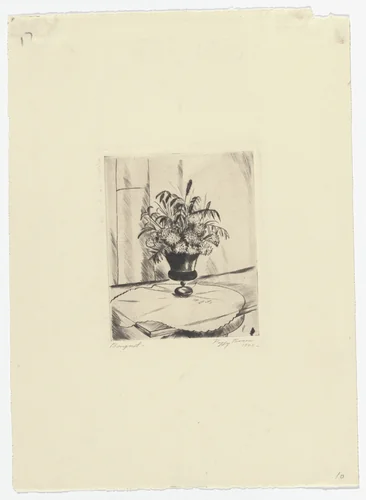
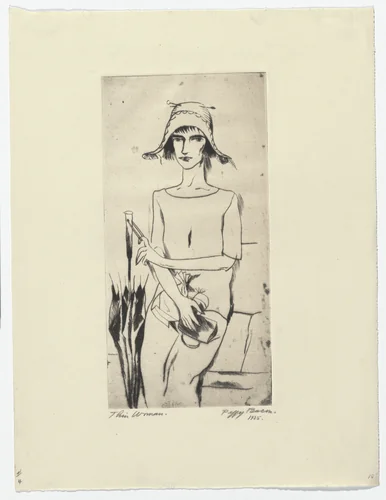
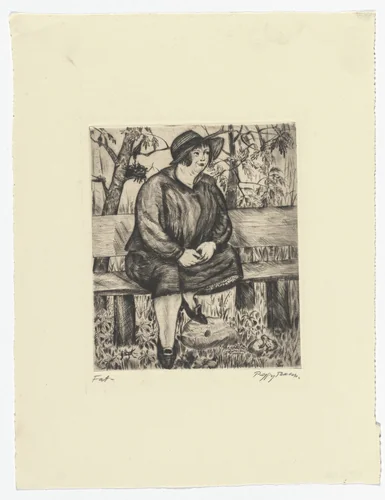
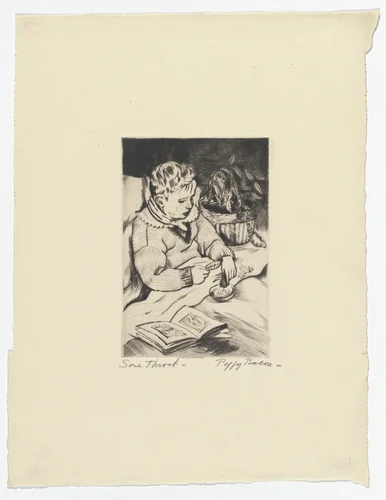
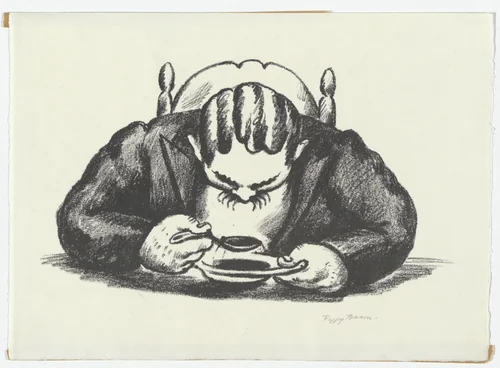
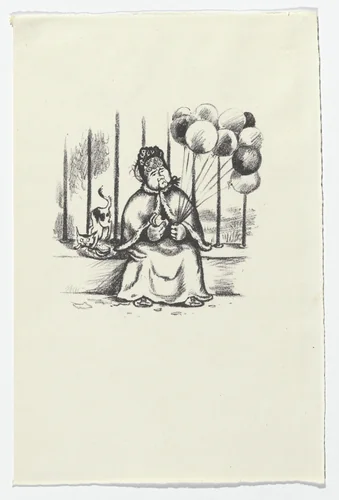
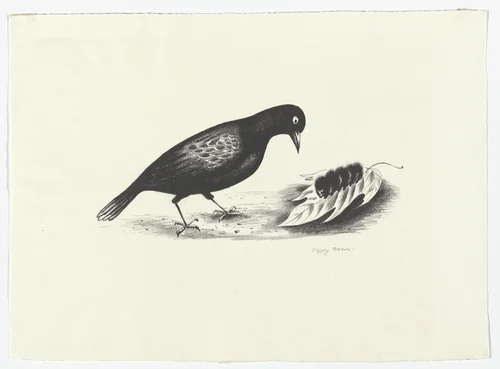
Margaret Frances Bacon, widely known as Peggy Bacon (1895-1987), holds a distinguished place in American graphic arts history, celebrated primarily for her incisive and witty satirical caricatures. While Bacon was a versatile artist who produced Peggy Bacon paintings, illustrations, and prose, her reputation is anchored by her extensive oeuvre of prints, particularly drypoints and lithographs, created during the dynamic period between 1918 and 1927.
Bacon’s formative years were spent studying at the Art Students League in New York, an environment that provided a rich source of material for her early graphic output. Under the tutelage of prominent figures such as Kenneth Hayes Miller and John Sloan, she developed a draftsman’s precision combined with a sharp, almost theatrical eye for human foible. Her work from this period operates as a visual diary of the bustling artistic and social infrastructure of the era.
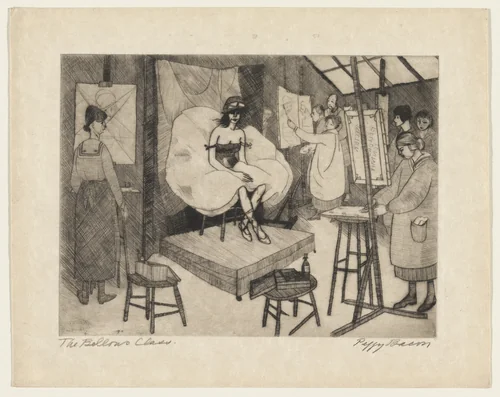
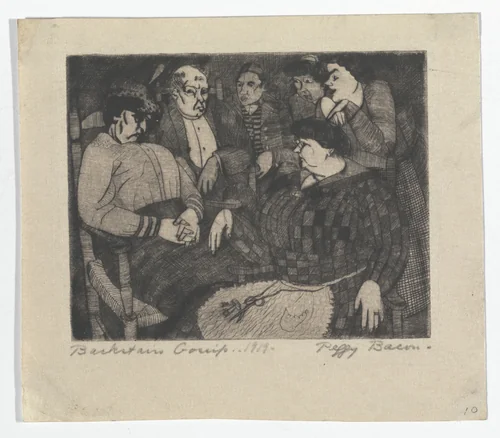
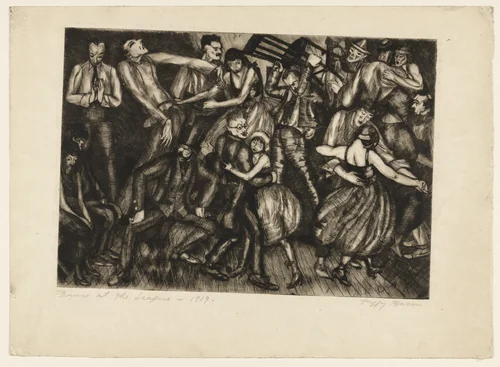
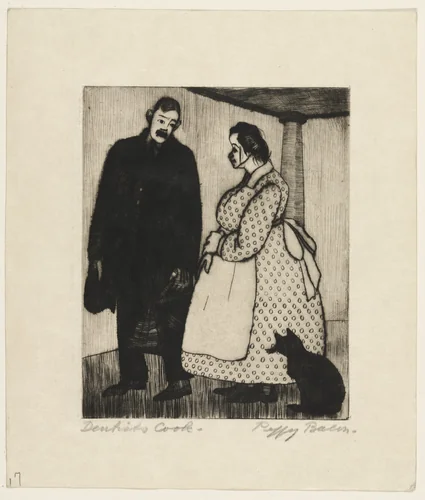
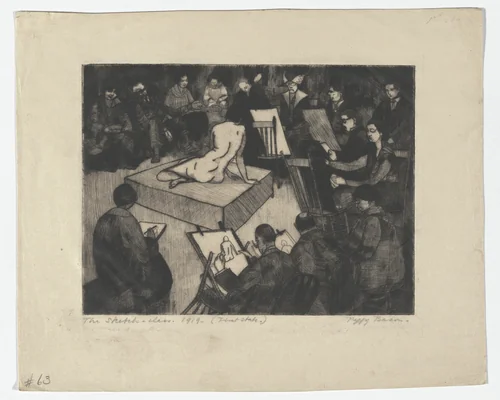
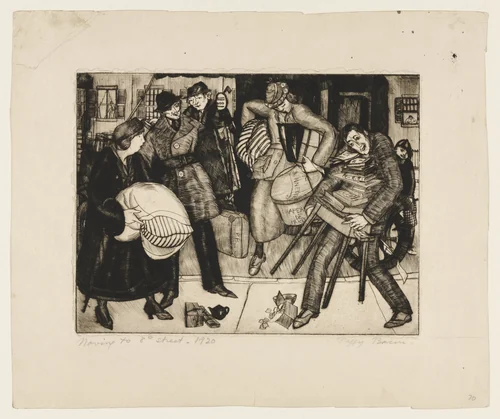
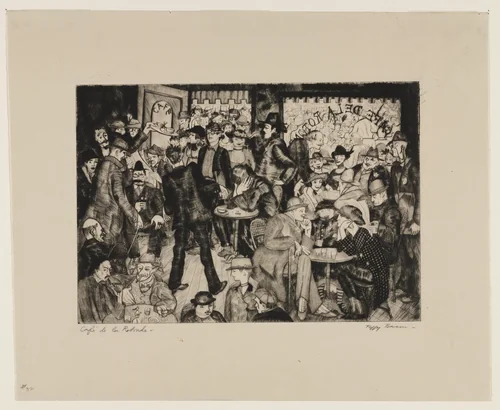
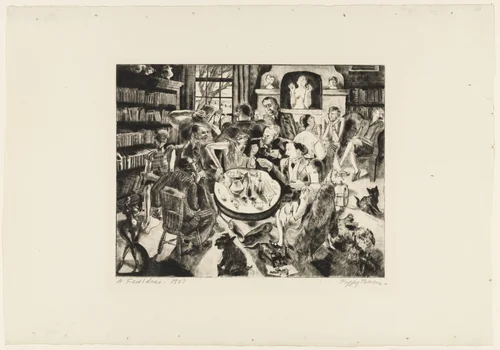
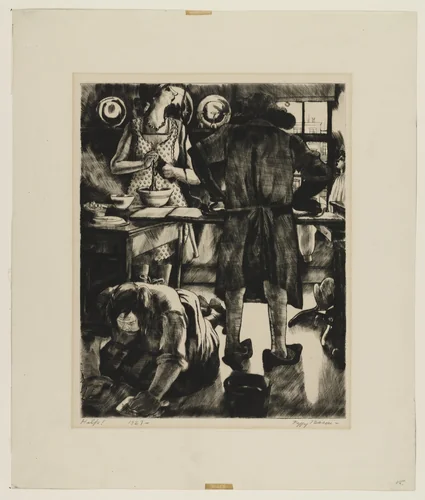
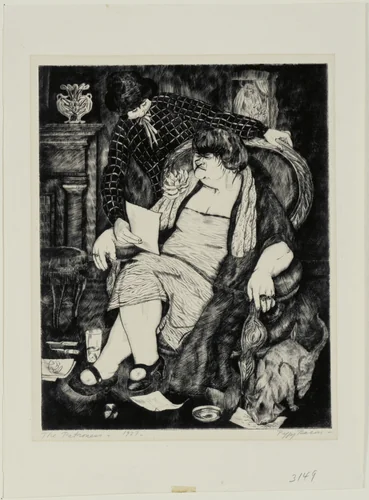
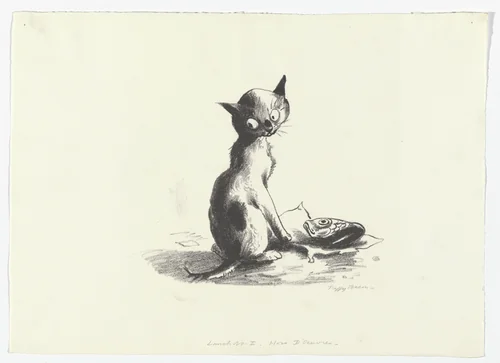
Bacon’s genius lay in capturing minor human dramas within institutional settings, transforming the mundane into focused, often comical vignettes. Her figures, never idealized, are rendered with specific, expressive postures and costumes, granting them an immediate and recognizable warmth despite the underlying satire. Prints such as The Sketch Class and Model in the Bellows Class expertly capture the awkward sincerity of artists at work, while Backstairs Gossip and Dance at the League function as concise social observations. One might observe that Bacon consistently utilized humor not as a tool of condemnation, but rather as a vehicle for shared recognition of universal human eccentricities. Even her most elaborately titled works, such as Earnestly Exhorting the Cook to Protect Isabella, reveal this narrative delight.
Bacon’s work achieved early and significant recognition, with examples of her high-quality prints quickly entering major collections, including the Museum of Modern Art. Her lasting influence stems from her capacity to fuse sophisticated technical skill with an unrelenting, yet often affectionate, scrutiny of contemporary life. Today, numerous examples of Peggy Bacon prints and drawings have entered the public domain, ensuring that these distinctive museum-quality prints remain accessible for study and enjoyment by a global audience.
Source: Wikipedia · CC BY-SA 4.0