Pedro Duque Cornejo
Pedro Duque Cornejo (1677–1757) was a pivotal figure in the Spanish Baroque tradition, representing the apex of the Sevillian school of sculpture in the late seventeenth and early eighteenth centuries. Born into a celebrated artistic lineage, his training was formidable; he served as a disciple under his grandfather, the established master Pedro Roldán, solidifying a professional inheritance critical to Andalusian religious art. While Cornejo is primarily remembered for his complex wooden polychrome altarpieces and monumental carvings that dominate the liturgical spaces of southern Spain, his surviving preparatory drawings offer a unique, immediate insight into his creative methodology and formidable skills as a draftsman.
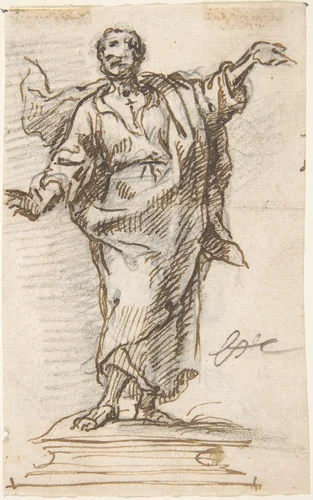
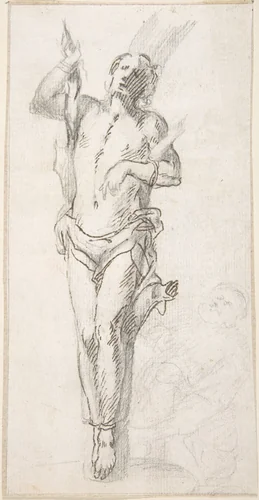
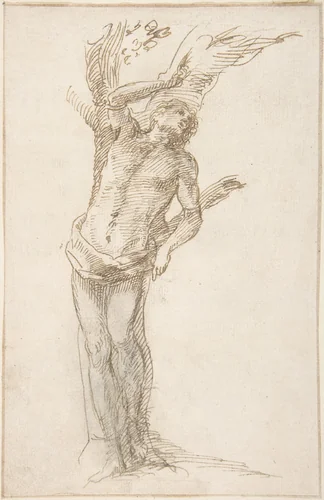
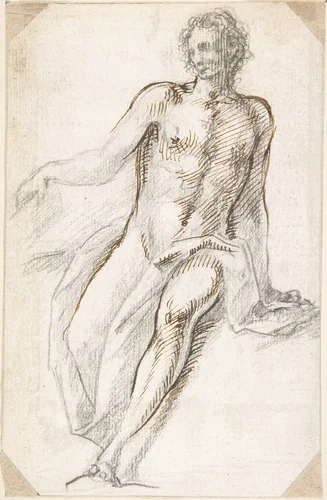
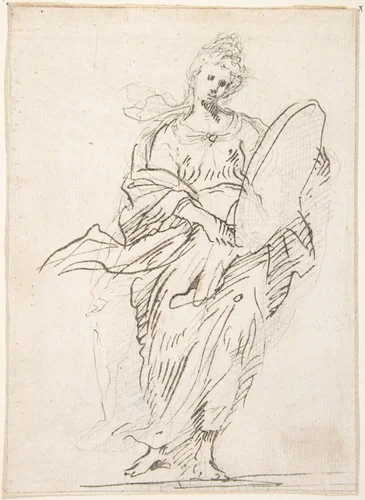
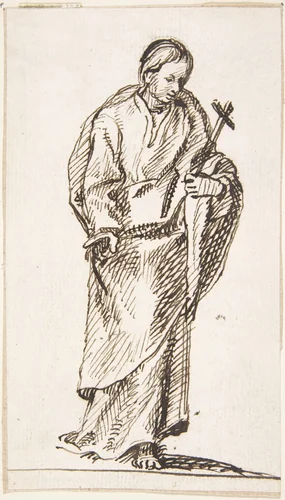
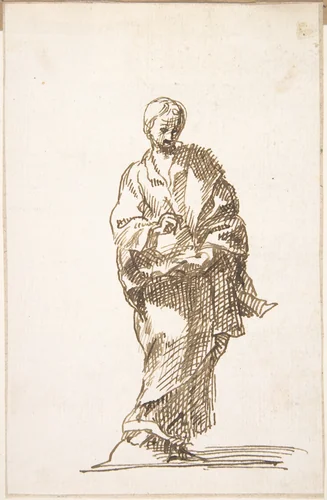
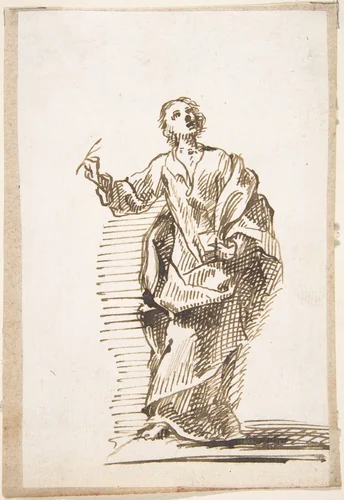
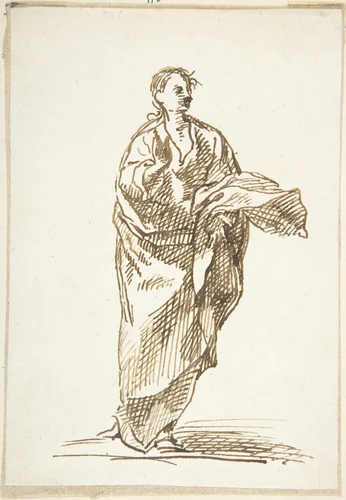
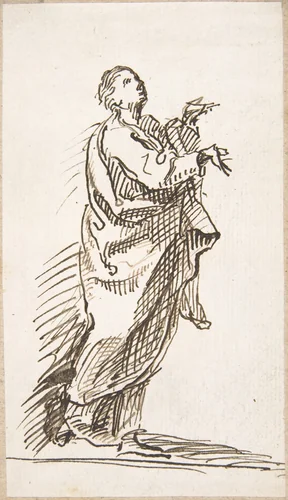
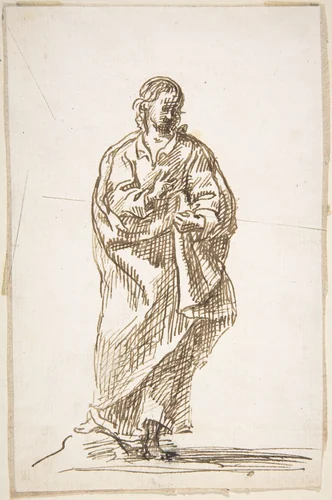
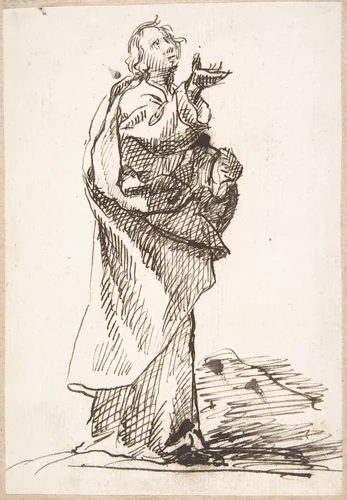
Cornejo’s relatively modest corpus of known drawings, numbering approximately fifteen examples, serves as compelling documentation of his meticulous artistic process. These works often functioned as modelli, rigorous studies intended to refine compositions and establish dramatic pose before execution in the permanent media of wood or stone. Characterized by fluid ink washes, confident chalk lines, and a deep sense of psychological intensity, these studies reveal an intense focus on anatomical precision.
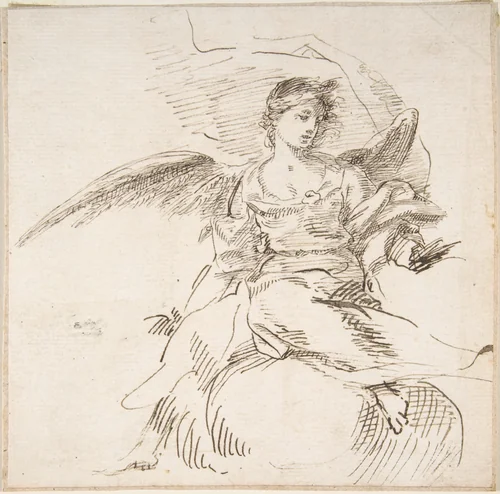
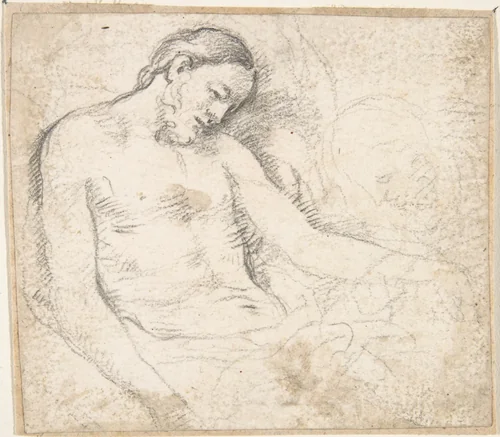
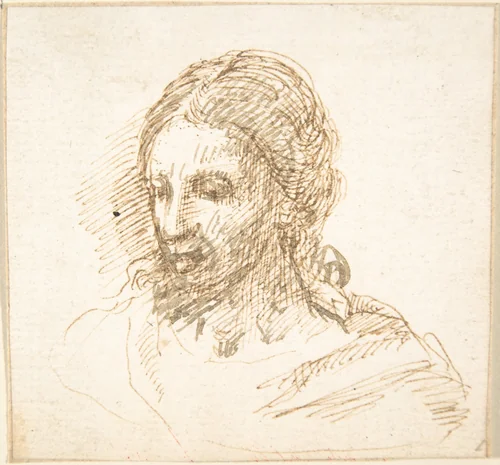
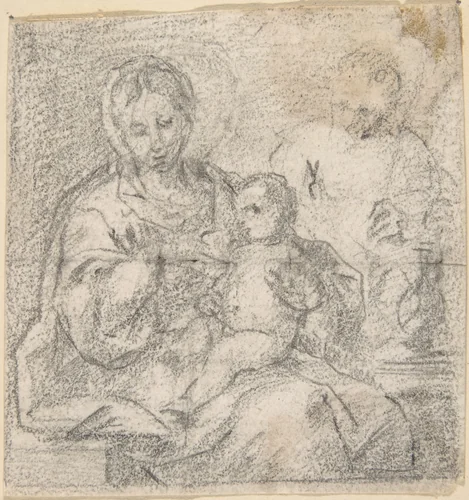
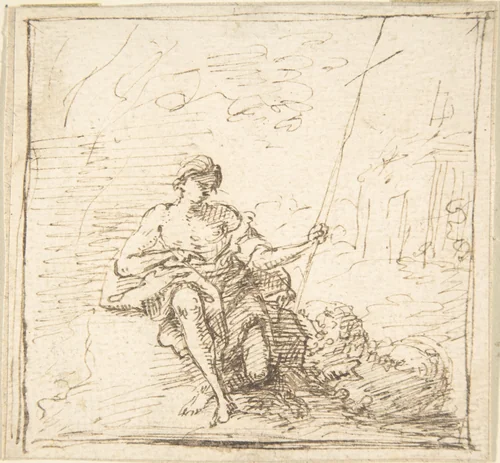
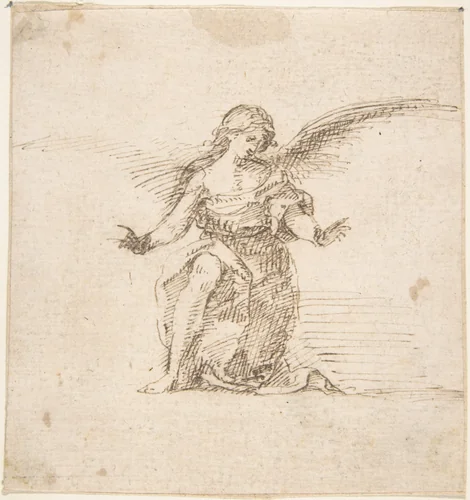
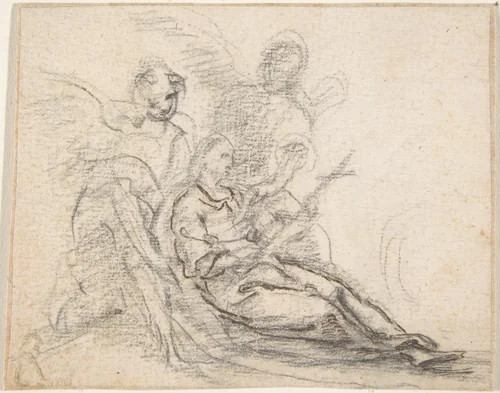
Examples held in major international collections, including the Metropolitan Museum of Art, showcase his range in sacred iconography. These works span from the dynamically posed Angel Seated on Clouds to the intimate study for the Holy Family. His sacred studies frequently delve into profound devotional themes, evidenced by the solemnity captured in Head of Christ and the sorrowful complexity of Figure of the Dead Christ with Mourning Angel (The Lamentation). Furthermore, drawings such as John the Baptist with a Lamb in the Wilderness highlight the artist’s remarkable ability to translate the theatrical fervor of the late Baroque into a palpable, two-dimensional graphic elegance.
For scholars studying the Spanish Golden Age, these museum-quality preparatory works are indispensable tools for understanding the intellectual transition from concept to finished devotional sculpture. Pedro Duque Cornejo prints, derived from these original paper studies, are now increasingly accessible. Given the inherent fragility of paper, the fact that many of these seminal works are now in the public domain, available as high-quality prints for detailed scholarly use, ensures that this key figure of the Sevillian school continues to be recognized for his mastery of line as well as monumental form.
Source: Wikipedia · CC BY-SA 4.0