Pavel Tchelitchew
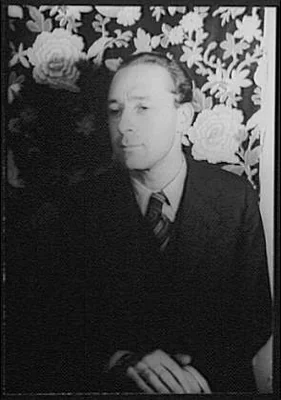
Pavel Fyodorovich Tchelitchew (1898-1957) holds a singular place in the development of 20th-century figurative art, transitioning seamlessly between painting, portraiture, and complex theatrical design. Best known for his highly original contributions to Surrealism in the 1930s and 40s, his earliest documented activities between 1918 and 1923 established the foundation of a profoundly versatile artistic career.
Tchelitchew’s early period was marked by rapid geographic and aesthetic transformation. Forced to leave Russia, he traveled through Eastern Europe, absorbing the avant-garde sensibilities of Berlin and Paris while supporting himself through commercial and theatrical work. This necessity explains the high number of early drawings and designs in institutional collections, such as the fifteen works currently in the database, many of which now reside at the Museum of Modern Art.
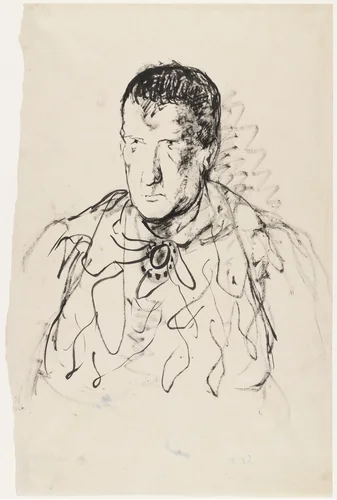
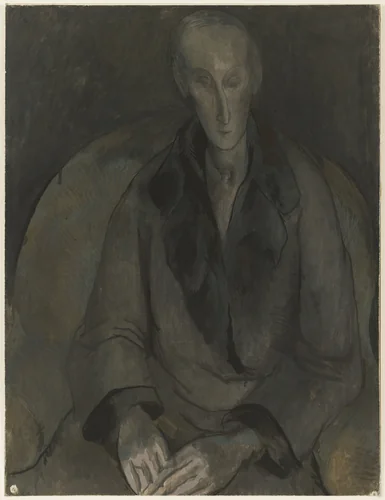
This portfolio demonstrates his technical precision and psychological depth before the chromatic intensity of his famous later canvases. Works like the early portrait The Artist's Mother and the precise topographical sketch Landscape Outside Kiev showcase his rigorous academic draftsmanship. Crucially, the period also included his immersion in ephemeral stage arts, evidenced by the kinetic Set design for Der Blaue Cabaret Theatre, Berlin. Designing for the post-war German cabaret required Tchelitchew to merge the classical understanding of the body with a nascent, often unsettling, modern theatrical aesthetic—a synthesis that foreshadowed the anatomical transparency of his mature Surrealism.
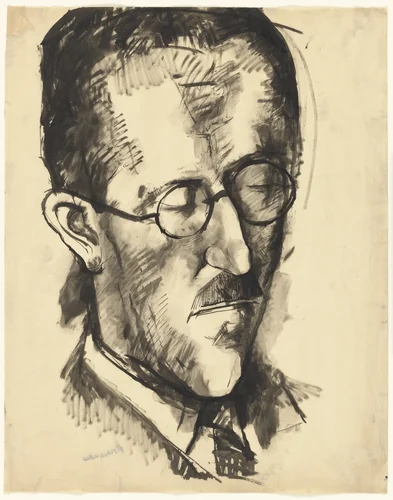
His early portraiture, such as the penetrating study of Pierre Souvtchinsky, indicates an artist keenly interested in the inner architecture of the sitter, not just the surface appearance. While the dramatic scope of later Pavel Tchelitchew paintings tends to draw the most attention, these foundational studies provide essential insight into his development of line and form. As these historically significant works continue to be digitized, scholars find access easy; many early pieces are entering the public domain, allowing for free art prints and the study of museum-quality drawings. These high-quality prints ensure that Tchelitchew's foundational achievements remain accessible for future generations of artists and historians.
Source: Wikipedia · CC BY-SA 4.0