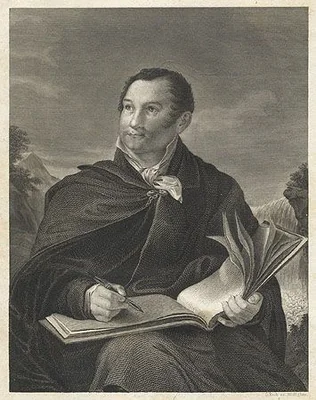
Pavel Svinin
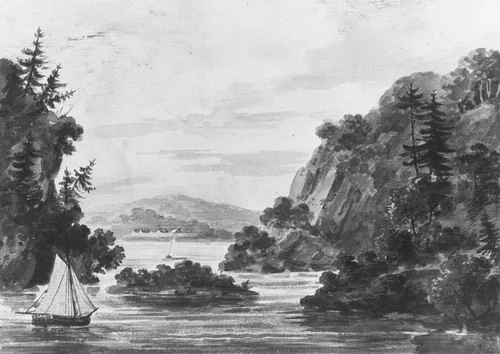
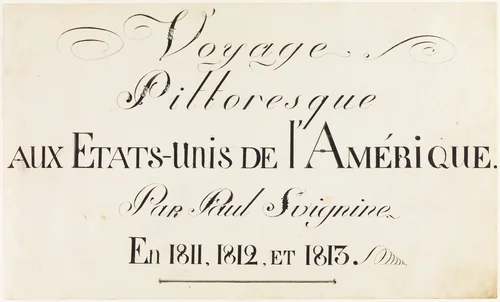
Pavel Petrovich Svinin (Svinyin) stands as a distinct, multi-faceted figure of the early nineteenth century, successfully navigating the complex roles of painter, editor, and prolific travel writer. While widely known in Russian literary history, his most enduring contribution to international art history is the singular series of watercolors and sketches he executed during his diplomatic sojourn in the United States. These works, produced between 1811 and 1813, provide a rare, unusually vivid outsider’s perspective on the nascent American republic, focusing acutely on architecture, infrastructure, and social custom.
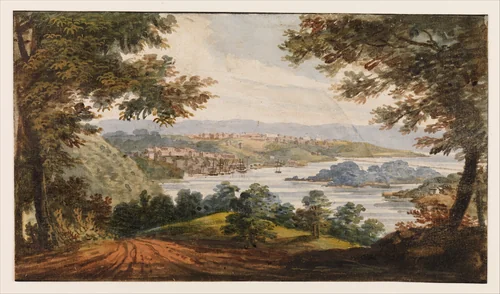
Svinin’s American artistic output largely focused on the mid-Atlantic region, documenting crucial elements of early 19th-century commerce and community life. Pieces such as A Ferry Scene on the Susquehanna at Wright's Ferry, near Havre de Grace and A View of the Potomac at Harpers Ferry capture critical arteries of settlement and transport, often infused with a keen sense of regional specificity. His observational interests extended beyond topography to the social fabric, notably illustrated by the striking historical documentation found in A Philadelphia Anabaptist Immersion during a Storm, which meticulously renders a moment of religious fervor and communal gathering in the face of inclement weather.
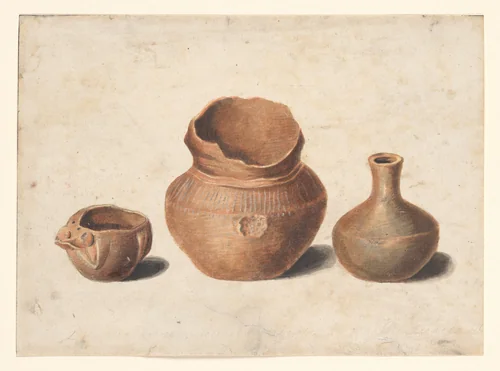
The artist maintained a reputation that transcended pure objective observation, often earning him the moniker "Russian Munchausen" due to the occasionally embellished and colorful accounts contained within his extensive travelogues. This flair for narrative, however, did not detract from the visual rigor evident in his artistic documentation. His detailed renderings of specific American locations, such as A Country Residence, Possibly General Moreau's Country House at Morrisville, Pennsylvania, provide invaluable evidence for historians studying early American material culture.
Today, the most significant collection of these unique Pavel Svinin paintings is preserved in major institutions, including the Metropolitan Museum of Art. Because many of these works now exist in the public domain, high-quality prints and downloadable artwork are widely accessible, allowing scholars and enthusiasts to study the formative period of American life as seen through the sharp, often witty, eye of a Russian diplomat.
Source: Wikipedia · CC BY-SA 4.0