Paul Sandby
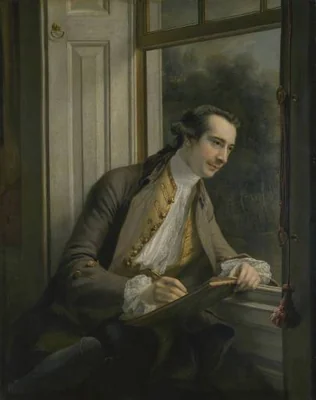
Paul Sandby holds a distinctive and formative place in eighteenth-century British art history, serving as a crucial transitional figure who elevated landscape watercolor painting from a preparatory medium into a fully recognized art form. His early career was unexpectedly rooted in the technical demands of military and geographical mapping, an experience that instilled in him a foundational precision that profoundly shaped his subsequent artistic vision. Along with his older brother, Thomas, Sandby achieved permanent historical significance as a co-founder of the Royal Academy in 1768, cementing his role not just as a practitioner, but as an architect of the emerging British art establishment.
Active between 1731 and 1745, Sandby worked prolifically across drawing and printmaking, mediums ideally suited to capturing the shifting sensibilities of the emerging Picturesque movement. His surviving oeuvre includes highly skilled drawings and prints, many of which are now held in major international collections such as the Metropolitan Museum of Art and the National Gallery of Art, affirming their museum-quality status.
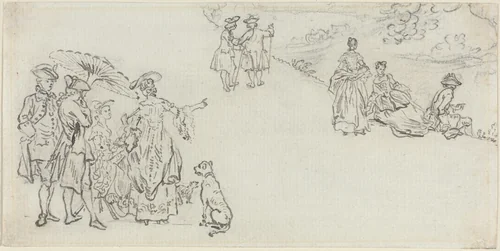
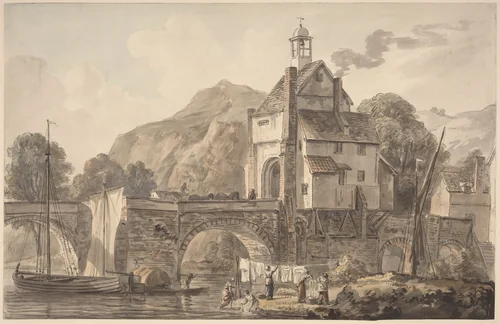
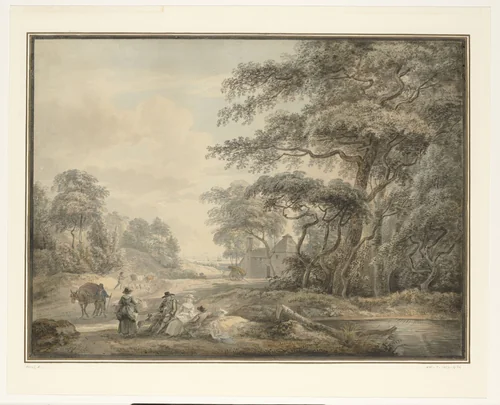
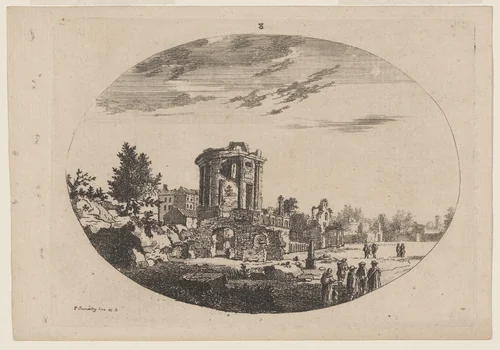
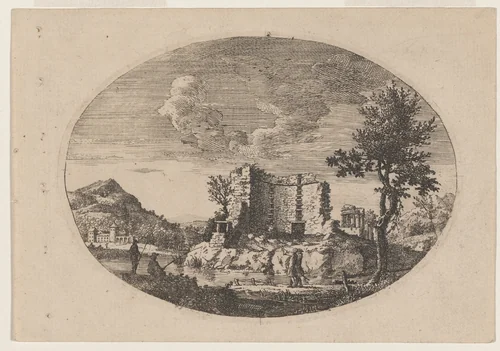
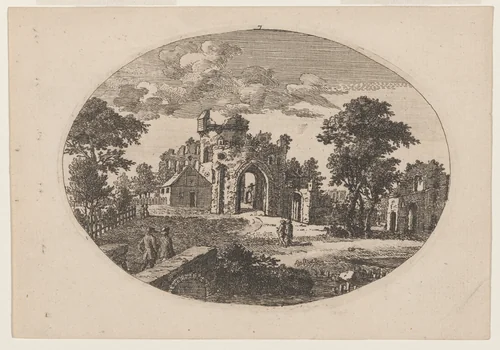
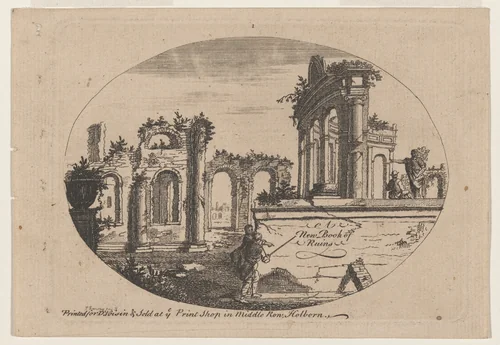
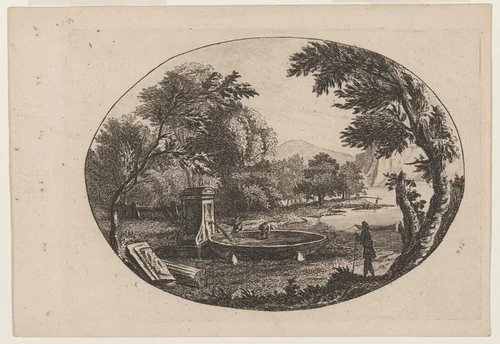
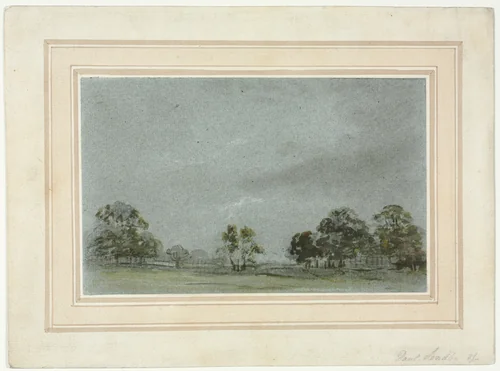
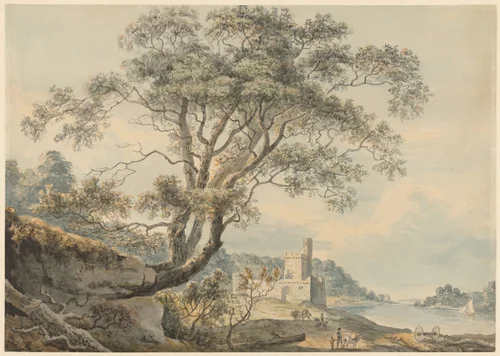
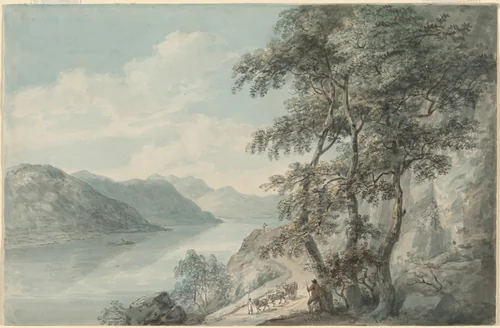
Sandby's subjects ranged from grand estate views to intimate genre scenes, characterized by his keen ability to integrate human figures naturally into the surrounding environment. He captured the stark natural beauty of the north, seen in works like Derwentwater, and detailed subtle domestic moments in studies like the paired Girl with a Bonnet at Work [recto] and Girl with a Bonnet Reclining [verso]. Other notable compositions, such as Ladies and Gentlemen in a Country Park and the evocative Ruins with a Seated Man, and a Covered Wagon in the Distance, showcase his technical mastery in combining topographical accuracy with romantic sensibility.
It is perhaps one of the more charming ironies of British art history that a career rooted in the objective, quantitative measurement of the earth ultimately helped define the subjective criteria for aesthetic excellence in landscape painting. The historical importance and enduring technical skill evident in Paul Sandby prints ensure continued scholarly interest. Today, the availability of high-quality prints and downloadable artwork allows widespread engagement with his significant contributions to the genre.
Source: Wikipedia · CC BY-SA 4.0
![Girl with a Bonnet Reclining [verso] by Paul Sandby, drawing, 1731-1809](https://img.artbee.org/2c7d093a-3b4b-445a-bbe4-3a9081532b91/small.webp)
![Girl with a Bonnet at Work [recto] by Paul Sandby, drawing, 1731-1809](https://img.artbee.org/6a90f69d-cc79-4292-9d4a-b11a7ccb1046/small.webp)