Paul Revere
Paul Revere is historically recognized as an American silversmith, industrialist, and military officer, yet his enduring significance rests equally upon his output as a pivotal engraver whose widely circulated images helped shape public opinion during the critical opening months of the American Revolutionary War in Massachusetts. Active as a printmaker from 1755 to 1796, Revere mastered the medium of copperplate engraving, applying his precision, honed as a tradesman, to the volatile sphere of political communication.
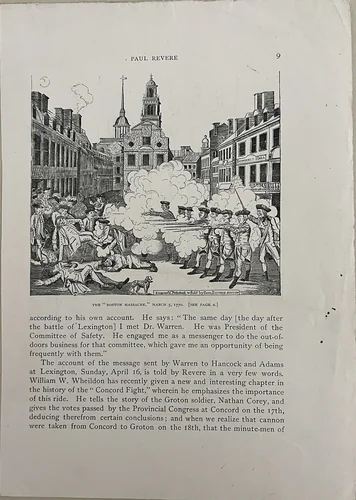
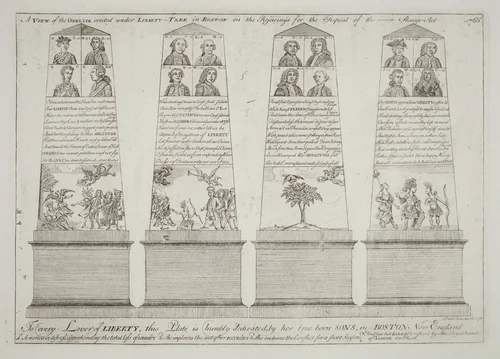
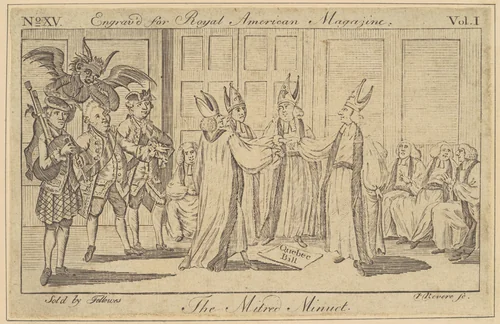
Revere’s most famous artistic endeavor is the highly potent political broadside, The "Boston Massacre," March 5, 1770. Though often adapted from the composition of fellow artist Henry Pelham, Revere’s edition was published rapidly, functioning as a defining piece of Patriot propaganda that presented the incident as an organized, unprovoked assault on unarmed citizens. This strategic use of visual media established him not merely as an artist, but as an acute manager of popular sentiment. His political engagement continued through works such as The Mitred Minuet and the celebratory The Obelisk under the Liberty Tree, Boston, works that utilized visual satire and commemoration to galvanize revolutionary feeling.
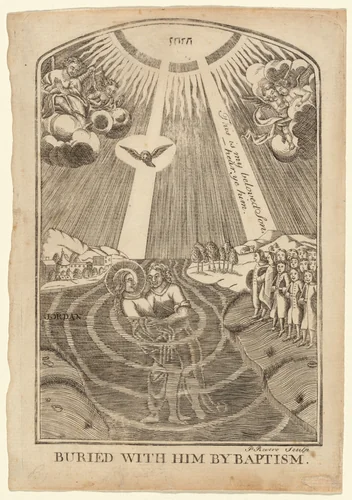
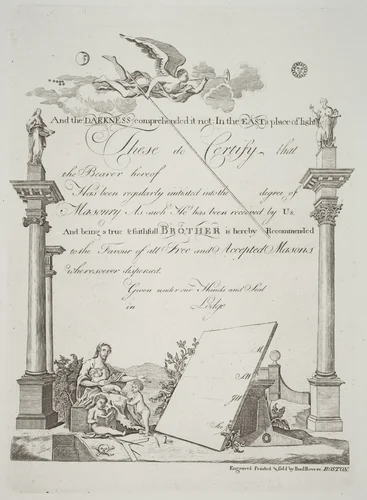
While his political prints are his best-known legacy, Revere’s range reflects the necessity of an active colonial tradesman. His output included functional and ceremonial documents, such as the elaborate Masonic Certificate, and devotional subjects like the religious plate Buried with Him by Baptism. These diverse Paul Revere prints illustrate the commercial viability and technical skill required of eighteenth-century engravers. Few artists in American history have so successfully transitioned their skills from the production of luxury items (silver) to the mass distribution of incendiary, museum-quality information.
Following his alerting of nearby minutemen prior to the battles of Lexington and Concord in 1775, Revere’s focus shifted increasingly toward industrial pursuits and military service. However, his visual legacy remains foundational to the study of American political art. Today, his historically significant works are held in major institutions like the National Gallery of Art and the Art Institute of Chicago, and many of his most iconic pieces are now widely accessible as high-quality prints within the public domain.
Source: Wikipedia · CC BY-SA 4.0