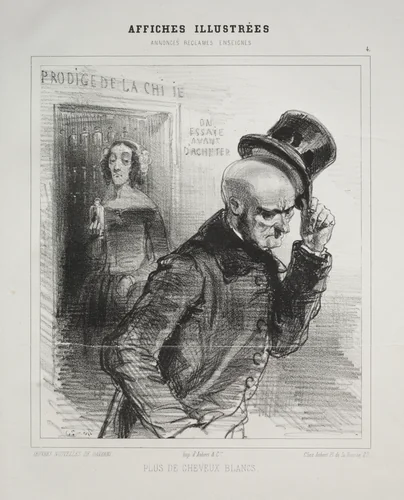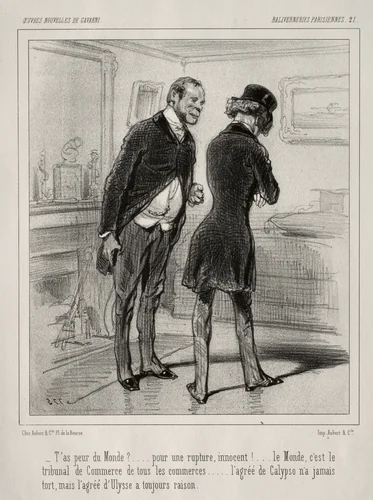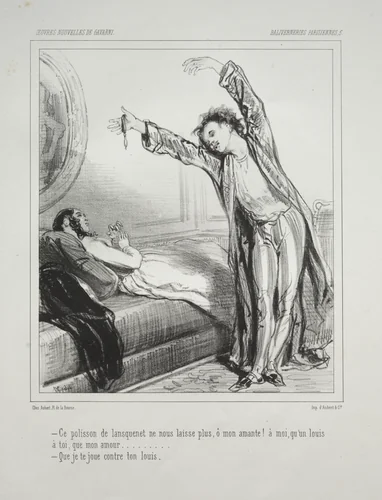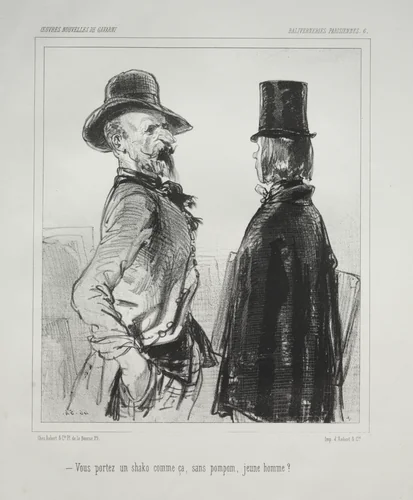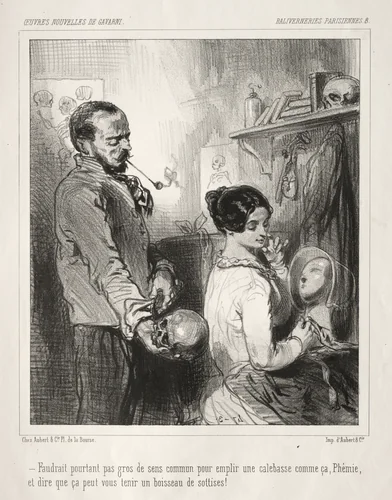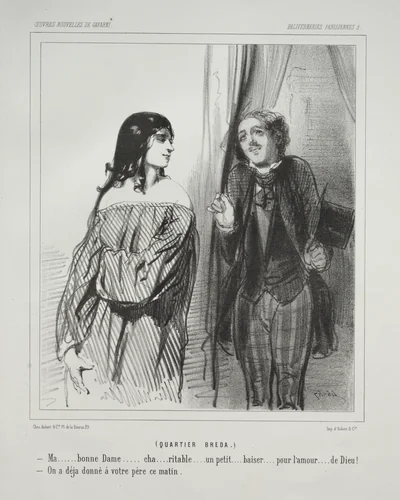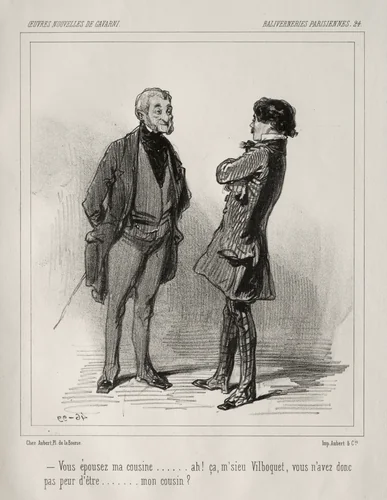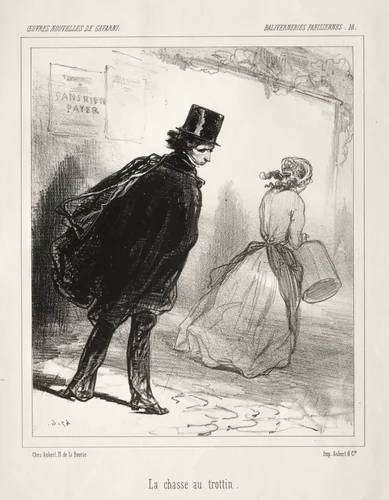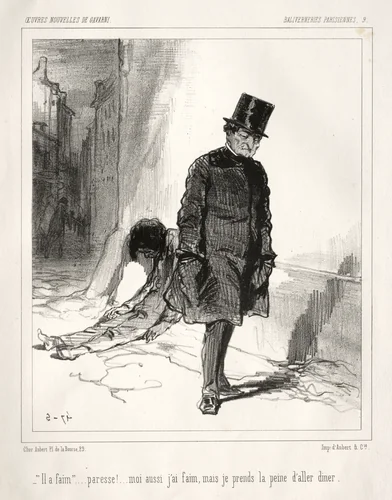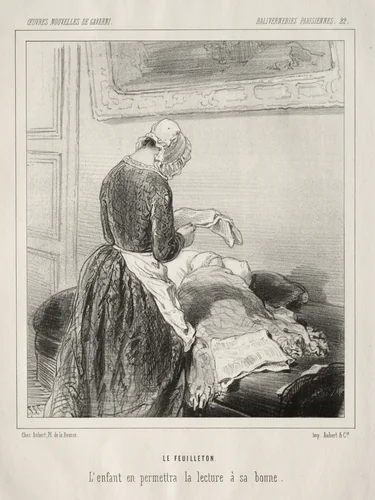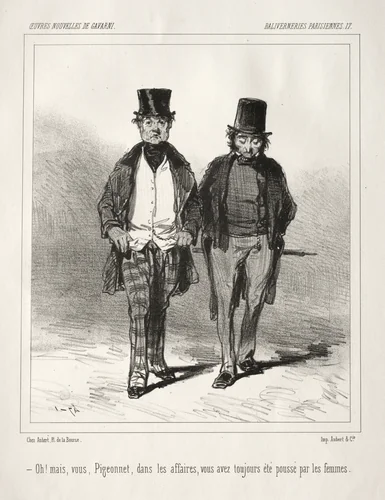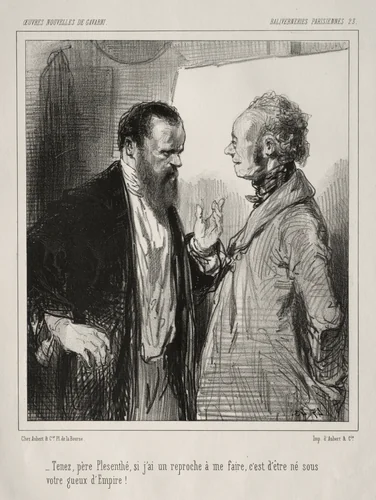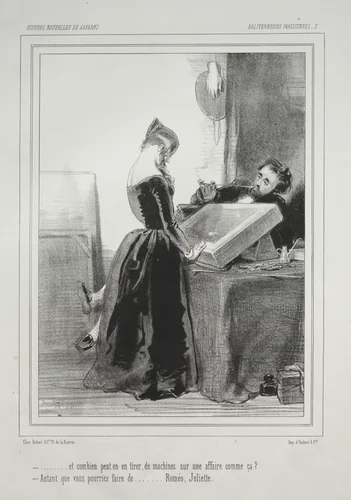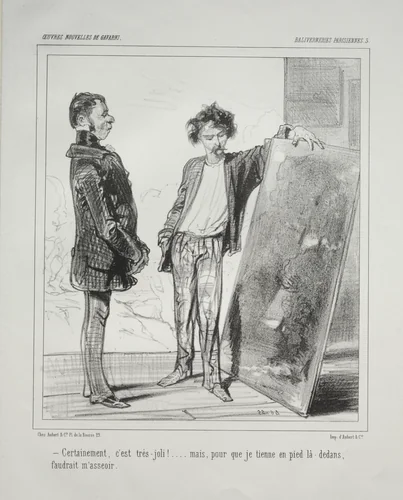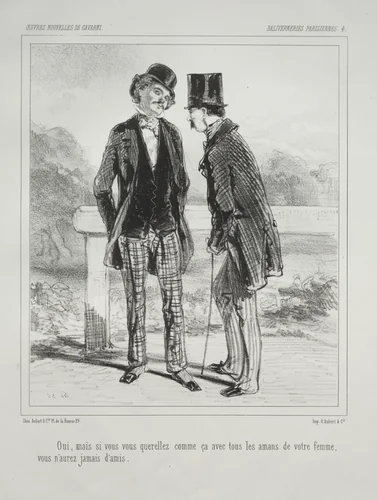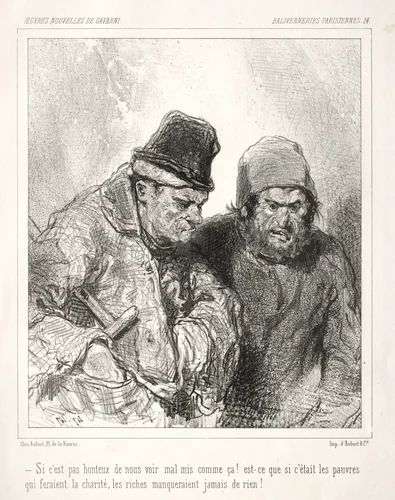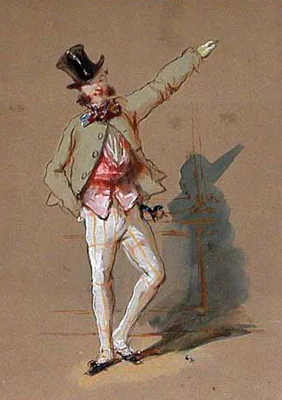
Paul Gavarni
Paul Gavarni, born Sulpice Guillaume Chevalier, stands as one of the 19th century’s most insightful and prolific French illustrators, a visual chronicler who captured the kaleidoscopic social dynamics of Paris with piercing detail and subtle wit. He was less a simple draftsman and more a visual sociologist whose extensive body of work, predominantly in lithography, provided an indispensable record of contemporary Parisian mores, ranging from the lavish decadence of the highest salons to the stark realities encountered on the street.
Though records indicate an active period roughly spanning 1804 to 1814, Gavarni’s mature work defined the mid-19th century, utilizing the technical possibilities of printmaking to disseminate his sharp social commentary widely through periodicals. His significance rests largely on his mastery of lithography, which allowed for the mass reproduction of complex, nuanced drawings, positioning him at the forefront of graphic social observation. Unlike many contemporaries who romanticized urban life, Gavarni embraced irony and sophisticated satire, holding particular fascination for the fleeting, often ridiculous, dictates of fashion and the transactional nature of urban relationships.
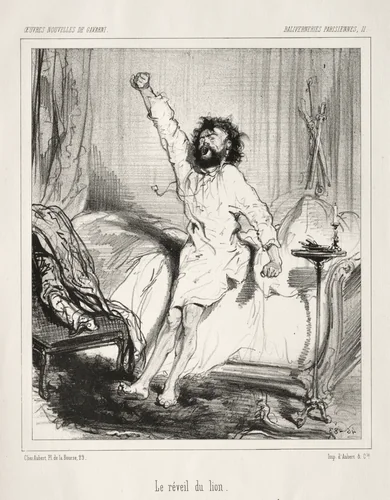
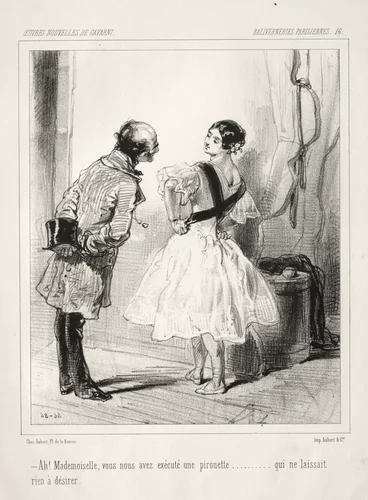
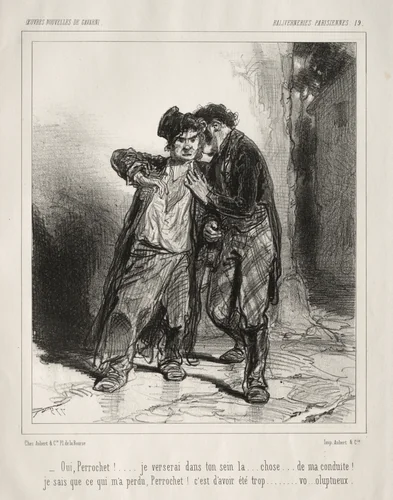
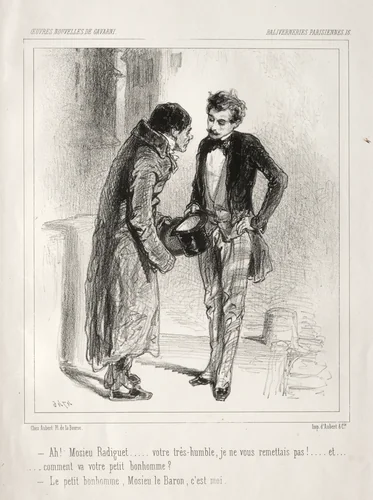
His detailed character studies, such as the evocative C'était un beau cavalier... or the poignant reality captured in the English Beggar, demonstrated an astute psychological understanding of character and circumstance. He deftly translated scenes like Ce qui se fait dans les meilleures societes into powerful visual essays. While his work often fixated on the anxieties tied to finance and appearance, it is perhaps fitting that the artist himself famously struggled with money, a personal irony reflected in the title Et pas le Sou pour Souper (Not a penny for supper).
Today, the museum-quality lasting power of his graphic works is affirmed by their essential inclusion in major global institutions, including the Metropolitan Museum of Art, the Rijksmuseum, and the National Gallery of Art. His legacy, preserved through collections featuring his drawings and Paul Gavarni prints, continues to inform our understanding of Parisian history. Because the majority of his originals are now firmly established in the public domain, institutions are able to offer high-quality prints and royalty-free downloadable artwork, ensuring his vast catalogue remains accessible to scholars and enthusiasts worldwide.
Source: Wikipedia · CC BY-SA 4.0