Paul Bril
Paul Bril (c. 1554–1626) was a central figure in the transformation of European landscape painting at the dawn of the seventeenth century. Though a Flemish painter and accomplished printmaker by origin, Bril’s enduring artistic legacy was forged almost entirely in Rome, where he spent nearly fifty years of his active career. His sustained commitment to refining the Italianate landscape established him as a crucial intermediary between the dense topographical traditions of the North and the emerging classicizing ideals of Italian art.
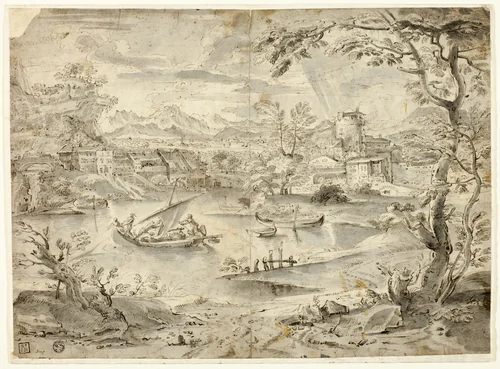
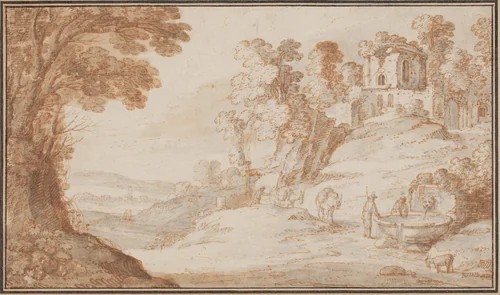
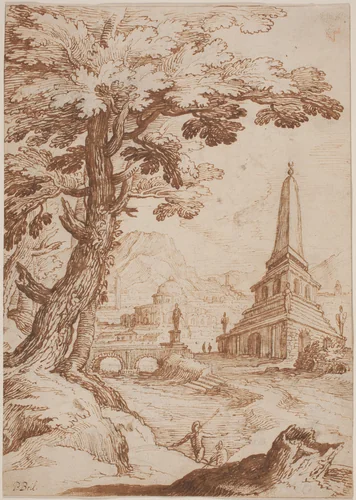
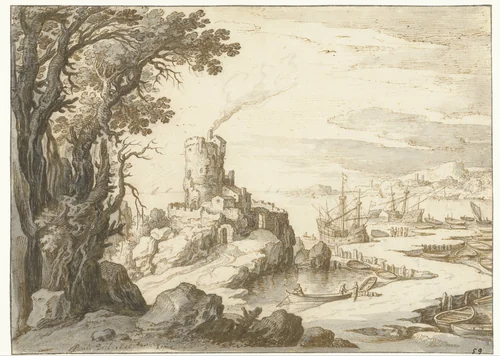
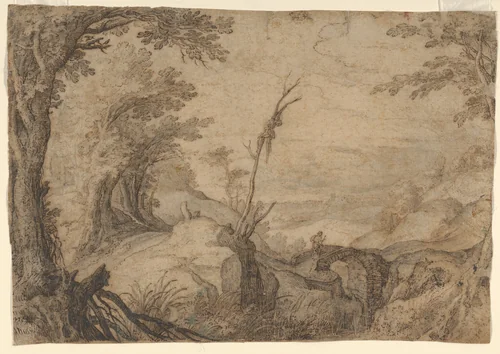
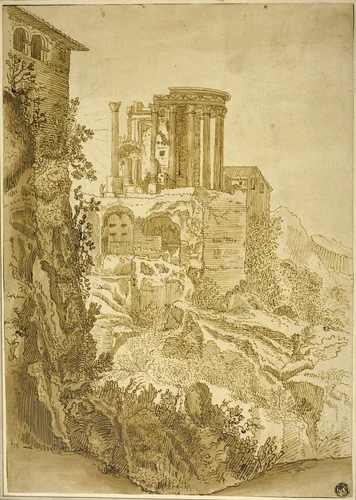
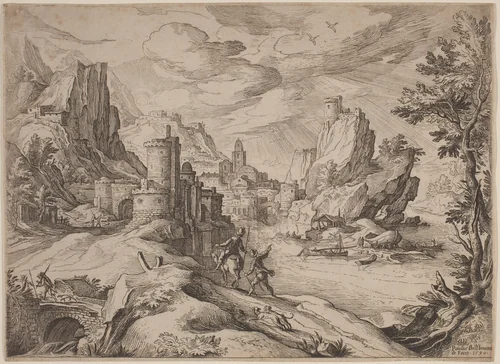
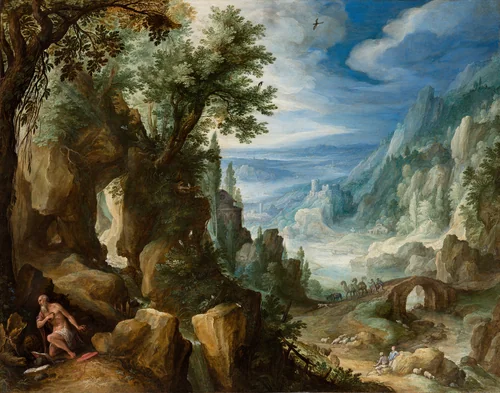
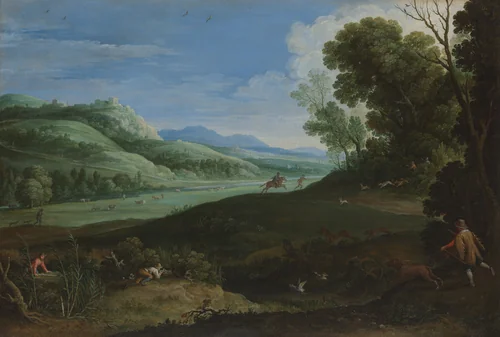
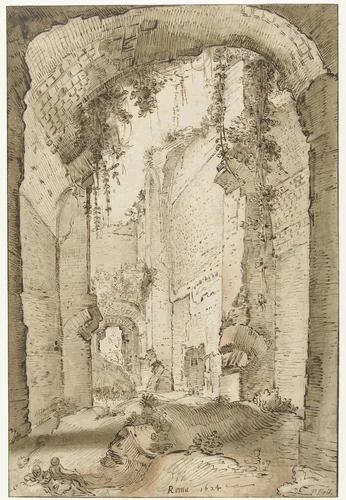
Arriving in Rome around 1575, Bril initially collaborated with his older brother, Mattheus, on significant fresco cycles, including projects within the Vatican. Following Mattheus’s death, Paul successfully inherited and expanded the studio, shifting his focus toward smaller, highly sought-after cabinet paintings, large drawings, and complex etchings. Bril’s artistic evolution is marked by a transition away from earlier Mannerist complexity toward a more organized, idealized vision. His mature compositions, such as Heroic Landscape and the detailed drawing Skeleton Hanging from a Tree in a Landscape, display a sophisticated use of atmospheric perspective, creating expansive vistas often punctuated by dramatic ruins or isolated coastal features, as seen in the work Gezicht op een kust met een donjon of vuurtoren.
Bril’s prolific output and stylistic innovations earned him widespread patronage and significant influence across the continent. He was instrumental in popularizing a formula for elevated, paesaggio art that profoundly impacted the next generation of masters, including artists like Annibale Carracci and Adam Elsheimer. The longevity of his career, which spanned the reigns of five Popes, speaks to his remarkable ability to adapt to shifting artistic demands while maintaining a consistently high level of execution. Today, collections such as the Metropolitan Museum of Art and the Art Institute of Chicago hold prime examples of Paul Bril paintings and prints, cementing his importance in the canon. Many of these seminal works now reside in the public domain, allowing enthusiasts access to museum-quality high-quality prints for study and appreciation.
Source: Wikipedia · CC BY-SA 4.0