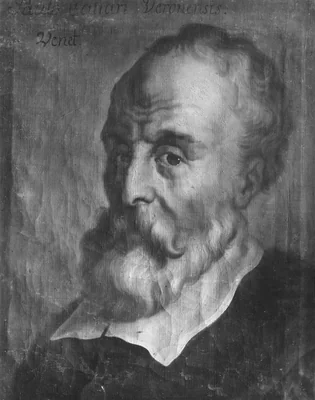
Paolo Veronese
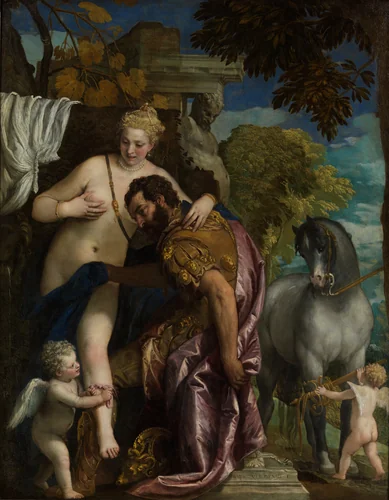
Paolo Caliari, known universally as Paolo Veronese, ranks among the most influential masters of the Italian Late Renaissance. Active between 1500 and 1575 and centered primarily in Venice, Veronese achieved lasting fame through his ambitious, monumental history paintings, specializing in complex religious and mythological narratives rendered on an epic scale. These colossal works, such as The Wedding at Cana (1563) and The Feast in the House of Levi (1573), cemented his reputation as a painter capable of orchestrating dense compositions while maintaining clarity and visual splendor.
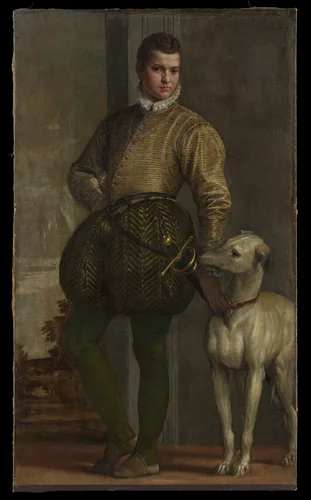
Veronese’s artistic evolution saw him transition away from an initial engagement with the compositional tension and elongations characteristic of early Mannerism. Heavily influenced by the pervasive presence of the elder Titian, he matured into a distinctly naturalist style. He is justly celebrated as a supreme colorist, renowned for a dazzling, luminous palette that allowed him to convey the texture of lavish silks, gold plate, and architectural stone with unparalleled realism. His sophisticated application of color and light effectively transformed spiritual chronicles into dazzling visual feasts; indeed, while his subjects were often sacred, the resultant scenes frequently appeared less pious depiction and more extravagant Venetian garden party, populated by contemporary figures in rich sixteenth-century costume.
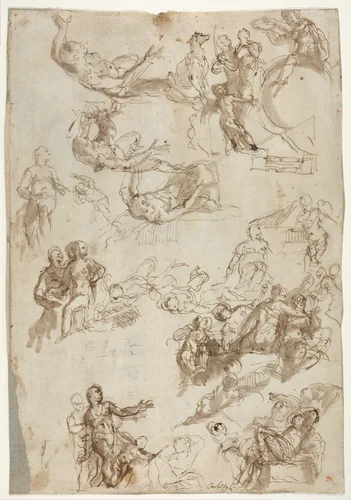
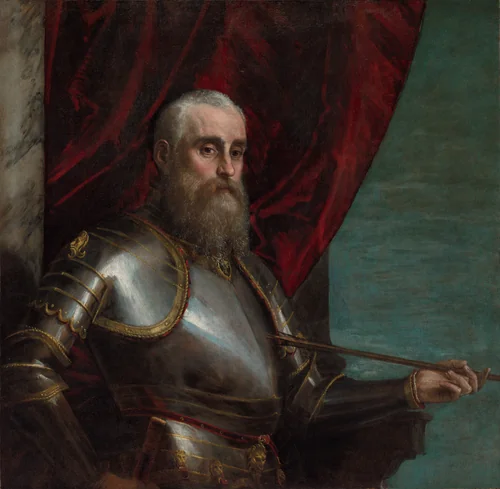
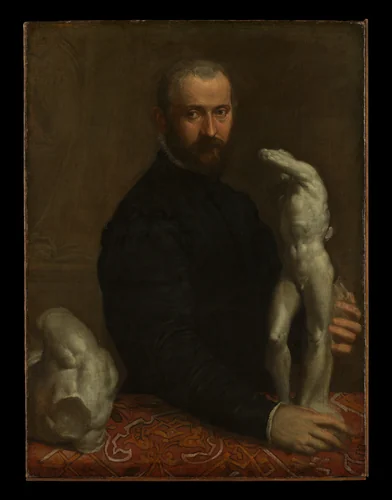
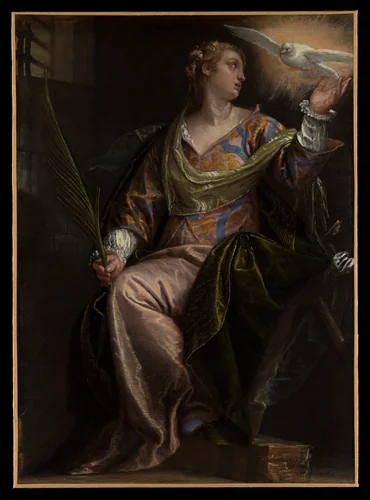
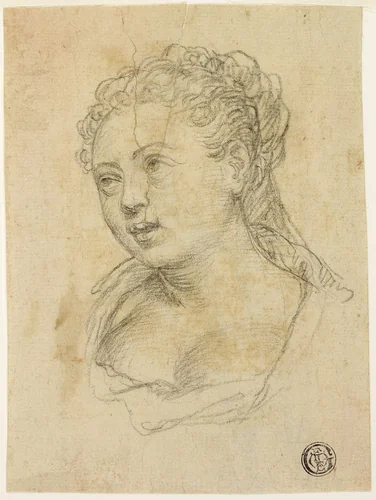
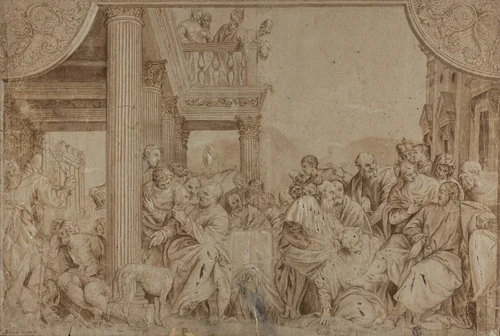
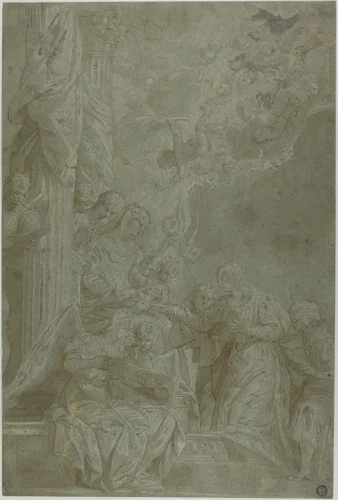
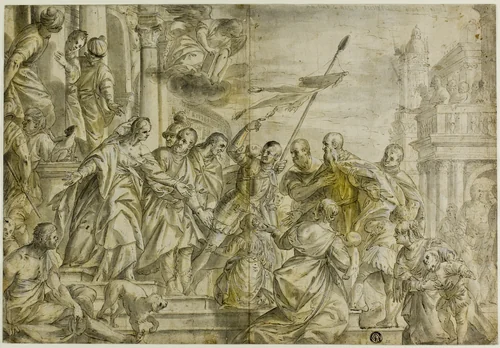
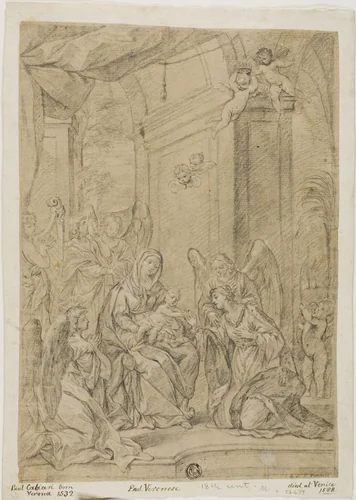
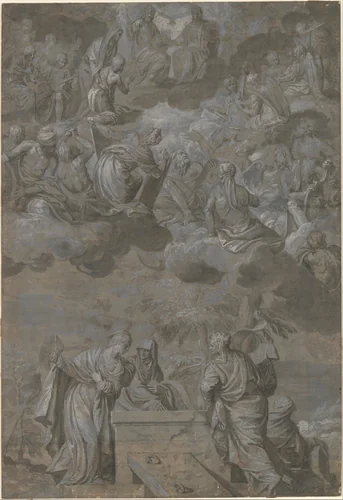
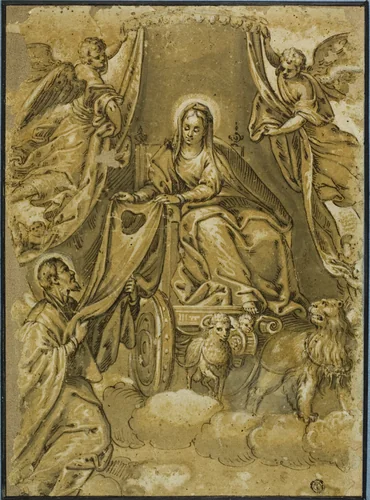
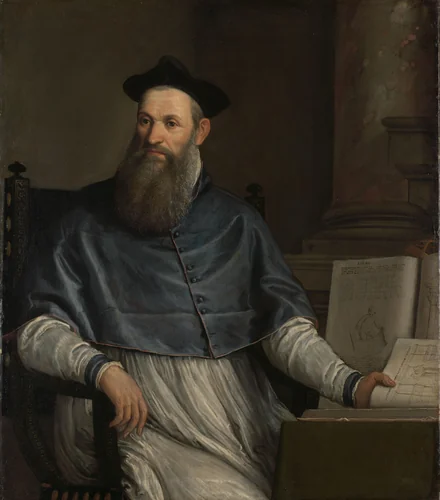
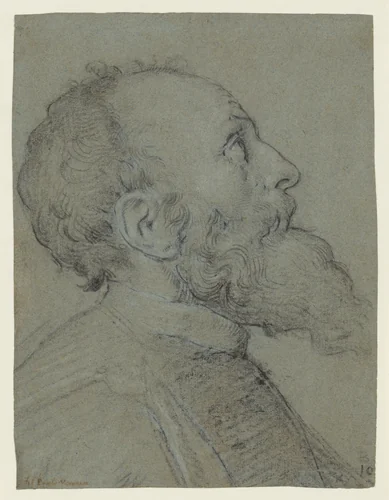
Veronese forms, alongside Titian and the slightly senior Tintoretto, the formidable "great trio" who completely dominated and redefined Venetian painting during the cinquecento. His treatment of space and grand architectural settings particularly distinguished him within this competitive environment. Today, his surviving practice, which includes nine documented drawings and major canvases like the Mystic Marriage of St. Catherine and the penetrating Portrait of Daniele Barbaro, is actively conserved by leading institutions.
Veronese's legacy endures globally. Collections at the Metropolitan Museum of Art, the Art Institute of Chicago, and the Rijksmuseum all house significant examples of his work. Happily, many important Paolo Veronese paintings are now in the public domain, allowing enthusiasts and scholars to acquire high-quality prints or downloadable artwork for detailed study, thereby extending the accessibility and influence of his exceptional color and compositional mastery well beyond the museum walls.
Source: Wikipedia · CC BY-SA 4.0
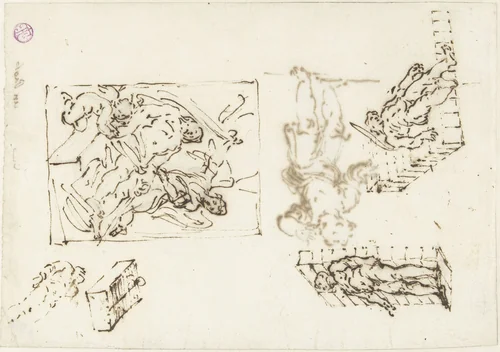
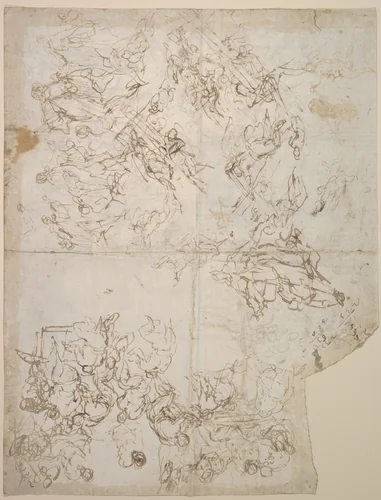
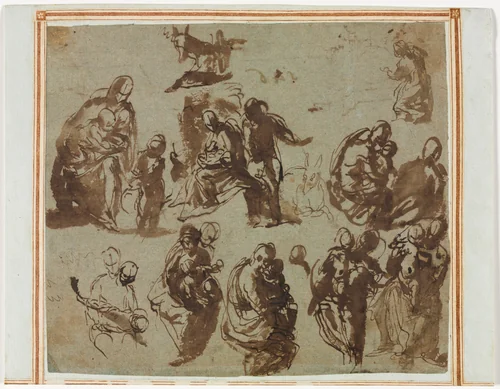
![Various Sketches of the Madonna and Child (recto); Architectural Studies (verso) [partially visible on recto] by Paolo Veronese, drawing, 1565-1575](https://img.artbee.org/79be4ac2-f916-40cf-832a-9f9373d01ce4/small.webp)