Paolo Gerolamo Piola
Paolo Gerolamo Piola (1666-1724) holds a significant position within the late Italian Baroque tradition, operating mainly in Genoa during a period of intense artistic production and dynastic rivalry. His career trajectory was inextricably linked to the local artistic infrastructure, beginning with his lineage: he was the son of Domenico Piola, one of the most celebrated and dominant painters of the Genoese school. This paternal influence provided not only a rigorous technical education but also immediate access to the high-level commissions that defined the era.
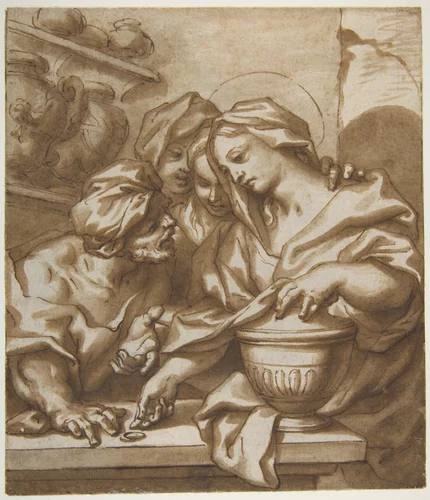
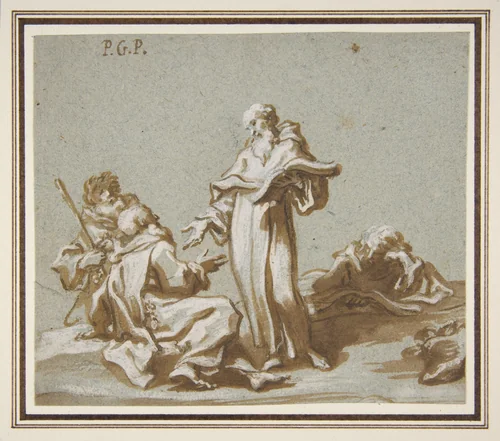
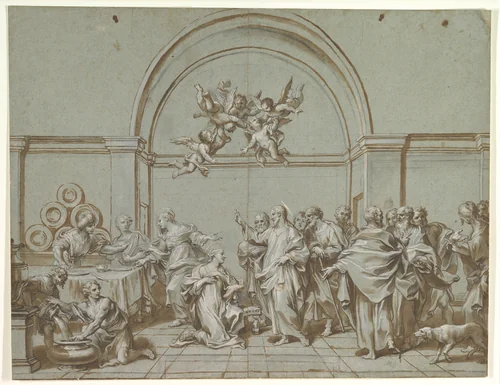
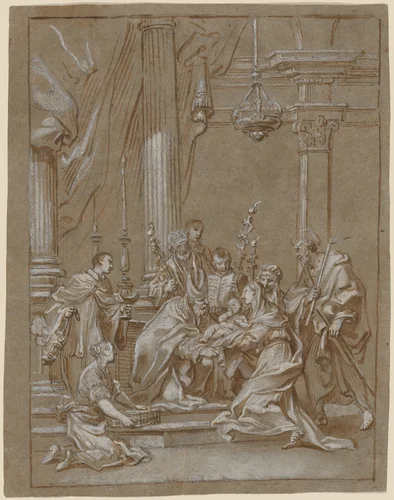
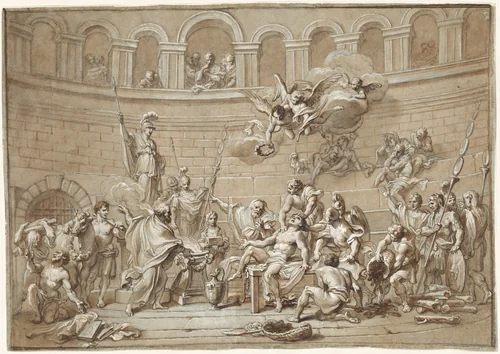
Active primarily from 1666 to 1720, Piola dedicated himself with prolific energy to the demands of religious patronage, excelling particularly in large-scale frescoes and devotional subjects. His surviving oeuvre confirms his mastery of complex narrative composition, a necessity for the grand decorative cycles then fashionable. The numerous preparatory drawings housed in international collections bear witness to his technical assurance and the intellectual process behind his large commissions. These studies, such as The Presentation in the Temple and Christ in the House of Martha and Mary (Luke 10:38-42), illustrate a clear adherence to Baroque formalism while retaining a distinct Genoese emphasis on confident, detailed draftsmanship. It is worth noting that while Piola excelled at the intense piety demanded by his patrons, he possessed a particular flair for capturing the quiet, slightly mundane side of devotion, visible even in the focused observation required for Scene with Four Figures of Monks Discoursing.
Though regarded as a regional master during his lifetime, the enduring quality of Piola’s work is affirmed by its continued preservation in preeminent Western institutions. Examples of his draftsmanship are secured in major American collections, including the Metropolitan Museum of Art and the National Gallery of Art. The preparatory studies for Paolo Gerolamo Piola paintings and large frescoes survive today not only as crucial scholarly documents but are increasingly accessible to the public. High-quality prints derived from these important museum holdings ensure that the visual impact of this skilled Baroque artist continues to resonate, providing connoisseurs and students with unique access to exceptional, royalty-free artistic heritage.
Source: Wikipedia · CC BY-SA 4.0