Otto Greiner
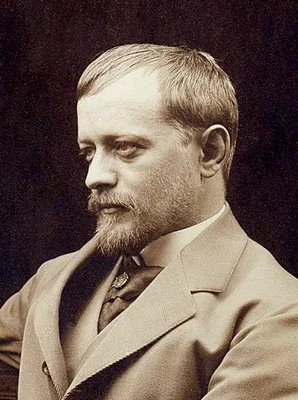
Otto Greiner (1869-1915) was a German painter and graphic artist whose career unfolded during the pivotal transition between late Academic classicism and the onset of modern European movements. Distinguished by the precision of his hand and a deep affinity for classical form, Greiner established a lasting presence in major international collections, with his drawings and prints held by institutions such as the National Gallery of Art and the Metropolitan Museum of Art.
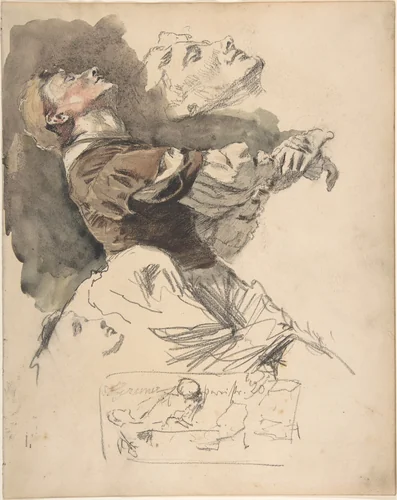
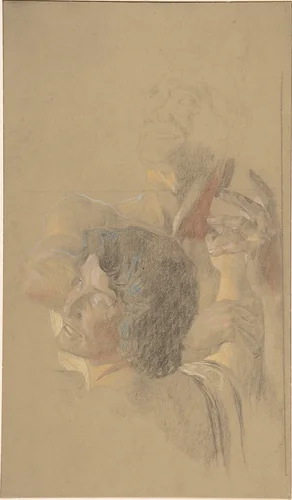
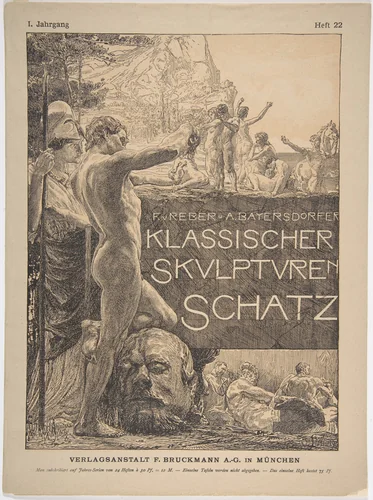
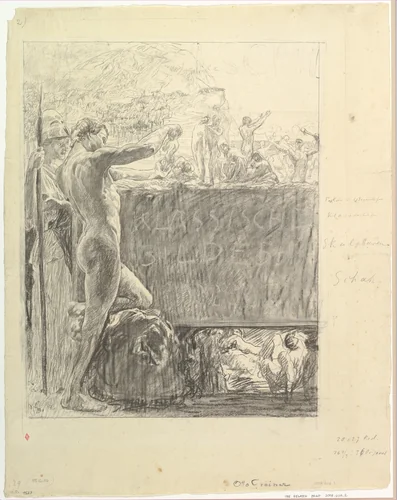
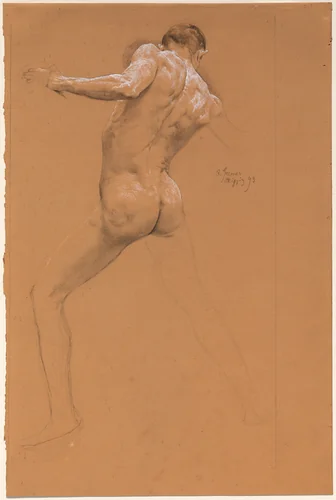
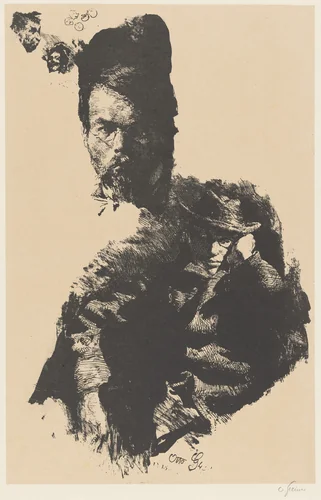
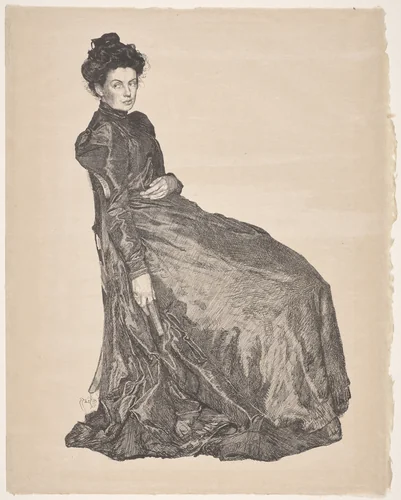
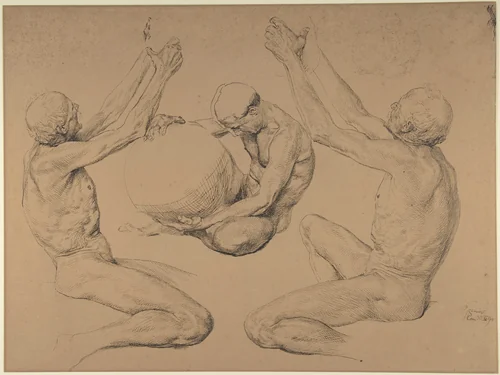
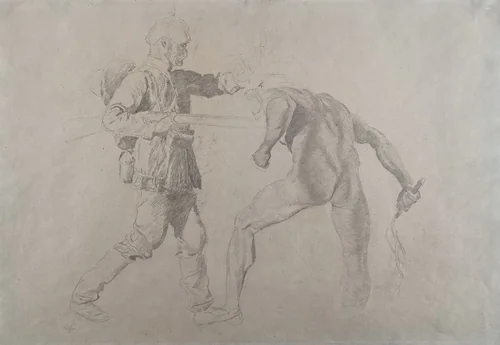
Though contemporary records label him broadly as a painter, Greiner’s most recognized achievements often reside within his extensive graphic output. His rigorous training is manifest in the exacting detail and anatomical accuracy of his preparatory studies. Works such as Studies of Men in Togas [recto] and the figural analysis for A male and a female figures (study for 'Golgotha') confirm his commitment to foundational draftsmanship. He frequently approached the human subject with a sculptural sensibility, seeking to define mass and volume through line rather than color. This classical preoccupation is also subtly emphasized by his design for the cover of Klassischer Skulpurenschatz, tying his graphic oeuvre directly to the lineage of ancient sculpture.
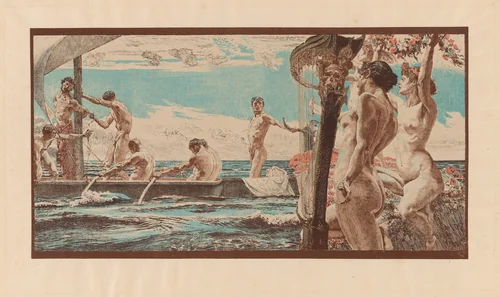
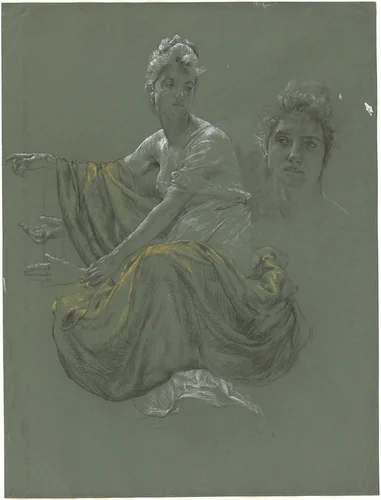
As a graphic artist, Greiner utilized etching and lithography to create high-quality prints characterized by their strong tonal definition and linear clarity. However, beneath the formal rigor of his academic structure, one finds evidence of a lively observational eye, particularly in swift movement studies such as Study of a Female Dancer and Studies for a Boatman. While many of his contemporaries were engaging with the rising frisson of Expressionism, Greiner remained firmly committed to legible form and narrative clarity, suggesting that for him, the perfect line was often preferable to the revolutionary brushstroke.
The legacy of Otto Greiner paintings and graphic works continues to be studied for its technical excellence. Today, due to the efforts of major institutions, many of these historical artworks are now available to the public. As an important example of late nineteenth-century draftsmanship, much of his work has entered the public domain, ensuring that these museum-quality images remain accessible to scholars and admirers globally.
Source: Wikipedia · CC BY-SA 4.0
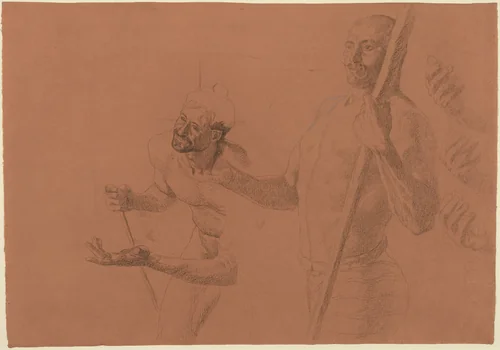
![Studies of Men in Togas [recto] by Otto Greiner, drawing, 1869-1916](https://img.artbee.org/cdc77112-2fcf-499f-a087-f4896d99eaaf/small.webp)