Otto Freundlich
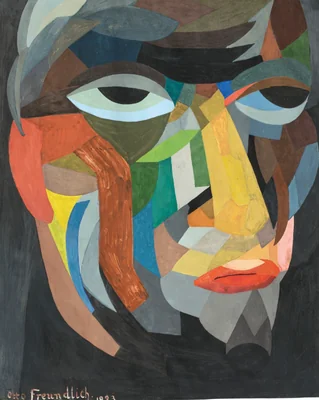
Otto Freundlich (1878-1943) stands as a crucial figure among the first generation of European abstract artists. A German painter and sculptor of significant intellectual curiosity, his prolific practice bridged the expressionistic fervor of early twentieth-century German art with the formal rigor emerging from Paris. His early exposure to the innovations taking place in the French capital was foundational; Freundlich was a profound admirer of Cubism, an affinity that ultimately led him to spend the majority of his professional life based in France.
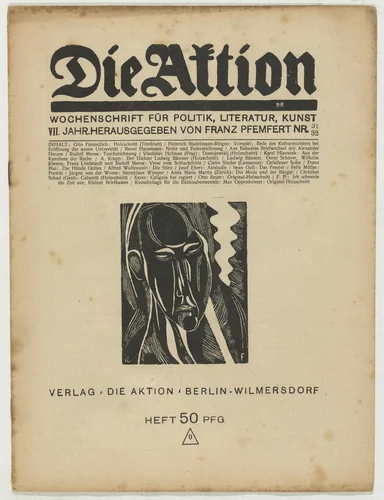
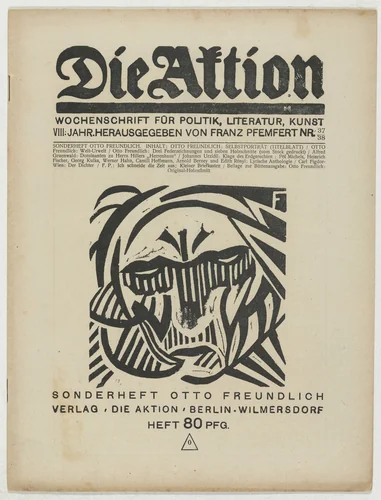
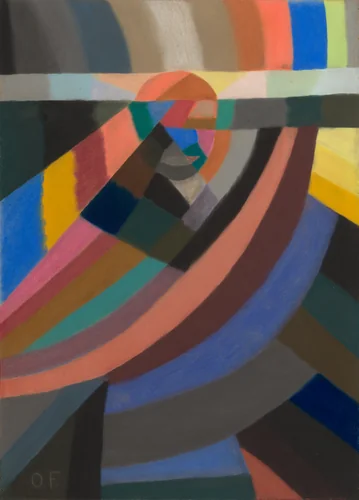
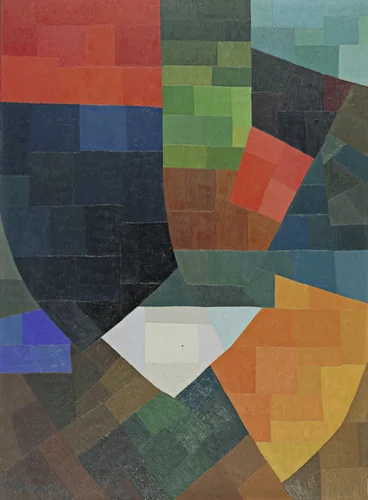
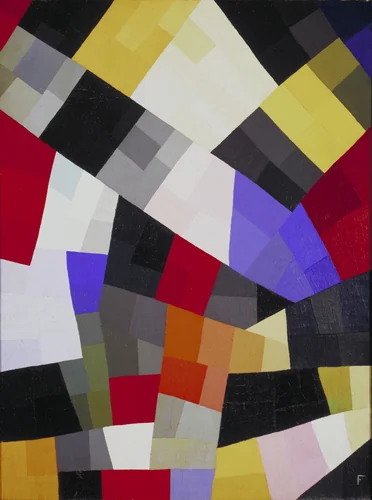
Freundlich’s artistic development centered on dissolving representational constraints to achieve a synthesis of spiritual and formal concerns. Active primarily between 1917 and 1936, his early output included illustrative contributions featured in radical publications like Die Aktion, which carried works such as those appearing in volumes 7 and 8. He quickly moved toward monumental, purely abstract pieces. His large-scale works, particularly the series titled Composition, exemplify a measured yet dynamic geometry, favoring interlocking, rhythmic forms over sharp fragmentation. While many contemporaries used geometric abstraction to express utopian order, Freundlich’s approach often retained a powerful sense of underlying organic energy, perhaps best captured in the drawing The Unity of Life and Death.
Freundlich’s dedication to non-objective art ensured his place as a targeted figure during the political upheaval of the 1930s. Despite the cultural destruction taking place in his homeland, his visual innovations secured his works permanent placement in major global institutions. Today, key examples of Otto Freundlich paintings and sculptures are held in major collections, including the Museum of Modern Art in New York and the Cleveland Museum of Art, affirming their museum-quality status. For scholars and admirers seeking closer study, a selection of his later works are increasingly available as high-quality prints through public domain initiatives, often deemed royalty-free due to their age.
The trajectory of Freundlich’s deeply influential career was tragically cut short. As an artist of Jewish origin, he was apprehended during the Nazi occupation of France and murdered in 1943 at the Majdanek concentration camp. His artistic legacy, however, remains indelible, marking him as a pivotal voice in the foundation of abstract expression and non-objective art.
Source: Wikipedia · CC BY-SA 4.0