Ottmar Elliger
Ottmar Elliger (1633–1679) stands as a compelling, if complex, figure within the corpus of Flemish Baroque painting. Active primarily through the 1670s, he built his reputation in Northern Europe as a specialist still life painter, yet his extant works demonstrate a far broader scope than this designation suggests. Born in Hamburg and likely trained in Antwerp, Elliger synthesized the meticulous observational techniques of the Netherlandish tradition with the robust chiaroscuro and dramatic composition inherent to the Baroque style, establishing himself as a notable craftsman whose skill garnered institutional recognition during his lifetime.
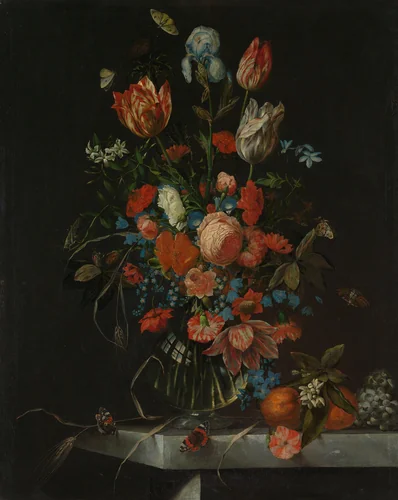
Elliger’s mastery of the still life genre is evident in pieces such as his definitive Still Life with Flowers. Here, he focused not merely on rendering botanical accuracy but on capturing the presence of the subject: the precise reflection on a glass vase, the textural difference between taut bud and wilting petal, and the dramatic interplay of light used to make the arrangement appear three-dimensional and immediate. Such works cemented his appeal to both private collectors and patrons seeking refinement.
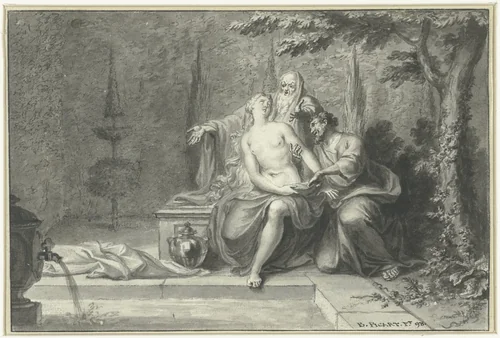
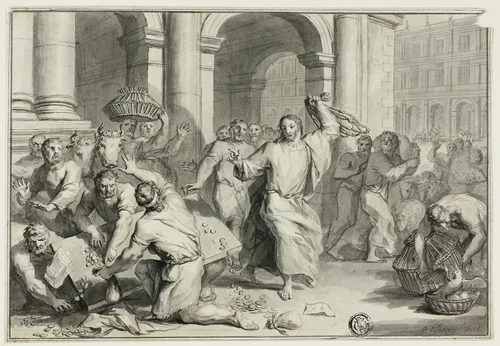
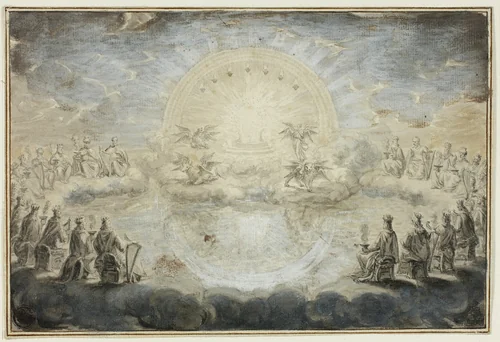
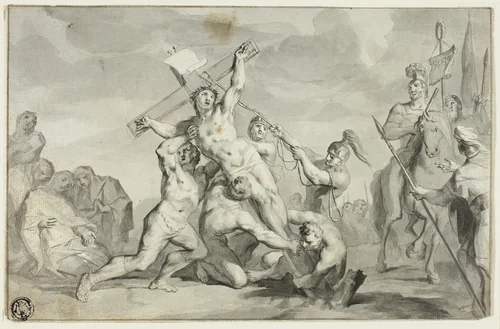
However, the complete inventory of Elliger’s surviving output, including those pieces active in the 1673-1686 period, reveals an artist capable of handling monumental religious and narrative subjects. Works like The Raising of the Cross, Scene from Revelations, and the dynamic Christ Driving the Money-Changers from the Temple required large-scale figural composition and a profound understanding of storytelling within the visual arts. This duality, transitioning effortlessly between intimate naturalism and high religious drama, perhaps speaks to the varied commissions required of a successful 17th-century painter: while lucrative floral still lifes satisfied market demands, the ambition for prestige was fulfilled through history painting.
Today, Elliger’s carefully executed compositions continue to attract scholarly attention. Major institutions, including the Rijksmuseum and the Art Institute of Chicago, hold key examples of his oeuvre, affirming the museum-quality of his contributions to the Flemish school. Fortunately, for those seeking to study the nuances of this Baroque master, many Ottmar Elliger paintings and drawings have entered the public domain. This shift allows for the wide distribution of high-quality prints and downloadable artwork, ensuring his technical proficiency remains accessible to enthusiasts globally.
Source: Wikipedia · CC BY-SA 4.0