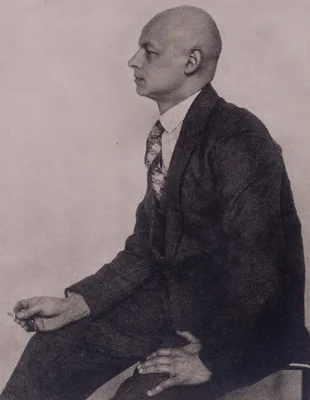
Oskar Schlemmer
Oskar Schlemmer (1888-1943) stands as one of the most conceptually rigorous and multifaceted figures of German modernism. A highly disciplined painter, sculptor, designer, and choreographer, he is primarily recognized for his foundational tenure at the Bauhaus school, where he developed a systematic aesthetic approach that spanned fine arts, graphic design, and stagecraft. Active across major media between 1913 and 1923, Schlemmer consistently sought to establish a harmonious, almost mathematical relationship between the human figure and architectural space. His work consciously eschewed the subjective expressionism prevalent in the period, opting instead for a cool, rational clarity based on universal design principles.
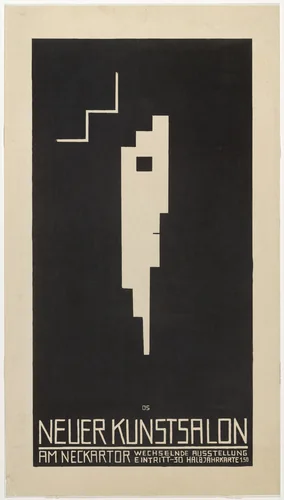
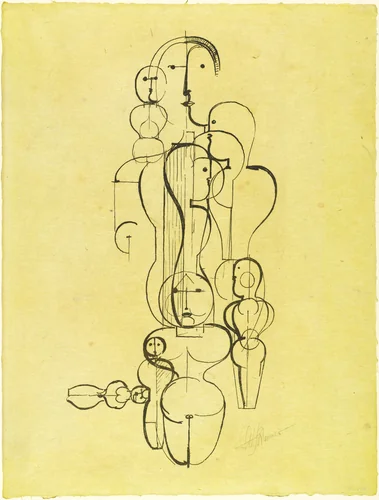
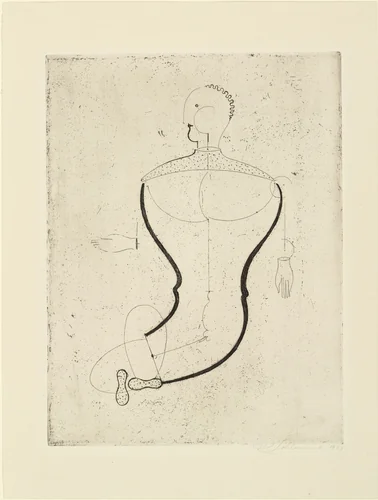
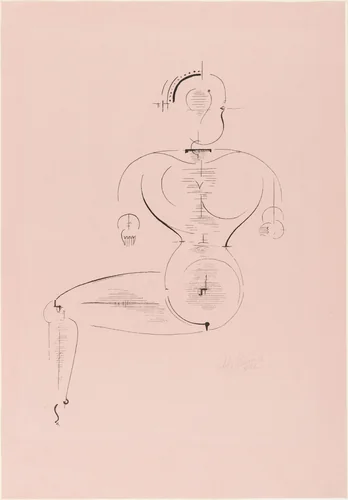
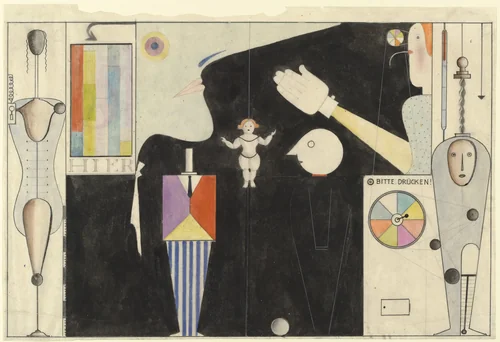
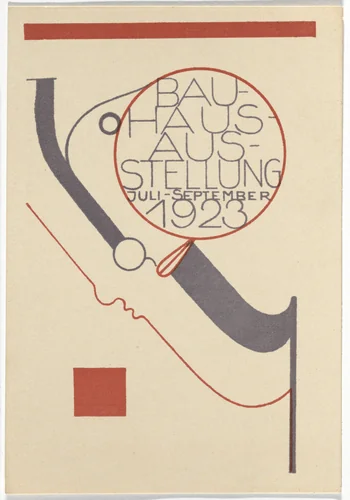
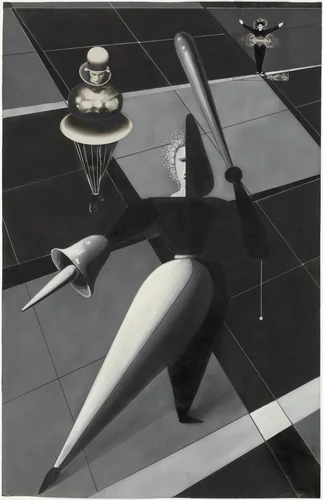
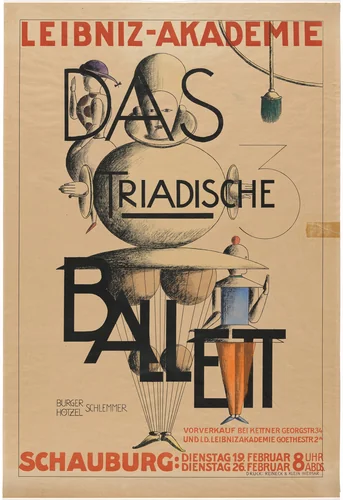
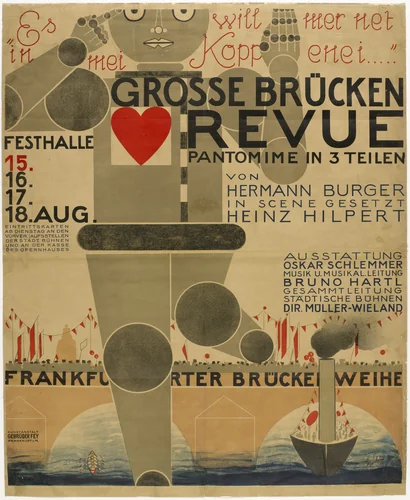
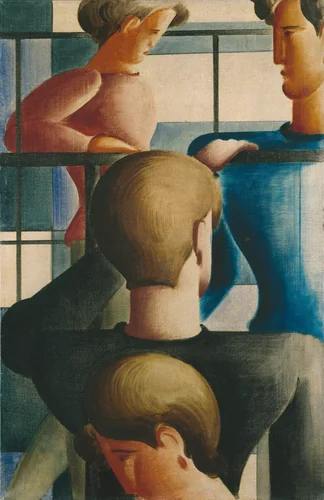
Schlemmer’s primary innovation lay in his meticulous investigation of the human figure as a measured component of a universal design scheme. He treated the body not as a subject for subjective portraiture but as a kinetic element subject to geometric laws, famously stating that space itself was the true material of his creations. This systematic philosophy is clearly evident in graphic works designed for public dissemination, such as the seminal Poster for the Neuer Kunstsalon, Stuttgart, a design that translates complex modernist principles into commercial efficiency. His printmaking often focused on highly stylized head studies and sequential movements, transforming simple profiles into sophisticated exercises in spatial analysis.
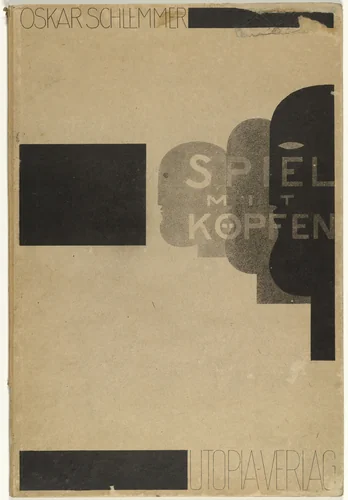
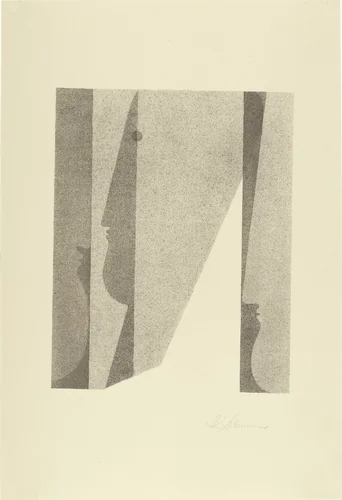
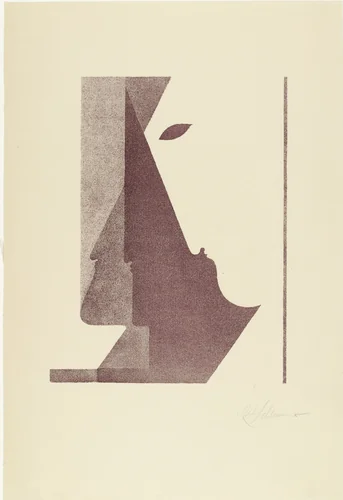
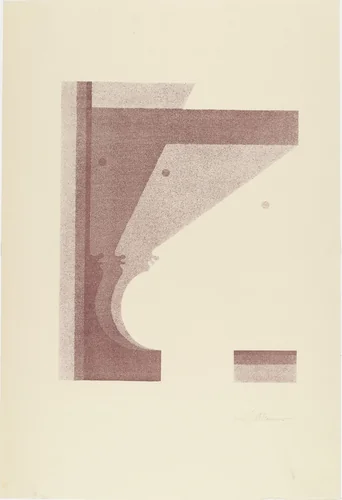
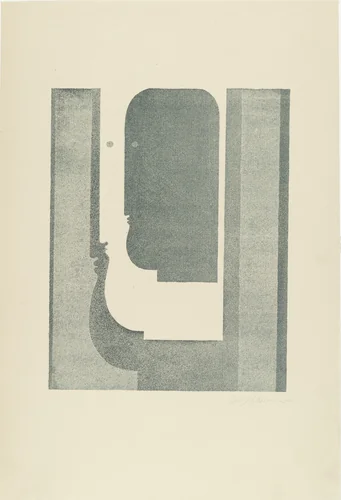
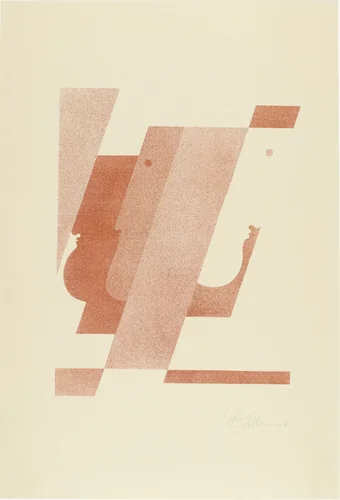
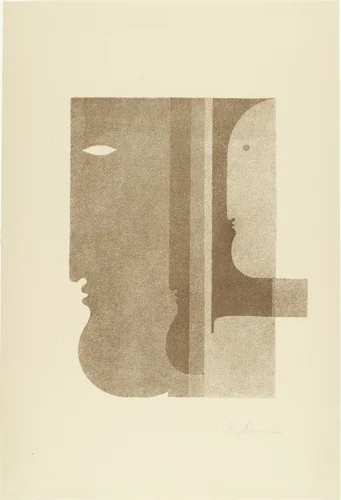
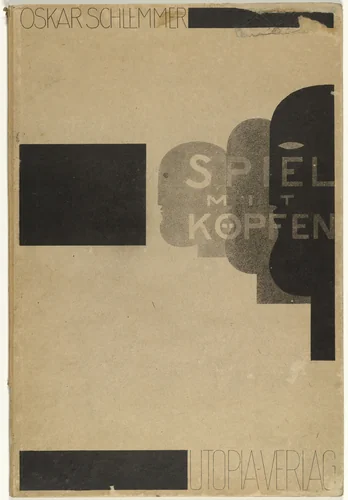
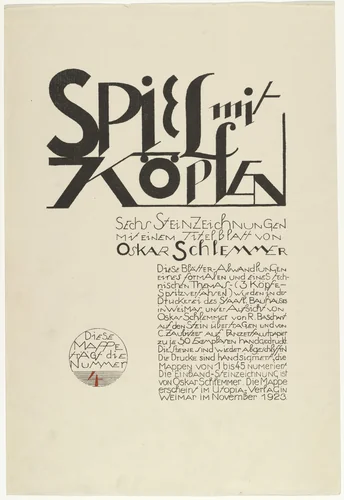
This fascination with geometry and movement is perhaps most vividly captured in the print series Play on Heads (Spiel mit Köpfen). This body of work meticulously dissects the human face into simplified, overlapping forms, producing fascinating spatial puzzles. Pieces like Three Heads, Superimposed and Three Profiles between the Vertical and the Diagonal reveal Schlemmer's precise obsession with the intersection of the vertical axis and the diagonal line, demonstrating how even the most abstract geometry can possess a unique sense of inherent theatrical drama. It is a remarkable observation that an artist so committed to rigid precision was simultaneously a pioneering choreographer, treating his dancers as living embodiments of his geometric principles.
Schlemmer’s dedication to structure and human placement ensures his continued status as a key modernist designer. His pioneering Oskar Schlemmer prints are held in major institutional archives globally, notably the Museum of Modern Art, ensuring their status as museum-quality representations of the era. Much of his influential visual catalog is now in the public domain, offering access to high-quality prints as downloadable artwork for enthusiasts and researchers worldwide.
Source: Wikipedia · CC BY-SA 4.0