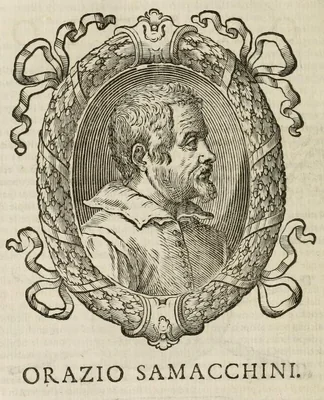
Orazio Samacchini
Orazio Samacchini (active 1500-1580) stands as a pivotal figure in the transition between late-Renaissance ideals and the sophisticated, often tension-filled stylistic intricacies of Mannerism. An Italian painter, Samacchini established his reputation across the major artistic centers of Rome and Parma before returning to work extensively in his native Bologna. His career spanned nearly five decades, during which he became sought after primarily for large-scale commissions.
His surviving corpus, represented globally in prestigious collections like the Metropolitan Museum of Art, the Rijksmuseum, and the Art Institute of Chicago, suggests that his principal activity involved monumental fresco cycles and complex architectural decorations, particularly high vault studies. Samacchini’s technical expertise resided in executing dynamic, large-scale compositions featuring dense figural groupings and heightened emotional expression, hallmarks of the emerging stylistic shift towards Mannerism.
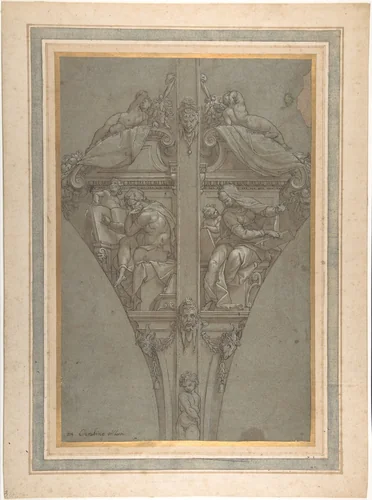
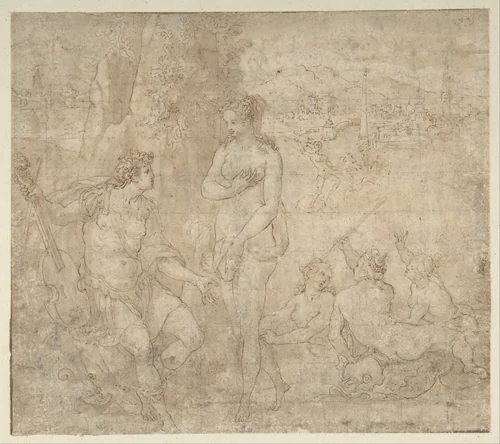
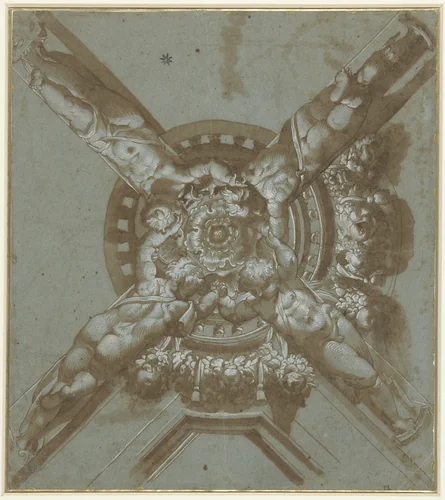
His output consistently demonstrates technical virtuosity in handling crowded mythological and allegorical narratives, evidenced by preparatory works such as Study for the Decoration of a Vault. This focus on ceiling and complex overhead perspectives demanded exceptional skill in sotto in sù (seen from below) rendering, a necessary convention for major decorative schemes of the Italian sixteenth century. He frequently incorporated classical themes, displaying a fluent command of antique sources in pieces like Apollo and Galatea in a Landscape with Neptune and Three Nymphs.
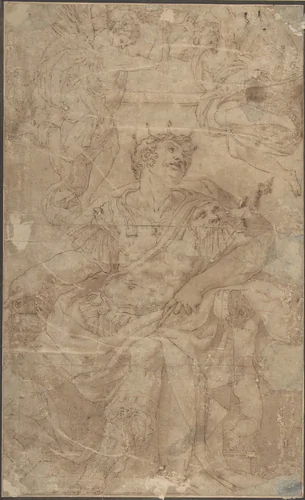
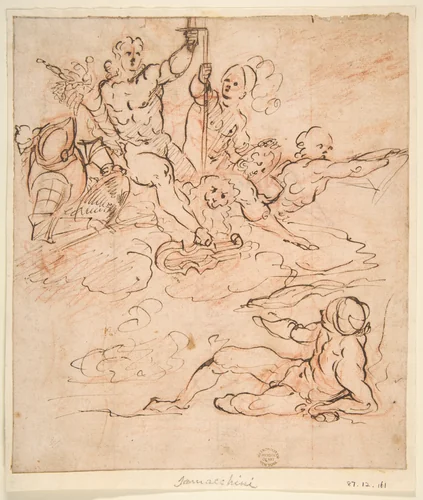
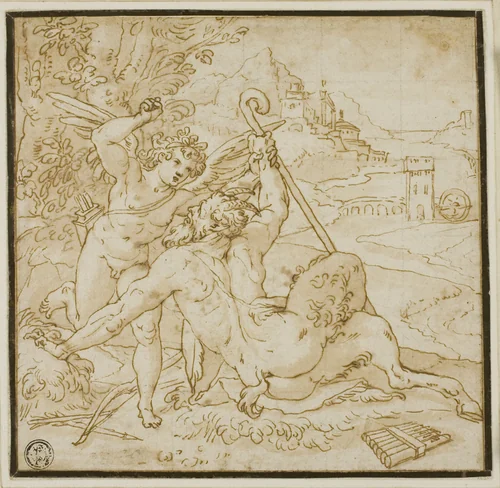
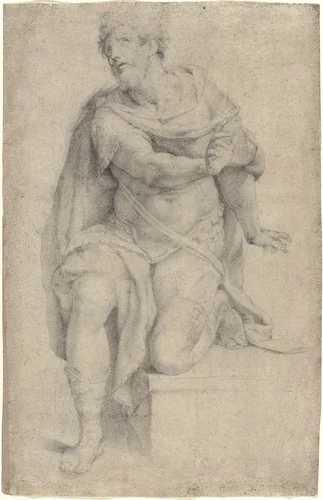
Samacchini possessed a meticulous eye for the theatricality inherent in biblical and classical drama. Even in seemingly straightforward character studies, such as A Seated King in Armor (King David?), the figure is invested with a potent, almost sculptural gravitas. One subtle, recurring characteristic in his draughtsmanship is his continuous engagement with the physical strain of divine action, often positioning his heroes, gods, or figures of allegory in highly difficult, dramatically rotated poses, clearly seen in Cupid Overcoming Pan.
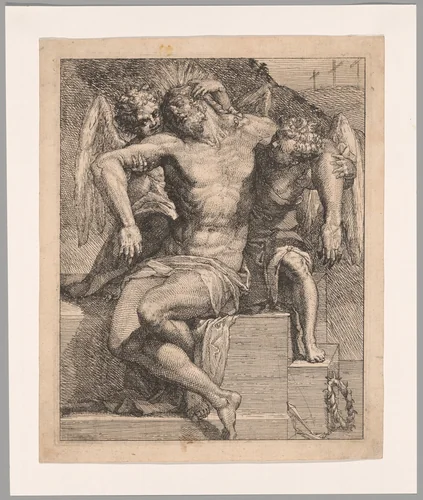
His works are held in premier institutions globally, confirming their enduring museum-quality relevance. Fortunately for researchers and enthusiasts, many of the preparatory studies and original Orazio Samacchini prints created during his prolific career are now in the public domain, making high-quality prints and related downloadable artwork widely accessible for study.
Source: Wikipedia · CC BY-SA 4.0